When the career is over, only one question remains: was it worth the time?
· Viktor Papazov
Imagine the end of your career and whether it will make you happy and whether you will be proud of it!
Introduce yourself with a few sentences..
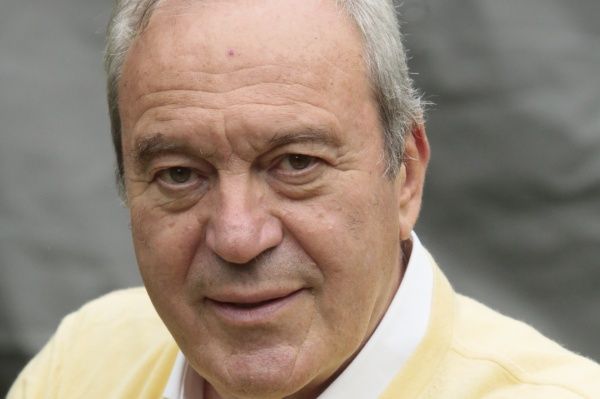
My name is Viktor Papazov. Economist. Founder of Bulgarian Stock Exchange AD and co-founder of Central Depository AD. I have two diplomas from VII "Karl Marx", now UNSS. I graduated from Advanced Management Program at Harvard Business School, as well as many other courses and specializations around the world. In 1998, I was nominated as one of the 100 Global Leaders of Tomorrow by the World Economic Forum in Davos.
As the executive director of BFB AD, I have been nationalized and dismissed twice by "democratic" governments.
What did you dream of becoming in your childhood?
I don't remember having a specific dream of what I wanted to become. In those years, children dreamed of becoming astronauts or famous doctors. Now I see the dreams are to become an influencer and to have a lot of money. The world has changed, but is it for the better?
At what age did you earn your first money? Share an interesting story with us?
As far as I remember, I earned my first money by returning a few crates of empty bottles from soft drinks. In those years, people returned bottles and received money for it. The most expensive were the bottles from Coca-Cola. I think I earned a whole 12 leva! A lot of money for a 10-year-old boy.
One of the interesting stories related to money was in 2003 when Zagorka AD announced a promotion, promising a new BMW X5 to the one who sent the most caps from Zagorka Special beer within the next 3 months.
Obviously, the promotion could not be won by drinking beer. We devised a scheme for buying caps that motivated people to bring us the caps often, and the more caps they brought us, the more we paid for them. We named the campaign "Plums for trash, no, money for caps".
At the end of the campaign, we handed over 350,000 caps, and for my birthday, which was two weeks later, I received a new BMW X5. Of course, I sold it immediately and with the money, we created our first company. The investment of 35,000 leva brought in revenue of 100,000 leva for two and a half months of work. The fastest, but also the riskiest and most hard-earned money.
What are the main factors and examples that shape us as individuals at an early age and form our interests? What is your recipe for curiosity, sources, and wells of information and inspiration at this stage of our human development?
The main factor, of course, is the family. The small person is formed there. It is no coincidence that the importance of the first seven years is emphasized. At that time, a person observes, absorbs, and imitates their parents. The most lasting knowledge, habits, and behavior patterns are formed precisely then.
Another important thing is reading books. As a child, and even now, I loved to read books. I read constantly. Reading books, after handwriting, is the activity that develops the human brain the most. Beautiful, calligraphic writing indicates an educated person. Young people do not have the patience to write by hand. New technologies are not an excuse. I love to write by hand and with an ink pen.
Unfortunately, young people no longer read books. They do not have the patience. Everything is some short texts – SMS, posts on social networks. There are those who even no longer read, but only watch some short videos. This is a sure recipe for superficiality, dullness, and declassification later in life.
I don't know if young people realize, for example, that the so-called "artificial intelligence" is eating their bread. If a program can do things that you cannot, then you are redundant.
Has there been any significant change in your perceptions in more mature age regarding what motivates you to do or not do something?
Of course. A person learns and changes while they are alive. With the accumulation of experience and knowledge, one's worldview and understanding of the world also change.
As for motivation, everyone must find it within themselves. But we are all very different, especially in the structure of the brain, which in turn determines whether you have abilities in one area or another. But even if you have abilities, you need to develop them, and for that, you need to put in effort, to work hard, which is not easy at all.
When a person passes 60, they suddenly realize that they are not eternal as young people imagine, which makes them not postpone one thing or another, to live as actively and fully as possible in their remaining limited time.
Whose decision was it where to pursue higher education and what to study?
The decision was mine, although my father, who was a military man, wanted me to pursue a career in his field. Thank God I did not succumb, considering the subsequent disintegration of the Bulgarian army. I would have had the unfortunate fate of thousands of honest soldiers who were declassified.
After high school, I applied for journalism. I was not accepted. The second year in the army, I had a change of mind and applied to the economic institute. I was accepted and graduated in management and planning of the national economy. A few years later, I obtained a second degree in foreign trade.
Then came the changes, and I turned out to be lucky. The years of reading and translating materials and books suddenly proved to be very useful.
You know the definition of luck? It is when preparation meets opportunity. I found myself in the right place at the right time with the appropriate good preparation.
Was this decision correct, viewed from today's perspective?
In history, there is no subjunctive mood, the same is true in life. As Radoy Ralin said – "the past does not return, it is only swallowed".
I think I had a good and interesting life. Of course, there were also falls and many difficult moments. Two nationalizations and dismissals are no joke, but they were a good lesson. The important thing is not to stop working and learning. You never know which knowledge or skill you will need in life. The important thing is to work hard, to not stand still. Sometimes knowledge acquired many years ago turns out to be useful and decisive today.
I remember that infamous speech by Steve Jobs at the graduation of a class at Stanford University, where he says that you should not live someone else's life, that you should constantly seek something new and work hard. The satisfaction from what you have achieved and laziness are deadly for success and development.
Share more about your interests, knowledge, skills, and hobbies?
My interests are very diverse. I love to make things with my hands. In fact, a few years ago, I built a whole workshop myself. Now I do all sorts of things. I am engaged in jewelry making. I made a beautiful belt buckle interpreting the mask of Teres. In May of this year, I completed a welding course in WIG technology. I make various things from metal. Currently, I am making new lighting fixtures for the garden from metal profiles and LEDs. I think they are turning out beautiful. I also work with wood. I have made several pieces of furniture.
I love to play sports. As a young man, I skied, but after a disc herniation surgery, I had to give them up. I switched to more gentle sports. I swim. I play golf, which is a wonderful excuse to travel the world. For the last 6-7 years, I have been riding an e-foil (electric surfboard on an underwater wing).
I just started a captain's course.
In short – I do not stop learning, working, and making things. I often do physical work to exhaustion, but it keeps me in relatively good shape for my age.
Would you change your profession today and which areas of activity capture your interest?
Hardly. In fact, what does profession mean? Being an economist means knowing or at least thinking you know how the economy works. I fear many today imagine they know. They confuse business education with economics. Anyway.
If I can define my profession, I would rather use the term "entrepreneur", a person who creates things. A few years ago, we created a dairy. We produced some of the best dairy products in Bulgaria. During those 2-3 years, I specialized at UHT Plovdiv, in the dairy I was everything – from technologist to fireman, general worker, tanker driver, and what not. Everything passed through my hands. Unfortunately, I "hitched a ride with a partner" and the venture failed with a bang. Regardless, I learned new things and do not regret it.
They say that personal branding is everything that people say about you when you are not in the same room with them. What would you like to hear today?
Which people? People are very different. My impressions, for example, from social networks is that many people are superficial, limited, and biased. You cannot convince them of anything. Whatever you write, even if they read it entirely, they rarely delve into what is written. Such people remind me of the famous American physicist Richard Feynman, who wrote a wonderful book titled "What Do You Care What Other People Think?" In this sense, the opinion of such people does not interest me. You cannot please everyone, and it is not necessary.
People who know me and have worked with me, I hope will say that I am a good person. That is enough.
The emotional intelligence, adaptability, and flexibility, as well as our soft skills are key conditions for success in recent years. How do you cope with the daily challenges of life to stay in good shape and mood?
These fashionable terms, "emotional intelligence", "soft skills" are nice. In fact, if you are a good, compassionate person who cares about others, you will be "successful". I wonder, what does it mean to be "successful"? How do we measure success? If we measure success with money, for example, Jack Welch, the former CEO of General Electric, was considered successful. During the twenty years that Welch was CEO, the company's market capitalization grew from 14 billion to 600 billion dollars. Upon his retirement, he received a reward of 417 million dollars, the largest at that time in history. At the same time, he earned the nickname “Neutron Jack", a direct reference to the neutron bomb, which destroys people but preserves buildings. There is even a book about him titled "The Man Who Broke Capitalism". My question is – do you think Jack Welch is successful?
Another example is Grigori Perelman. A brilliant Russian mathematician who proved the Poincaré hypothesis - one of the seven unsolved problems of the millennium. He has been awarded numerous prizes, including one of 1 million dollars. He refuses all. For a while, he gives lectures at universities in the USA, but decides to return to Russia. He lives poorly in St. Petersburg. Do you think he is successful?
I fear that many define success as it is suggested to us by Hollywood movies – a big house, a luxury car, a lot of money. We should not only look forward and upward, but from time to time look back. To look around us. If a person is alive and healthy, that is a sufficient reason for a good mood.
There is a wonderful movie – "Life is Beautiful". I recommend it to everyone. As Viktor Frankl, one of the survivors of the Nazi concentration camps, said, "You can take everything away from a person, but not their choice of attitude towards whatever circumstances they face, their ability to choose their own path".
What are the most important conclusions you have made so far for maintaining proper communication considering the different characters of the people you meet daily – colleagues, friends, relatives?
The most important thing, in my opinion, is the ability to listen to people. To try to understand them. I fear that I often do not do this.
What do you think about money? What is their influence on your life? What is your advice to people who often ask themselves questions related to money and how sufficient they are?
A very broad and deep topic.
1. Few can give an exact definition of what money is. Do you think I am exaggerating? Let's take a 20 leva banknote from the 1996 issue. Show it to your friends and ask them - Is this money? They will probably answer that it is not money. If you ask them why, the answer will be – well, it is no longer valid. That is, a banknote is no longer money because the state has said that it is no longer valid. At that moment, we come to the most important thing – are the banknotes in our pockets money and what makes them money? Can the state whimsically say what is money and what is not? If so, then we are completely dependent on the will of people who can easily rob us of our savings. Is that right?
2. What is money nowadays? Even Aristotle defined the functions of money. Today, however, it seems that money has another function – to measure whether a person is successful, ergo whether they are smart. Because stupid people cannot be successful, right? Money is the new god to whom everyone bows, and for it, people are willing to make all sorts of compromises and even atrocities.
3. What do I think about money? Money, up to a certain amount, is a means of satisfying personal needs – the ability to buy one thing or another that you need. Above that amount, they are already a measure of something else, of the ego, to show how great and successful you are. It is no coincidence that the rich, and those who claim to be such, buy luxury items to demonstrate their success, to shove it in our faces. Of course, I am not saying that when there is an opportunity, one should not have a comfortable and luxurious car, but somehow I cannot accept the pile of parvenus with overpriced limousines and sports cars in Bulgaria. This is a complex. A person who has earned their money through hard work and effort does not flaunt it.
4. My advice to people is to stop from time to time, to look around and think whether it is worth accumulating more and more money? Not to find out that their life has passed in pursuit of more money and in the end, they have no time to live, to do things that make them happy, to be with people they like. Of course, such thoughts come to you when you realize that life is finite and most of it has already passed. J
5. Another piece of advice is – avoid at all costs taking loans and falling into
debt. This is a sure recipe for economic disaster. No matter how good
money you are making at the moment, do not extrapolate this state into the distant future,
because life is full of surprises and if you make a mistake and have too much
debt, it will destroy you financially. It is better to save, invest, and with
such money buy what you think you need.
What is the most valuable career advice you would give to
people?
It is very difficult to give advice. We people are so different. Different things motivate us and make us happy. On top of that, as we age, our attitude towards life and the things we like changes.
Probably the most important thing is to do things that make you
happy and that are good for others. After all, we live in a society and those around us
evaluate us by what we do for others, not by how much we have eaten, drunk, or
spent. I do not know of any case where someone has remained in history with their selfish
behavior.
As for the career. Do not pursue a career for the sake of the
career itself, because when it ends, which is inevitable, it will turn out that you have
wasted time, and there is nothing more valuable than that. There was a very nice book
by Stephen Covey about the seven habits of highly effective people. One of the habits was:
“Start by envisioning the end.” Imagine the conclusion of your career and
whether it will make you happy and whether you will be proud of it.