Only you know best what you need
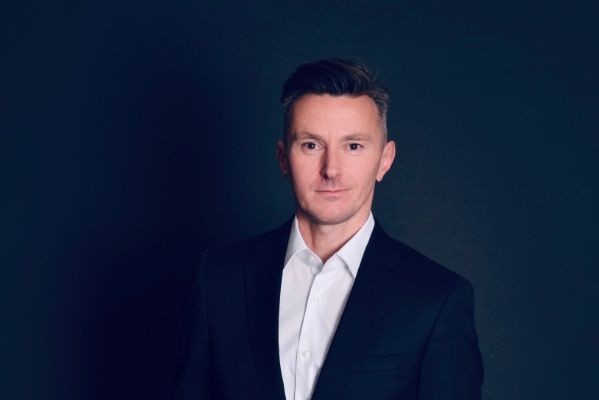
· Radoslav Nedelchev
Think not only about your next role, but also about the one that will come after it!
Introduce yourself in a few sentences…
My name is Radoslav Nedelchev and for over 25 years I have been learning to
listen actively every day! I started professionally – first as a radio host, and
now in the role of Chief Client Director for Central Europe at dentsu, building partnerships based on
trust and humanity, capturing the emotions behind the words.
What did you dream of becoming in your childhood?
I probably dreamed of doing only interesting
things, because that’s what I still do. At 15, I started with radio as a hobby,
which completely captivated me. After three years, I already had my first employment contract as
a radio host. Over time, I took on managerial responsibilities, probably because I have
shown the necessary qualities that help me dream even today - to develop and motivate the people around me.
At what age did you earn your first
money? Tell us an interesting story?
I was thirteen or fourteen years old, during the
summer vacation I helped my grandparents, who had a small shop-café,
where I sold ice cream. The sweetest job, literally! And in the end, I also received a reward
for it – it was a pleasant summer. A little later, I started hosting a radio show
once a week, which gave me the confidence to communicate freely, work with
different people, and develop creatively. The money was just an addition, not a main
incentive.
What are the main factors and examples
that shape us as individuals at an early age and form our interests?
What is your recipe for curiosity, sources of information and
inspiration at this stage of our human development?
I grew up in the 90s – a very romantic period,
full of constant changes and exciting things. Every day something
different happened: I discovered a new magazine, listened to a new song, or watched a foreign
TV show. The environment around me was stimulating for all kinds of new
experiences and constantly gave me opportunities to discover new things. When
it became a daily routine to use the internet, my life accelerated - endless access
to ideas, information, and communication opportunities.
Did any significant difference occur
in your perceptions in a more mature age regarding what motivates you to do or
not do something?
I don’t think so! Over the years, my passion for what excites me
has not only not faded, but has grown more than ever. My desire
to develop myself is my greatest motivation – knowing that every new day
begins with a better version of myself.
Whose decision was it where to pursue
higher education and what to study? Was that decision correct, looking back
today?
Entirely mine, driven by my desire for
independence and the ambition to study what was interesting to me at that moment.
I graduated with a bachelor's degree in “Public Administration” and a master's degree in
“Business with International Management and Marketing”. Both fields have given me
knowledge and skills that I use daily.
Share more about your interests,
knowledge, skills, and hobbies?
My superpower is strategic thinking! I may have developed it
thanks to my curiosity, colorful cultural experiences, and
the ability to build meaningful connections with people by listening, observing, reading,
writing on various topics, and often traveling for work to get to know
new cultures and stories. CliftonStrengths helped me discover that some of my strongest
traits are that of a Gatherer, which constantly drives me to pursue new knowledge and
resources; Achiever, which motivates me for constant progress; Activator, which
turns ideas into action; Ideation, which finds innovative solutions; and
Reflective, which adds depth and meaning to conversations. I believe I am
a prime example of how the power of curiosity and the constant pursuit of knowledge
can turn any challenge into an opportunity.
Would you change your profession today and
which fields of activity capture your interest?
My profession is universal – to connect people, to
build trust, and to always be adequately prepared for the opportunities that
lie ahead. When I encounter new situations, I rely on my ability to
manage them effectively and rationally. I strive to pass on what I have learned –
to the environment, the industry, and through personal contacts. I believe that contributing to
the development and improvement of the environment is our responsibility, which everyone
should take on.
They say that personal branding is everything
that people say about you when you are not in the same room with them. What would you
like to hear today?
I strive to be a person with clear beliefs and opinions, who
inspires with their actions and is sincere with themselves and others.
Emotional intelligence,
adaptability, and flexibility, as well as our soft skills, are key conditions for
success in recent years. How do you cope with the daily
challenges of life to stay in good shape and mood?
I found that my brightest ideas and strongest energy are
in the morning, when the day is just unfolding. This gives me the charge and optimism to look
at problems as opportunities. I use the afternoons for meetings, conversations, and
moments of awareness that smoothly lead me into the evening. Then I try to
exercise to recharge my mind and stimulate my body. It’s important for everyone to find
their rhythm and organize tasks according to their own energy, rather than being
guided by habit.
What are the most important conclusions you
have drawn so far about maintaining proper communication considering the different
characters of the people you meet daily
– colleagues, friends, close ones?
Communication is an area where there is always something to learn
and develop. Recently, I read Charles Duhigg's book “Supercommunicators”,
which discusses three main types of conversations: Practical, Emotional, and
Social. The practical conversation focuses on tasks and problem-solving, the emotional conversation involves sharing feelings and seeking
empathy, while the social conversation explores common and different identities and
experiences with the aim of building a connection. The most important thing is to recognize
at the beginning what kind of conversation we are dealing with, in order to choose the most
appropriate approach and express ourselves in the clearest way.
What do you think about money? What is their
influence on your life? What is your advice to people who often ask
themselves questions related to money and how sufficient they are?
Money gives freedom. True value comes from
meaningful experiences and the satisfaction of what has been achieved. I follow
my interests and dreams, not the money.
What is the most valuable career advice
that you would give to people?
I will share three main pieces of advice. First – know yourself well
and your abilities. Second – you are the best HR of your own
career, so don’t rely on someone else to know better than you what you need – that is your
responsibility. Third – think not only about your next role,
but also about the one that will come after it. This will help you plan your skills
and development more clearly. And most importantly – follow your passion and surround
yourself with people who inspire and support you. Don’t be afraid to part with
those who hold you back.
#Radoslav_Nedelchev #Marketing_and_Advertising #Communications