Wisdom in Money: Why the Amount of Funds is Not Enough if Conscious Management and Balance are Lacking?
· Galia Mancheva
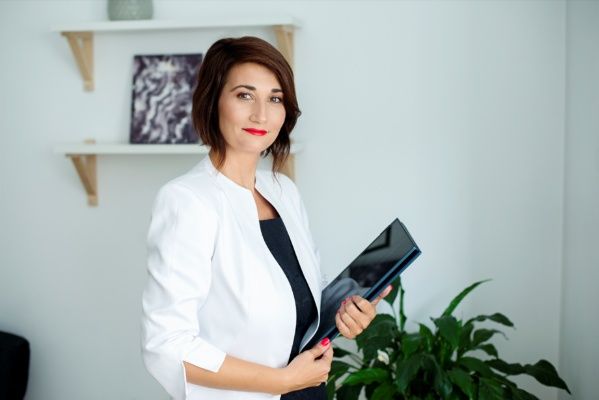
True financial freedom is born from the ability to manage our resources and maintain harmony between giving and receiving!
Introduce
yourself in a few sentences!
I
am an economist and a doctor of political science with many years of experience in
risk management, technology, and finance. I have worked on projects for capital
adequacy and banking provisions in several countries, which has given me a broad
international perspective and in-depth expertise.
My
passions are children, entrepreneurship, and science – areas where I invest my
heart, meaning, and inspiration. At this stage, my focus is on entrepreneurial
initiatives related to these passions. I am developing a company that
helps businesses adapt to European regulations for artificial
intelligence, as well as a training and mentoring brand that helps busy women with
children manage their time, energy, and personal finances in a fulfilling way
through an authorial system.
At the same time,
I am a founder and executive director of a foundation that works to raise
public awareness about a holistic approach to children's health.
What did you dream of becoming in
your childhood?
I
don't have a clear memory from my earliest years of a specific dream, but around the fifth grade, I started to envision my future as a businesswoman. I would place the home phone on my desk, conduct "business
calls" and "sign contracts" – for me, these were the first games in which I
trained my ambition, organizational skills, and interest in management.
At
what age did you earn your first money? Share an interesting story with us?
I earned my first money as an excellent student
in school, and later in university in the form of a scholarship. This was
real income, earned through personal effort, perseverance, and dedication to knowledge.
This experience taught me that hard work and the pursuit of development are always
rewarded. I am a person with intellectual interests, and for me, knowledge always
comes before finances – it is the foundation upon which sustainable success is built.
What are
the main factors and examples that shape us as individuals at an earlier age
and form our interests? What is your recipe for curiosity, sources
and wells of information and inspiration at this stage of our human development?
First and foremost – my family. From my parents,
I learned to live consciously, to appreciate the joy of life, and to follow its spiritual
principles. They gave me the stable foundation upon which I built myself.
The second key factor is education – my
teachers and instructors, who helped me shape myself as a cosmopolitan
individual, thinking critically and globally.
Third – my spiritual quests and my interest in
conscious and fulfilling living.
And not least – my work with people from
different nationalities. International experience gave me confidence, a higher
professional self-esteem, and a deep understanding of the value of cultural
diversity.
Has there
been any significant change in your perceptions in more mature age about
what motivates you to do or not do something?
Over
the years, I realized that my motivation has changed significantly. In my younger
age, it was mainly related to achievements – to the desire to prove myself.
Today, in more mature age, my motivation comes from other, deeper places – from
the meaning of what I do, from the opportunity to be useful, to create
value, and to inspire others.
I am no longer driven so much by the need to
compete, but by the desire to contribute and leave a mark. I believe that maturity brings with it a quieter, but much
stronger sense of inner motivation – the one that comes from conscious choice
and awareness of one's mission.
Today,
my decisions are not guided by external expectations, but by inner clarity. And
this, in my opinion, is the greatest transformation that occurs with
the years – to do things not because you "have to," but because they fill you with
meaning.
Whose
decision was it where to pursue higher education and what to study? Was this
decision correct, viewed from today's perspective?
The choice of higher education was entirely
mine – dictated by my deep interest in economics and business management.
Today, with gratitude and satisfaction, I can say that this decision was one
of the most important and correct in my life.
From the very beginning, I fully dedicated myself to
the academic process – I was a regular student, attended all lectures and
exercises, and strived to extract the maximum from the knowledge that
the educational system and my teachers offered me. This was a time of active
learning, inspiration, and awareness of the power of knowledge.
One of my majors was related to
business and entrepreneurship – an area that today is at the core of
my professional path. The knowledge I gained then became an extremely
valuable resource for the development of my own projects and initiatives.
Today, looking back, I see how much
higher education has given me – not only in terms of knowledge but also in terms of discipline,
analytical thinking, and self-confidence. I apply it every day in my life and
work, and the feeling of gratitude for that time and the people who
trained me remains unchanged.
Share
more about your interests, knowledge, skills, and hobbies?
I believe that a person should keep their
interest in the world alive and find time for things that bring them joy and recharge them. For
me, hobbies are not just free time – they are a way of life. They help me
maintain the balance between a busy daily routine and my inner peace and keep
my yin-yang balance. They are my “yin” when my daily life is “yang.” When I have
more stressful periods, I even add new hobbies – this way my mind rests, and
I feel calmer and inspired.
I love sports and movement – they give me
energy and freedom. Among my favorite activities are skiing, swimming,
tennis, cycling, and boating in the summer. Sports teach me discipline and help me
think more clearly.
I also love to read. Most often, I reach
for books on spiritual development, modern business, leadership, and energy
psychology. They inspire me and help me grow both professionally
and personally.
One of my first hobbies was
videography. I loved to film my children and turn those moments into
short films filled with memories and emotions. Now I have less time for that, but I still
film – most often for professional and social causes.
Gardening and floristry are part of
my hobbies. Over time, my interest gradually shifted from floristry to
the care of the garden as a whole.
In addition, I really enjoy
experimenting with different international cuisines – for me, cooking is a way to
combine my passion for the new and the desire to create.
For me, hobbies are not just a way to
rest – they are a source of inspiration and joy that keeps me alive and
connected to what I love.
Would you
change your profession today and which areas of activity capture your interest?
In a professional and expert sense, for more
than ten years I have been developing in the field of financial technologies. I worked both
in Bulgaria and abroad – in Serbia, France, and Albania. My main
expertise was related to the application of European standards and regulations for
capital adequacy and banking provisions – an area that requires a high degree
of analytical thinking, responsibility, and strategic vision.
After 2017, I directed my attention and
energy towards entrepreneurship, combining the three areas that have always
inspired me – children, science, and business.
Today, I am the creator and leader of
several projects that reflect this mission of mine.
Thus, my professional path gradually became a mission – to combine the scientific, human, and entrepreneurial spirit
in projects that have a real impact and contribute to a more conscious and healthy
society.
They say
that the personal brand is everything that people say about you when you are not in
the same room with them. What would you like to hear today?
I would like my name to be synonymous with
high professionalism, ethics, and morality. For me, true leadership is expressed
through personal example and inspiration – not through authority or position, but through the way
you live, work, and support others.
I often receive feedback that I
exude charisma and strength that motivate and inspire the people around me. This
recognition is invaluable to me because it shows that my efforts to be an inspiring
leader and a positive example have a real effect on those around me.
I believe that this approach – a combination
of professionalism, morality, and personal charisma – is the key to sustainable success and
real change, both in professional and personal life.
Emotional
intelligence, adaptability, and flexibility, as well as our soft skills, are
key conditions for success in recent years. How do you cope with
the daily challenges of life to stay in good shape and
mood?
In today's dynamic world, emotional
intelligence, adaptability, and soft skills are crucial for success
and resilience. For me, daily challenges are not just obstacles, but
opportunities for growth and self-awareness.
I strive to maintain good shape and
mood through a balanced approach to my physical mental, and spiritual health. Sports,
like skiing, swimming, tennis, or cycling, help me clear my mind and
recharge my energy. I also practice mindfulness and organized time management,
which allows me to pay attention to both my professional
commitments and my personal interests and family.
For me, it is important to maintain my flexibility and
adaptability, to learn from every experience, and to approach difficulties with
a positive attitude. This not only keeps my mood good but also gives me
strength to be an effective leader and inspiration for the people around me.
What
are the most important conclusions you have drawn so far about maintaining the right
communication considering the different characters of the people you meet
every day – colleagues, friends, close ones?
One of the most valuable things I have
learned over the years is that successful communication requires consideration of
the individual characters and needs of the people around us – colleagues, friends,
close ones. Every person is unique, with a different way of thinking, motivation, and style
of interaction.
For me, the foundation of successful communication
is careful and active listening, which shows respect and understanding. I adapt
my approach according to the character and perceptions of others, striving to find
the right tone and way of communication. Empathy and emotional intelligence allow me
to build trust and openness, while clarity and directness in
expressing expectations and goals minimize misunderstandings and
tension.
Through this approach, I manage to maintain
productive professional relationships and close, meaningful personal relationships. For me,
communication is not just a means of exchanging information, but a tool for
creating trust, inspiration, and collaboration.
What
do you think about money? What is their influence on your life? What is your
advice to people who often ask themselves questions related to money and how
sufficient they are?
For me, money is not an end in itself,
but a tool – a means to realize ideas, projects, and personal goals. They give
freedom to choose, to create value, and to support those causes and people
that are important to us. Their influence on my life is precisely this – they allow
me to realize my professional and entrepreneurial initiatives, to
invest in the education and development of my children and myself, and to support
social causes.
My advice to people who often worry
about whether they have "enough" money is to change their focus. Instead of asking
"How much is enough?", it is better to ask "How can I use
what I have to create value for myself and for others?" Financial
security comes not only from the amount of funds but from the ability to manage
our resources consciously, to invest wisely, and to maintain balance between giving
and receiving.
Money is a tool for the freedom to
live consciously and fully, and true wealth is the ability to use them in
harmony with our personal values and goals.
What is the
most valuable career advice you would give to people?
The most valuable career advice I would give to
people is to follow their true interests and passions, to dedicate themselves to what
inspires them, and to build their professional path through perseverance,
diligence, and honesty. True success comes when the combination of knowledge,
skills, and dedication aligns with a person's mission and values.