Doctor of the Year 2025: Character Saves Lives
· Prof. Dr. Nikolay Gabrovski
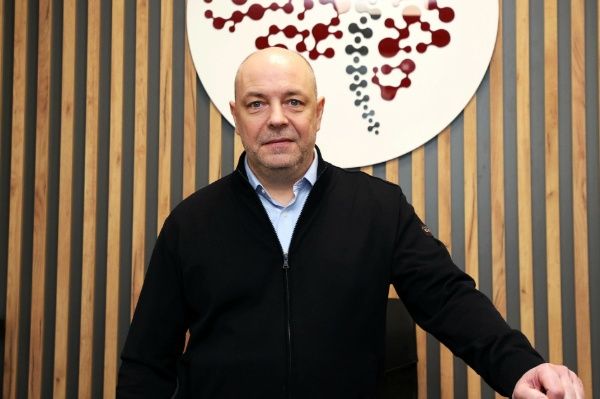
The path that does not seek applause!
Introduce yourself in a few
sentences..
Doctor. Neurosurgeon. That’s what I have done my entire conscious life. This is my main occupation. Of course, I have had accompanying activities along the way, but the leading thread in my life has always been professional - neurosurgery.
What did you dream of becoming in your childhood?
You will probably be surprised, but at first, I had no
idea what I wanted to become — I certainly only knew that I did not want to be
a doctor. I saw the example of my father, who is also a neurosurgeon: continuous
shifts, sleepless nights, huge responsibility, always available and engaged
with patients, and in those years — with quite weak financial independence.
I was convinced that I did not want this to be my fate.
But around the age of 17, this changed spontaneously — a moment of internal maturation — and I completely changed my perspective, deciding that I had to become a neurosurgeon. From then on, I had no doubts — the decision was made then, and I simply followed my path.
At what age did you earn your first money? Tell us an interesting story?
I have always had a desire to be independent and in some way self-sufficient. I have been working from a very young age. With the permission of my parents, I started my first job at around 14 years old — in a library, where I stamped books, carried letters, and distributed books and documents. One, of course, not very heavy, but still interesting work for my age.
Throughout my life, I have worked at least in two places simultaneously. I have also realized my own ideas and projects related to various online initiatives in the field of medicine and healthcare. For example – I am the founder and creator of the health website Puls.bg. For years, this was the most visited health online media. I believe that work is an extremely important part of our development — we learn a lot from it, and it gives us a lot. That’s why I started early and have always believed that it should be this way.
What are the main factors and examples that shape us as individuals at an early age and form our interests? What is your recipe for curiosity, sources, and wells of information and inspiration at this stage of our human development?
Each of us carries the traits of our character. As Heraclitus says: character is destiny. And this guides us throughout our lives. But character is invariably shaped by external factors. Undoubtedly, the influence of family is the strongest. Consciously or not, in our early years, we absorb behavior models against which we may later rebel, but ultimately we gradually return to the path we have adopted as an example.
This is the framework in which character is built. Otherwise, it is tempered in battles — not only with successes but also with failures. There needs to be a balance between the two because constant successes can intoxicate and mislead, while constant failures can discourage.
Has there been any significant change in your perceptions in more mature age about what motivates you to do or not do something?
Of course, when a person is younger, they naturally want to prove themselves, to stand out. Unfortunately, in most professions — and in neurosurgery especially — this is practically impossible in the early years.
This inevitably creates anxiety and tension that a person must learn to control, channel, and turn into a stimulus for their own development. In this regard, my views have not changed — I am guided by something my father often said: “Son, improve yourself, learn, work. Things will fall into place.” He turned out to be right.
So I have always adhered to this motto. And I believe that it is correct — now, from a different position and at another stage of life, I would repeat it myself. Ultimately, the efforts, the battles we win, and the constant striving for development are what shape us as individuals.
Whose decision was it where to pursue higher education and what to study? Was this decision correct, looking back today?
Fortunately, I have always been extremely independent in my choices. My parents have always encouraged me to take responsibility and to make my own decisions. Of course, they helped as much as they could, but the choice of what and where to study was entirely mine. Today, more than 30 years later, I can categorically say that this decision was correct. Whether there could be other life hypotheses is a separate question, but I am satisfied with the choice I made so far.
Share more about your interests, knowledge, skills, and hobbies?
Neurosurgery, as well as medicine in general, consumes an individual immensely. Not only is there not much time left for other activities, but the mind is often primarily focused on patients and the problems that need to be resolved.
In general, I try to be more active and regular in sports. In fact, I have been doing it almost my entire life. Time does not always suffice, but I believe that this is a very important way to recover - not only physically but also psychologically. I like cinema as an art and the freedom that nature provides.
Would you change your profession today and which fields of activity capture your interest?
I would not. There are certainly other interesting paths and
life hypotheses, but neurosurgery has given me a lot.
They say that personal branding is everything that people say about you when you are not in the same room with them. What would you like to hear today?
I would again link it mainly to the professional sphere. I hope the assessment of me as a good professional will be the leading thing that people mention, even in my absence.
For us, surgeons, this is somewhat easier, because our results are visible. Ultimately, if the patients are well, it means you have done your job. So I would be glad if the words about me were in this direction.
Emotional intelligence, adaptability, and flexibility, as well as our soft skills are key conditions for success in recent years. How do you cope with daily life challenges to stay in good shape and mood?
This is a big challenge because we doctors work with people who are sick, suffering, and tense. This can lead to serious communication difficulties and carries the risk of conflicts. A sad fact is that emotional stress in patients sometimes turns into physical violence against doctors.
On the other hand, doctors are also tired and do not always manage to control their emotions in such a way as to handle similar moments of stress. Unfortunately, in recent years, our work has become even more tense, as the expectations of patients — as well as sometimes negative societal attitudes — adversely affect this communication.
But ultimately, the most important thing in the healing process is trust. And everything that undermines good communication between doctor and patient, everything that destroys that trust, has a negative effect on the healing process.
What are the most important conclusions you have made so far about maintaining proper communication considering the different characters of the people you meet daily – colleagues, friends, close ones?
The most important thing is that we, doctors, unfortunately do not have the right to give free rein to either our emotions or our thoughts. Regardless of the situation, we must behave professionally and adhere to common standards and norms so that the patient feels safe, calm, and protected.
Of course, sometimes this is difficult or even impossible, but the aspiration is always the same — to show understanding towards people, towards their problems and the emotions that dominate them. As professionals, we realize that patients are often under the influence of strong, even uncontrollable emotions and do not always manage to control themselves. And that their actions or even anger are not directed personally at us, but stem from their suffering and illness.
What do you think about money? What is their influence on your life? What is your advice to people who often ask themselves questions related to money and how sufficient they are?
They say that money is the second most important thing in the world. A person chooses for themselves what is first.
Of course, this is an individual choice, but we live in a material world where money determines a large part of our daily lives — how we feel, how we rest, how we organize our lives. It is misleading to think that money solves all problems. I am convinced that this is not the case, but their absence leads to potential dependency.
And in this regard, I would say that for me, money is first and foremost a tool for more freedom.
What is the most valuable career advice you would give to people?
It will probably sound endlessly boring, but achieving high professional success invariably requires perseverance and hard work. The modern world often creates the illusion that everything can be achieved quickly and easily.
The digital world creates the feeling of possible quick wealth. There may be such options. But I am convinced that medium- and long-term success is guaranteed only by constant efforts for self-improvement and perseverance along the professional path.
Business Card:
Corresponding Member Prof. Dr.
Nikolay Gabrovski is the head of the Clinic of Neurosurgery and Deputy Director
for Medical Activities at UMHATSM “N. I. Pirogov”.
He has headed the Bulgarian Society of Neurosurgery from 2018 until October 2025. In 2022, he was elected as the first leader of the Working Group on Emerging Technologies and Innovations of the European Association of Neurosurgical Societies (EANS), and in 2025 he was also elected as a member of its Executive Committee and financial officer (treasurer) of the organization.
His scientific work is focused on spinal and robotic neurosurgery, as well as minimally invasive techniques. Under his leadership, the Clinic at “Pirogov” has become a reference center for robotic spinal surgery and a training base for neurosurgeons from all over Europe.
Since September 2024, Prof. Nikolay Gabrovski is also the chairman of the “Council for Brain Health” Foundation, through which he dedicates his efforts to the public cause for better quality of life for people with brain diseases.
Corresponding Member Prof. Dr. Nikolay Gabrovski is the recipient of the prestigious award of the Bulgarian Medical Union “Doctor of the Year 2025”.