How a vacation leads to a life and career decision in the Netherlands?
· Venelin Dobrev
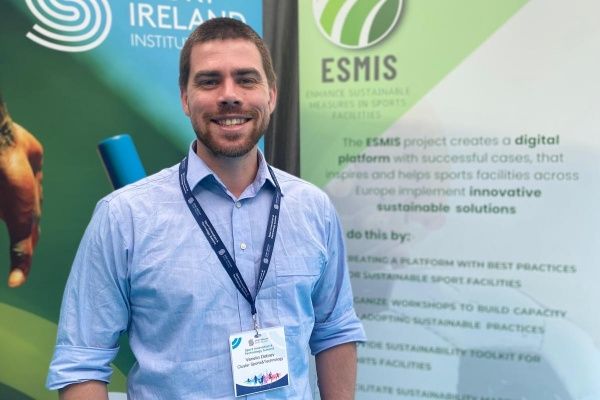
I would not sacrifice my health (physical and mental) in pursuit of big profits!
Introduce yourself
in a few sentences. What does your work as daily
commitments consist of?
My name is Venelin
Dobrev, I am 34 years old and I am a consultant in two main areas – project
management (project manager) and communication management (communication manager).
I have been working
in the field of publicly funded projects for 11 years. I started with small
municipal projects with a budget of a few thousand euros, reaching today when I
manage projects with budgets of around 7-9 million euros each. I am an external
expert, hired by organizations that need expert support for their EU-funded
projects (and not only).
I work on quite a few
various projects, but at the moment there are two main ones worth mentioning as
interesting – I3-INSHAPE (https://www.i3-inshape.eu/the-project/)
and Digit-Pre (https://www.digit-pre.eu/). The main goal
of the projects is to help companies in the regions that are part of each project
to find a partner in another country and work together on an innovative product
or service in the field of sports and active lifestyle (I3-INSHAPE) or in
the field of healthcare (Digit-Pre).
My work is
related to the following areas:
-
Selection
of companies to be part of the two projects and finding suitable
partners for them. Literally like Tinder for small and
medium enterprises. : )
-
Connecting
companies with suitable mentors within the project, who can help them develop
their prototype into a real product offered to clients.
-
Coordinating
everything that companies need for this within the project (around 2
years) – training, suitable services, access to events, investors, experts.
I also ensure that the mentors have the necessary support to do their
job well and I monitor whether service providers encounter any problems with
the companies.
I am responsible for
all the innovation infrastructure that helps companies bring their
innovative products and services to market.
I also work on other
things for other clients, but it would take us all day to talk about that, and I
don't want to bore the readers :)
In which country
and city do you currently live and how did you end up there?
I live in
the Netherlands, in the southern part of the country in the city of Breda. My
wife and I came on vacation in the spring of 2022 and we liked it. We were
visiting a friendly family. There were a few more visits before we made
the final decision to move. For us, this is still an experiment – maybe
later we will move to another country, while never excluding
the option of returning to Bulgaria.
What were
the biggest challenges you faced at the beginning of your stay?
The first year
was definitely the hardest. I would say something clichéd, but the weather was
one of the main things we had to get used to here. Of course, finding a
suitable job and building a social environment are also things that
one goes through when moving to a new place.
How
did you overcome the language barrier (if there was one)?
In the Netherlands,
almost everyone speaks English, but there is an invisible barrier you cross
when you speak the local language. Mastering Dutch is not that important for
cities like Amsterdam, Rotterdam, and The Hague, but in the province of North Brabant,
where I am located, it is important for integration and finding new
opportunities. We learned the language ourselves, and after about a year we started a course that is
sponsored by the municipality and is for foreigners (with no additional requirements).
This helps a lot. Our daily contacts with our Dutch colleagues and
friends also help us to master the language better.
What resources
or networks (local communities, colleagues, organizations) helped you adapt?
We were lucky and
fortunate to have the support of a friendly family, which initially helped us
find housing and guided us on what actions we needed to take to register and
settle in without problems. This helped immensely. After that, we met other people who
shared experiences, opportunities, and helped us in our adaptation. It is worth highlighting
the efforts of two communities that help many Bulgarians in the country – the community
around the Bulgarian school in Amsterdam: https://www.bgschoolamsterdam.nl/,
as well as the Bulgarian hub in Eindhoven: https://www.bghub-eindhoven.nl/.
We have not directly benefited from their help, but we have attended their events
and I know that they are really great.
What are
the main differences between the work culture in your current country and that in
Bulgaria?
Every person faces
different aspects of life here and would share different impressions. I
personally really like that the Dutch are direct and do not take things
personally. Professional criticism and disagreements end in the office, and after that
there is no problem laughing and having a beer with the person. Again, I emphasize that
this is my personal experience with colleagues and
clients. Other people may not share the same opinion.
What values
and workplace practices impressed you the most?
My work is
different from standard office work and in this sense, the definition of
“colleagues” and “workplace” is not like that of most people. I am impressed
that here projects are implemented not to report activity, but to
achieve real results. I find this extremely motivating, especially in
working with institutions and municipalities that are extremely proactive and open to
new ideas and problem-solving. My experience with Bulgarian institutions in the past
has not always been like this, and this is one of the reasons I do not work on projects
in Bulgaria.
Have there been
situations where cultural differences have hindered you?
I wouldn't say there
has been such a situation, except for minor technical misunderstandings like
setting schedules or other minor organizational things.
How does finding
a job differ in your current country compared to your homeland?
It is hard for me to
say because I work with clients and in this sense, I cannot give a complete and
categorical answer. I certainly know that here a lot relies on the network
that one can build. This is the main advice from every recruitment expert.
Did you have to
go through any additional qualification courses?
Besides the language
course we started, at the moment there has been no need to go through any
additional qualification.
Have you faced
prejudices or obstacles because of your foreign origin?
Certainly many Bulgarians
in the Netherlands have shared stories about this, but my wife and I have never
faced obstacles or prejudices because we are Bulgarians.
I would even say that people are very curious about our country and culture. Even
this week we had a couple over for dinner, for which we made a Bulgarian dinner with
traditional dishes from our homeland. We have given out martenitsi, gifted
terlici, and it is always nice to bring banitsa to clients or colleagues :) We
are open to Dutch culture and in turn, the Dutch around us
are very open to Bulgarian culture. Our friends regularly ask us if we have
problems with integration and if we encounter bad attitudes.
What would you
advise people who want to take a similar step?
I do not encourage
anyone to emigrate, but if you have made a decision, I can share my experience.
I would advise you to find a country that meets what you consider important
factors for a good life. Climate, standard of living, culture. Determine what is
really important for you and your family and start planning carefully.
Gather funds that will allow you to spend at least six months in
the country without having other income, let at least one of you (if you are a couple) find
a job before you move, and make sure you have a place to live with
the option to register your address. Even with all these things in place, it will still
be difficult. And think about your long-term goals. Before we came to the Netherlands,
we also considered Switzerland as a potential destination, but the fact that there
is a requirement for years of residency before you can buy a home discouraged us.
If you could
go back, would you choose the same path?
Maybe we would
have done some things differently, but I think we would again make the same
decision to come here.
What do you
miss most from your homeland in professional and personal terms?
Well, we are with
one foot in Bulgaria. We go back very often (almost every month), and
our families and friends come to visit us regularly. But those are the two
things - our families and close friends.
Have you considered
returning and under what conditions would you do it?
There are no specific
conditions that would send us back to Bulgaria. At this moment, we would return if we
had to take care of one of our loved ones. As I said – we go back extremely
often, and our goal is to work entirely
remotely so that we can spend more time in Bulgaria.
What do you think
about money? What is its influence on your life? What is your advice to
people who often ask themselves questions related to money and how sufficient they are?
Everyone views
money differently, but what I can say for sure is that it is not
important how much you earn, but also how much you spend. For me, a few things are important:
having an emergency fund for at least 3 months (ideally – 6), a budget in which I
track all income and expenses, and clear financial goals. Simple, measurable, and with
a deadline. This way I know that we are financially secure, I track my money, and I know
what I am pursuing. Money is important, but it is certainly not everything. I would not
sacrifice my health (physical and mental) in pursuit of big profits.