The HR manager of the future: human or algorithm?
· Marta Popova
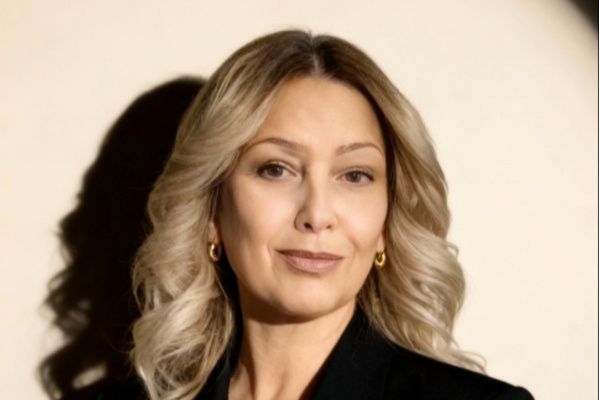
From managing people to managing meaning: HR after 2030!
Would you introduce yourself – what is your professional path to the position of HR manager and which moments define your development as a leader in human resources?
My name is Marta Popova and I have been working in Human Resources since 2006. At first, I didn't even suspect that this endeavor would turn into my passion, calling, and personal driver for self-improvement.
Over the years, I have gone through various roles – from trainer and training manager, through HR business partner, to strategic positions such as HR manager and HR director.. But if I have to be honest, these are just different positions, united by one common mission – to place the individual, the human essence, and its potential at the center of the business.
For me, leadership in Human Resources is expressed in the ability to stand by your principles, balancing daily between the human and business logic. A good HR leader is one who creates an environment where people can unleash and showcase their full potential and capabilities.
First and foremost, a successful HR leader must possess strong empathy, high emotional intelligence, and a deep understanding of the business. However, the most crucial quality is the ability to inspire and influence, based on trust, authenticity, and personal example.
What is the personal philosophy or principle that guides you in working with people – and how does it influence your decisions?
The personal philosophy that guides me in working with people is honesty. This is the principle I stand on in every conversation, every decision, and every difficult situation.
I believe that no matter how complex the case is, I must be able to stand in front of people and tell them the truth – sincerely, respectfully, and in a way that can be heard and accepted. This is not always easy, and not every HR professional chooses this path, especially when it comes to tough decisions.
But for me, honesty builds trust, brings resilience, and creates an environment where people feel secure, even in times of change. Although sometimes employees value it more than leaders do, it always leads to longer-term respect and support.
Therefore, this principle directly influences my decisions, helping me to be consistent, to defend difficult but correct positions, and to maintain authenticity in every professional situation, to be honest with myself.
How has your understanding of the role of HR changed compared to the moment you started, and compared to what is required of you today?
When I started in Human Resources, the role of HR for me was primarily related to training, processes, administrative support, and document flow. The focus was on execution – to provide the right tools, to organize, to coordinate, to respond to the needs of the business. In other words, a service function that has many bosses. Back then, we were trained to be excellent administrators, without exerting undue influence on decisions. Consulting was limited to the legally established norms and rules.
Today, my understanding of the role is fundamentally different. HR is no longer a function “in support” of the business, but its strategic partner. We are expected to anticipate, to influence, to build culture, and to make decisions that have a direct effect on the sustainability and growth of the organization.
Over the years, I have realized that the true role of HR is not just to manage processes, but to manage influence – over trust, over leaders, over people, over transformation. Today, I am expected not only to understand the business but also to challenge it, to ask difficult questions, to defend principles, and to be a moral compass in decisions that concern people.
This development has taught me that HR is not an “office function,” but a key role for an organization to be healthy, engaged, and sustainable. And the more the environment evolves, the more HR becomes a leadership function, a center of trust, culture, and change.
The most challenging part is convincing management that a given idea or project is in the company's interest and will lead to sustainable results, especially when it comes to resources that need to be invested.
How do you see the HR manager of the future – what skills, attitudes, and knowledge will be most valuable in 5–10 years?
The HR manager of the future will be an architect of culture, a strategic visionary, and a trusted advisor to the business – the right hand of every manager, executive director. In the next 5–10 years, the qualities required from people management specialists will far exceed the standard requirements for the role.
Entrepreneurial thinking and a deep understanding of the business will be at the core of the role – skills for working with financial models, knowledge of market dynamics, skills for building business strategy will bring real value to the company and will be highly valued by management.
Technological literacy and data skills, predictive models, people analytics, automation, and AI tools will be key. Simply having “technical literacy” will be grossly insufficient, and one of the most important skills will be the ability to turn data into clear, applicable business decisions.
Influence will be the real power of HR of the future. It will need to persuade, influence leaders, lead difficult conversations, and stand by principles – a true influencer on the ground, whom people follow with trust and admiration.
I expect that much sooner than 5-10 years, change in every organization will be constant and the HR leader must respond quickly, adapt skillfully, and manage uncertainty in a way that provides stability to people. From HR will be expected to be flexible, adaptive, and highly resilient.
I would also add qualities such as highly developed emotional intelligence, a deep understanding of culture and human motivation, high personal and business ethics, and courage.
The HR manager of the future will be a combination of a strategist, psychologist, technological intermediary, and a leader of trust. His role will be not only to ensure processes but the overall experience in the company, supported by meaning and morality.
What trends in people management are already transforming the profession – AI, automation, people analytics, changes in work culture?
The HR profession is undoubtedly being transformed by technologies such as AI, automation, and people analytics, recruitment through AI tools, automated onboarding processes, internal employee chatbots, which is why the change in work culture requires new approaches to flexibility, engagement, and leadership. HR must respond swiftly to these changes, creating a modern and technologically adequate work and development environment.
However, no matter how advanced the technologies become, I believe that the human factor remains and will remain irreplaceable.
HR is not just processes, data, or reports. The role is deeply connected to empathy, understanding people, culture, motivation, and trust. Technologies can facilitate and accelerate routine tasks, provide analyses and forecasts, but they cannot replace the ability to listen, to inspire, to make difficult decisions, and to create meaning for people.
In this context, I believe that the HR profession is becoming more valuable because it frees up time and resources to focus on what is most important – the individual at the center of the business, supported by powerful technological tools.
What do you think distinguishes a truly good HR manager from just a good administrator?
The short answer is their ability to influence without necessarily being in a formally empowered role. People see in them a trusted colleague and at the same time a strong professional who is guided by fairness and has the courage to stand for justice.
A good administrator skillfully manages processes, documents, and rules, while the true HR leader does all of this while adding value that develops and builds over time.
Can you share a real example where an HR intervention changed a team, a person, or a process with a significant effect on the company?
I have a professional focus on developing young leaders, which is why I created an internal leadership program “Lead by Example”, which in 4 modules contains the essence of management and provides specific tools in the hands of young leaders.
In one of the companies, we had a young manager who had very high potential and remarkable sales results, but struggled with managing people and making difficult decisions. His talent and knowledge were evident, but his work with the team often led to conflicts and a decline in engagement.
The HR intervention included individual coaching partnership, regular feedback sessions, and developing a personal development plan focused on leadership skills, communication, and emotional intelligence.
At the same time, I supported this colleague daily with mentorship and coaching in a real environment, convinced that with the right mindset, things would happen. Providing daily constructive feedback, sharing his fears and concerns, trying different management models, resolving conflicts, time management, communication, and understanding the managerial role as a whole yielded remarkable results.
After a few months, we observed a significant change; he blossomed and began to lead the team more confidently, conflicts decreased, and the team's engagement and results improved. Moreover, his personal growth positively influenced his colleagues, creating a culture of open communication and trust. The entire team united around the mission of “young manager,” which in turn gave me an objective assessment of the potential of the entire team.
Sometimes holding someone's hand in their first steps in a new role is perhaps the most important step on the path to success.
With this example, I show that targeted HR intervention at an individual level can unlock unseen potential and have a long-term effect on the team and the business. Currently, the mentioned colleague is one of the highly prominent strategic leaders in Bulgaria.
What are the biggest challenges facing the HR profession today – and how do you personally navigate them?
As an expert on Bulgarian companies, I can categorically state that the biggest challenge is still convincing managers and executive directors to invest in HR, allocating budgets for innovation and people development. There is still a belief that HR is there to do everything “its own and others'” with its own resources, without wasting time in meetings or HR sessions.
The misunderstanding that the values of a company are not just inscriptions on the walls, but are manifested through the behavior and understanding of the owner himself, who as a leader is a role model; the lack of emotional intelligence; the strong ego stemming from the position of power – all of these are my daily challenges.
I tackle them with honesty, the ability to hit the right moment, and by providing feedback, even when it is unacceptable. For me, this is the way to build a culture of trust, to show the true value of people, and to support the sustainable development of the business.
What new work models (hybrid, flexible schedules, projects, internal mobility) do you see as sustainable in the long term?
Of course, everything depends on the type of business, the industry, and the sector of the company. However, if I had to highlight some trends, I would say that the formal understanding of working hours will gradually become a thing of the past. Although this may not be on the agenda for all companies at the moment, with the development of technologies, there will be an increasing emphasis on results rather than the number of hours spent in the office.
In the same way, formal roles of “manager-subordinate” will transform into project roles based on expertise and contribution, and the results will be a consequence of collaborative work and effective communication within the team.
The focus will shift to the culture within the organization, the mental and physical health of people, as well as creating an environment where employees feel valued, motivated, and supported.
I believe it is only a matter of time before employees are viewed as partners in the business, not only in terms of attitude but also in terms of pay models and systems.
What inspires you most in working with people – what are those moments that remind you why you chose this profession?
I am a results-oriented HR professional, and my greatest satisfaction comes when I see how the company achieves higher business results thanks to the synergy with the HR function. Optimizing personnel costs combined with increasing motivation and employee satisfaction is one of the most inspiring achievements for me. Knowing that you are beneficial to the business through people.
Equally motivating is the process of unlocking the full potential of the individual – when people develop their skills, their engagement and contribution grow, and the company benefits sustainably and strategically. To see with your own eyes how a shy new colleague, whom you welcomed on their first day, spreads their wings and conquers heights.
The profession chose me, not I it, so I accept it as my personal mission on the path to self-affirmation.
If you had to give one piece of advice to future HR professionals – what is the most important thing they should know about the profession before choosing it?
I am not much for advice because I believe that every generation must find its own way, given the environment in which it develops.
Many coaching experts, mentors, motivational authors provide ready-made models presented with
powerful messages aimed at people from HR guild. Of course, they are all true, but remember how many times you have banged your head, ignoring your grandmother's advice?
And if I can still guide future colleagues, I would share that being HR is not a profession, but a choice, a cause, and a calling.
If you are not an adventurer, ready to “travel” across all continents and to the Moon as well, it is better to choose something else.
The Power of Career Storytelling - see more!