When life doesn't deal easy cards, the choice remains yours
· Petar Neftelimov
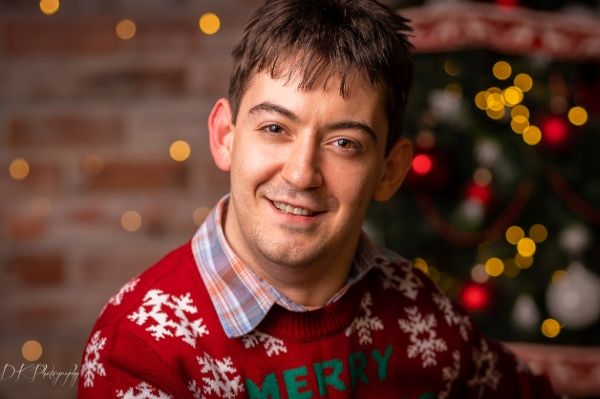
Proof that strength does not come from comfort!
Introduce yourself
– what do you do, which areas of activity are of interest to you?
My name is Petar
Neftelimov and I am a biotechnologist, bio-entrepreneur, and MBA. I am engaged in turning
scientific and innovative ideas into real, working, and sustainable business solutions with
social value.
My main
entrepreneurial focus is the biotechnology startup “Flower in a Test Tube” – a living
plant that blooms in vitro and lives for over 6 months without care and watering. The product
combines science, sustainability, and design and offers an ecological alternative to
cut flower bouquets. We actively work with corporate clients, hotels, offices,
institutions, and people who value conscious consumption.
At the same time,
I am a career consultant at the social enterprise JAMBA, where I work with young
people with disabilities, helping them build professional skills,
confidence, and realization in the labor market.
My interests lie
at the intersection of biotechnology, sustainable development, entrepreneurship,
social innovations, and communications. I believe that the future belongs to solutions
that simultaneously bring economic value, care for nature, and genuinely
improve the quality of life.
I am also the
founder of the media for practical business advice Neftelimov.com, as well as the author of
the book “Success in the Bulgarian Gene”. In my role as a mentor and lecturer, I actively work
with young people who want to turn their ideas into sustainable and meaningful
projects. I am part of the prestigious selections of Forbes Bulgaria “30 under 30” and
Darik Radio “40 under 40”, and in 2023 I was recognized by JCI Bulgaria as one of the
10 most prominent young personalities in Bulgaria.
When did you realize
that you wanted to be an entrepreneur, not just an employee?
I think entrepreneurship
found me, not the other way around. Gradually, step by step, as I followed my interest in
biology and my desire to create something meaningful.
Even in school,
biology was the subject that came most naturally to me. I continued with
biotechnology at Sofia University, where during lectures on
plant biotechnology, I discovered something more than laboratory work. I found an opportunity
for innovation, to create a product that can change attitudes. Thus,
the idea of creating flowers in test tubes was born.
Entrepreneurship
came from the need to realize this idea outside of textbooks and the difficult terms
in English. To make it accessible to people. Science gave me the foundation,
and entrepreneurship – the freedom to dream and act.
Throughout my journey,
regardless of physical challenges and numerous rejections, I have never
stopped believing that this is my path and with perseverance, everything is achievable. And
when you do something with a mission, every obstacle becomes an opportunity.
What were the most defining moments in your professional path so far?
The first key
moment was my admission to PMG “Vasil Drumev”, Veliko Tarnovo, in a class with
intensive study of biology and chemistry. This was the place where I first
realized that science is not just a school subject, but a way to understand the world and to
seek solutions. There, my interest in natural sciences was shaped and the
foundation was laid for everything that followed.
The second defining
moment was graduating with my bachelor's degree in biotechnology from
Sofia University. This not only gave me knowledge and methodology but also
confidence that I could turn scientific processes into real, applicable products.
It was during this training that I saw the potential for science to come out of
the laboratory and reach people.
The third and perhaps
the boldest moment was the launch of “Flower in a Test Tube”. This was the transition
from theory to practice. From idea to a business with a mission, sustainability, and real
impact. The project taught me entrepreneurship the hard way.
And finally,
my entry into the “30 under 30” selection of Forbes Bulgaria was the external
recognition that the path I am on matters not only to me but also to
the environment around me. This was a strong motivation to continue even more consciously and
responsibly forward.
Has there been a turning point that changed your vision of success?
I can't think of one.
How has your role in the business changed over time – from creator to leader?
At first, my role
was entirely that of a creator. The person who carries the idea, thinks about the product,
experiments, learns on the go, and does almost everything alone. At that time, my focus
was on whether it was even possible – whether science could become a
real, sustainable product and whether it made sense to fight for it.
Over time, I realized
that if I wanted the business to grow, I had to stop being the person who does
everything and start being the person who connects people. From someone “inside the
process”, I gradually became someone “above the process”. The one who sets
the direction, vision, and meaning.
Today I am
the face of the company, but also the connecting link between science, design, marketing,
and business. My responsibility is to keep the focus on the big picture – why
we exist, what problem we are solving, and where we are heading. I seek trust and
synchronization among the people around me.
For me,
leadership is not power, but the responsibility to create an environment where everyone knows
why they are there, what their contribution is, and has the freedom to give their best.
Where do your ideas come from – intuition, market, need?
I just wake
up in the morning and the idea is there – in my mind.
How do you understand
when an idea has value and potential, and not just sounds good?
When I
implement it in practice. I don’t think, I don’t plan, I just act. It happens as it should.
How do you approach
the creative process – do you have rituals, methods, or do you rely on “the moment”?
It starts here and
now. Tomorrow is already too late. Everything else comes from the external environment, over which
I have no control.
What inspires you
beyond business – art, people, travel?
The smiles on
the faces of people. That what I do is useful for someone and helps them to be
more satisfied in their life.
What are your
unchanging principles in work and life?
One principle that I refuse to a betray is
honesty. Even when it is uncomfortable. I am honest with colleagues, friends, family, and
even with the young people I mentor, because the truth builds lasting trust.
Sometimes the truth can hurt, but people know that I will never mislead them and
that’s why they come back to me for advice and guidance. This approach shaped
my leadership style, creating strong, trusted relationships with both colleagues
and partners.
What does the word “success” mean to you today – and is it different from five years ago?
For me, the word
“success” has many and different dimensions. For a long time, I perceived success mainly
through the business prism, namely that a successful business is one that at some point
starts to operate without you. Success was also the moment when more people began to
recognize and greet me than I myself know. When
strangers stop you and say “I know you”. This is a sign that you have left
an imprint, that you have created something meaningful, with which people associate you and remember.
Recently, however,
I added another, very important dimension to this understanding. For me, success is
proportional to how far you can go without feeling internal
discomfort from your actions and decisions. Each of us has personal boundaries –
moral, ethical, human. They outline our comfort zone, which is familiar,
safe, and comfortable. Often we do not take certain steps not because we cannot, but
because our inner voice or the fear of “what will people say” stops us.
The truth is that
these barriers exist mainly in our own heads. The more of them we consciously
cross, the longer path we travel, we accumulate experience and grow
– both as professionals and as individuals. It is this sense of development that
makes me feel more successful today than yesterday.
At the same time,
I believe that these boundaries also have a protective function. They keep us firmly grounded.
Crossing them should happen with time, experience, and internal readiness.
If we start to leap over them in a sprint, intoxicated by success, we risk entering a completely different reality, where the path is only downward. It is no coincidence
that people say that a person achieves according to how far their carpet reaches.
Today for me,
success is a balance between growth and awareness, between ambition and inner peace.
What place does ethics occupy in entrepreneurship according to you?
For me, ethics in
entrepreneurship is a direct continuation of the topic of personal boundaries, which I
mentioned above. In nature, there is no ethics. There is balance, adaptation, and
survival. Ethics is a human construct. It is a set of rules and frameworks that
we have created to live more orderly and comfortably in our own comfort zone. The problem arises when these frameworks begin to be used not for
balance, but for convenience, control, and limitation.
Very often, under
the guise of “ethical”, we actually limit our own potential or
the potential of other people. We limit some to benefit others.
This is not ethics for me, but a distortion of its meaning. In this context, ethics
often becomes a tool for maintaining the status quo, rather than for development.
Therefore, I perceive
ethics more as something opposite to soulless adherence to rules. For
me, it has nothing to do with the prohibition of helping, supporting, or giving a chance
to someone, just because “it is not accepted” or because certain indicators, data,
or formal criteria exclude them. When we refuse help or opportunity to
a person, citing abstract norms, we actually take away their chance for
development.
True ethics
is related to responsibility and mutual assistance. With the ability to see the person behind
the numbers, the meaning behind profit, and the long-term effect behind short-term gain.
Everything else are frameworks that often serve us more to hide behind them,
than to create value.
Do you believe in
the balance between personal and professional life or do you accept that it is an illusion?
Yes, I strongly believe
in balance. I even believe that personal life should take precedence over professional.
I often hear people
say that they “have no time for anything other than work”. For me, this is not a matter
of time, but of choice. When a person truly wants something, they find a way to do it.
Many people are just used to living in their comfort zone, namely working, having someone tell them what to do (managers, clients,
systems), and not stepping out of that model. Thus, life passes by without being
truly lived.
Work will not
run away. On the contrary, it will always increase. This is not life. We are not born
for this. Life is about being with our family, with loved ones and friends.
To attend events, to meet new people, to have fun, to discover new
places, to travel, to experience unfamiliar things. To accumulate positive
emotions, experiences, and memories.
Because there will come
a moment when we will want to do all of this, but for one reason or another
we will not be able to. That’s why I believe that the best investment a person can
make is the investment in experiences. They stay with us forever. They cannot be
taken away, lost, or devalued.
What is the most valuable lesson you have learned “the hard way”?
That we are not going anywhere alone and cannot do anything. Meaning, up to a certain point, a person can reach
alone. But after that point, it is impossible. I personally have tried to do things completely alone
and the results were far from what could have happened if I had found
the right people earlier. The truth is, no matter how much you want, you cannot shine
everywhere, and it is not necessary.
Over time,
I realized that strength is not in being able to do everything, but in knowing the right
people and having the courage to trust them. People who complement your weaknesses,
extend your perspective, and pull you forward.
As I like to
say, we are only alone in the bathroom. Outside of it, at every moment, we need
support. Someone next to us. A buddy with whom to lift mountains of actions.
How do you motivate
yourself in moments of doubt or failure?
I always remind myself that before me there are only 2 choices:
1. One
is to stand in the corner. To look at one point, to feel sorry for myself, to seek
excuses and let doubts paralyze me even more. This is the easiest choice, but also the most meaningless. There, nothing happens. There is no
movement, no development, no life.
2. The
other choice is to be in the center among people, among action, among reality. To
accept that doubt and failure are part of the journey, not a final stop. To
action, even when I am not completely sure. To take the next small step,
because movement always brings clarity.
I always choose
the second. Not because it is easier, but because it is the only way for things to
change. Doubts disappear not when you analyze them endlessly, but when you
start to act despite them. Failures are not a sign to stop, but feedback that you are alive, that you are trying, and that you are moving forward.
What legacy do you want to leave behind - as an entrepreneur, but also as a person?
To be
proof that limitations do not define our destiny. That a person can be
whole, useful, and happy, even when life has not dealt them “easy cards”.
If through my path someone else believes more in themselves, takes the first step,
comes out of the corner, and stands in the center of their own life – then I have done
my job.