How to build companies ready for audit, growth, and change?
· Boyka Terekieva - Humanity in Business Solutions
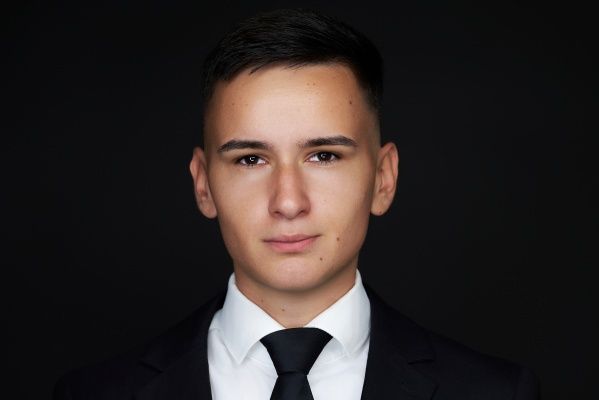
Before scaling, successful companies need good management!
How would you introduce yourself in a few sentences to people,
who are just getting to know you and Humanity in Business Solutions?
For myself, I would
say that I am a multidisciplinary expert with over a decade of experience in
operational roles, as my curiosity and desire to improve companies and
processes naturally led me to my own path. HIBS is a product of dozens of trainings, thousands of hours
working with clients, and the results we have delivered for companies. The company offers
consulting and implementation of GRC (Governance, Risk and Compliance) architectures, operational models, and
assurance (audit and assurance) for scaling technology companies, with our vision being that every company should be supported by a sustainable
operational model and processes. We would say that we democratize enterprise
standards for companies that are just embarking on the path of larger deals and
begin to operate in a field where supplier requirements are no longer limited
to expertise or product, but to trust and certification of the supplier
as sustainable and ready to meet greater demands of itself. Of course,
we also work with a wide network of experts in fields where our expertise could
be complemented more closely.
What made you create a company that does not
consult, but designs and builds management and operational architectures?
Over the years, we have
faced various challenges through our work with small and medium-sized
enterprises. We found that scaling companies often rely on
certain models that have taken them from 0 to 1. Our job, however, is to
create the infrastructure that takes companies from 1 to 100. Quite often,
this goes through the path of risk management, refactoring internal
operational debt, accreditation to various standards to enhance client trust,
as well as increasing the internal maturity of business functions to
ensure the resilience that the market demands from a business today.
Consulting is the first step, but it does not take responsibility for the final result
of the audit. Through implementation, we share the risk and responsibility and gain
our clients' trust in the long term.
What gap in the business environment did you see that required
such an approach?
The gap we
saw is in the field of the multidisciplinary approach to the operational processes of
companies – we often encounter fragmented services that offer
solutions in a specific area, but not a holistic approach that anticipates
the overall impact of a function – whether it is finance, information
security, or internal processes on the business. Here we offer superior
service as multidisciplinary and independent experts capable of seeing the whole and
providing solutions that contribute to the business as a whole, not in isolation.
What does “governance architecture” mean to you and why
do you think it becomes critically important as organizational
complexity increases?
Governance
architecture is a systematic approach that proves indispensable in times of
expansion, which inevitably brings with it an increase in organizational
complexity. We understand this discipline as a field that simplifies, systematizes, and
optimizes fragmentation, the informal know-how of a company, and prepares
the company for the next step in its growth. We often see companies
fighting complexity with additional complexity – additional implementation of
systems or applications that should systematize processes. Thus,
we get an end result that not only does not solve the so-called growing
pains, but further burdens
the administrative burden. Our philosophy is simple – simplification before
optimization is the key to sustainability. Clearly defined processes, matrices for
solutions and responsibilities within the company reflect on the final product,
and clients and employees feel this.
What are the most common structural weaknesses you find in
organizations, even when they appear successful from the outside?
There are no universal
weaknesses – each company is unique, as are the challenges it faces.
However, we often see isolation of departments that should be responsible
for standards or internal corrective management. There is a belief that
certain functions slow down growth and are an administrative burden for the business.
Better companies know that long-term sustainability guarantees revenues
more than sporadic deals or wins.
When working with
portfolio companies, we see a division between the narrative of
the management team about the company and the investor – we believe that with transparency and
trust, the need for a narrative is often unnecessary, and we can focus on
realities. These are part of the challenges we see in certain
segments.
How does the architectural approach differ from traditional
consulting and why does this matter for the sustainability of the business?
We view
traditional consulting as a one-time intervention that can bring
an external perspective and expertise on the challenges of a business.
The architectural approach, however, not only marks them but also resolves them. With this approach,
we ensure long-term sustainability and guarantee that the aforementioned
challenges are not only outlined but resolved, and become an asset
that brings additional and long-term value to the business by enhancing
its sustainability and readiness for new challenges.
What does an organization look like that can function
reliably during growth, audit, leadership change, or ownership?
Usually, these
are organizations with a strong business ethos, clear goals, and processes that create
the frameworks within which an organization operates. By the time it reaches
a capital event, hyper-growth, or management change, leaders work with
the clear mindset that a company should function adequately under any
type of changes or shocks – they view leadership through the prism of
responsibility for the resources entrusted to them (the so-called stewardship), not short-term solutions, let alone
a field for the unfolding of individual ambitions. Of course, this requires clear frameworks
for the ultimate goal of the company – whether it is growth and retention of ownership,
whether capital events are allowed or an exit from the company – the timely
perspective on the ultimate goal is extremely important. A strong team built with great
personal trust and clear frameworks, parameters, and goals. Business processes and functions
are so well organized and documented that the change of leadership or
lack of a key employee happens smoothly, and in the transition, we observe more room
for new policies and strategies than catching up in understanding what has happened so far
or how to make different functions that have operated in
isolation from each other work together. This is also the strength of standardized approaches – smooth
transitions based on good practices in the industries.
What conclusions do you draw about the maturity of the Bulgarian business
environment regarding management, risk, and institutional control?
We observe a very
strong polarization – there are companies that are managed according to the so-called western model,
there are also those that are managed as local. We see many opportunities to enhance
the export potential, as the Bulgarian business environment has many opportunities for
competition in European companies, but the maturity of the environment is still at a very
early stage. Companies that have operated in western
markets, which have experienced the lack of risk management not as a cultural
choice but as a stage of development, have a competitive advantage. However, risk management and
institutional control are very young disciplines in our country and unfortunately, rarely
represented, and this is a gap, as these disciplines are often a guarantee of
ethics, integrity, and success with internal and external structures.
Are companies in our country ready to transition from intuitive
management to clearly defined and professional operational standards?
All of this
depends on the maturity of the companies themselves, as well as whether they see the business need for
it. Operational standards less often
come as a natural need and more often as a requirement from clients. We believe that
with Bulgaria's ongoing integration into the single European market, we will see
more and more need for such management, so that Bulgarian companies can
remain competitive at a higher level, as well as ensure their business
sustainability in different economic cycles.
What role do integrity and professional rigor play
in building long-term trust – within the organization and externally?
Absolutely
key, is my short answer. The reputation of an organization, employee, or
supplier often precedes a deal or event. Business is built on trust and
results in the long term.
How does systemic thinking help avoid decisions
that work short-term but create future instability?
To a large extent,
systemic thinking at the moment is a personal quality, and it depends on the person at
the top of the chain to be implemented in an organization. Its
depersonalization, however, leads to business resilience in many aspects, as thinking from the second and
third order is a marker of the maturity of an organization.
Why is simplicity a result of good structure, not of
compromise or simplification “at any cost”?
We believe that in order to
create value in any aspect of the business, the process itself must be
laid on a solid foundation – alignment with business goals, analysis of the value
of the process or structure itself, risk analysis, and only then do we move on to
creation and integration, with the starting point always being the decomposition
of the fundamental, simple components. Simplicity is an inherent property; sometimes
we see complexity as a result of aversion to simplicity as a purely
human factor, and other times as a natural phase in the scaling process. In
all cases, our thesis is that good management can contain
a complex overall picture but ultimately simplifies things – for its employees and
clients.
How do new technologies and automation change
requirements for management and control systems?
The automation
of ineffective processes only amplifies their ineffectiveness. New technologies can
assist in optimizing an end process, but cannot decompose or
create the context in which a system is executed. The requirements with
the advancement of new technologies depend on the business model – they create
extremely successful conditions for micro-enterprises and a lot of risk for
institutional ones.
Can artificial intelligence compensate for the lack of
clear governance architecture or, on the contrary – make it even more necessary?
Artificial
intelligence can compensate for the lack of clear management architecture to a quite
limited extent – and only to the extent that it can be a product of the lack of maturity of
an enterprise and is used as a mirror of the process and to the extent that it does not
actually reinforce it. However, in the long-term horizon, it enhances the need for it – because
it creates additional risks, cannot contain a complex and multilayered
perspective, and most importantly – cannot take personal or legal responsibility.
Risk management of artificial intelligence, as well as the integration of its
capabilities should be among the current topics for many companies. We already see
regulatory intervention in many verticals and segments of the European and American
market in response precisely to this change, and we are part of the market for alignment with
regulatory requirements as a model of good governance and raising the
requirements for legal responsibility of principals.
How does Humanity in Business Solutions design systems,
that remain sustainable even when the environment, people, and scale change?
We use
the best standard practices and frameworks – this guarantees the sustainability,
continuity, and integration of our solutions, regardless of
the circumstances. We provide the gold standard in a specific segment and adapt it
according to the needs of the business. This way, businesses are better prepared for
changes and remain resilient to them, working with the best possible frameworks
for their segment.
What goals do you set for the near future regarding the
development and impact of the company?
Our goals are
related to creating meaningful and significant value for the businesses that trust us.
We have the ambitious goal of becoming a leader in the niche we have created and see a good response in the market. We view business as a way to
add sustainability and value for our clients and so far we have good
indicators that we are on the right track.
Where do you see yourself in 5 years – as a role in the business
ecosystem and as a contribution to a more mature and reliable organizational environment?
We see ourselves as
a trusted partner and a synonym for these terms. We hope that the paradigm of
sustainable management and our personal ethics will resonate with many more businesses and we
will succeed in proving that business can be done differently – with consideration for
the systems we influence, and the responsibility we have towards society.
What would you like to change in the way that
business thinks about management, responsibility, and sustainable success?
Very few
systems on a global scale manage to mobilize human, capital, and social
resources as successfully as business does. In this regard, business has a central
function in the world order as we know it. I wish more businesses
understood the responsibility, privilege, and role they take on in macro and micro
systems – internal and external, and as such set a successful example for
sustainability, integrity, and long-term success.
#Boyka_Terekieva #Humanity_In_Business_Solutions #Processes_in_companies