Year in numbers, year in development: what 2025 brought for Paysafe
· Ivona Gavrilova - Paysafe
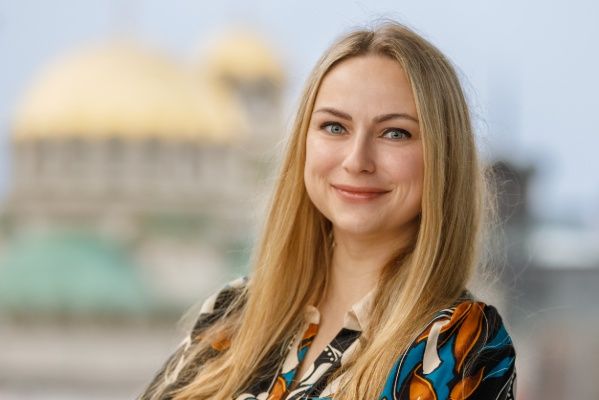
For 2026, the next big topic for us is the sustainable strengthening of the environment for people!
If you have to "tell 2025 in numbers" - which key directions most accurately describe the development of Paysafe? And why do you choose them?
The development of Paysafe in 2025 was dynamic and concentrated in several directions with measurable effect - volunteering and support for local communities, investment in future talents, and targeted development of employee skills. The clearest indicator of this is the engagement in the Paysafe Giving program: in 2025, over 350 colleagues in Bulgaria dedicated more than 3200 volunteer hours, and to stimulate participation, we increased the additional paid leave for volunteering from 1 to 4 days and implemented a centralized platform, Benevity, which made CSR initiatives visible and measurable in the team's daily life. With real results, we solidified this direction by collecting over 900 bags of waste from the Iskar River and planting over 500 trees around Sofia. The second key indicator is education and early access to fintech: through Paysafe Academy: The Future of Fintech in 2025, we engaged over 1000 students in lectures, hackathons, career events, and scholarship programs, while over 50 colleagues participated as mentors, lecturers, and juries. The third direction is care for parents in the company - from financial support for childcare, through a flexible work model, to the Families@Paysafe community, which facilitates the real combination of career and family, and in 2025 alone organized 14 events for the company's employees that united them around their common interests and causes.
In 2025, many employers upgraded benefits for parents. In which 3 elements does your package stand out as more beneficial for employees - and what does the feedback show that it works?
Our package for parents stands out mainly because it does not represent a one-time gesture, but a consistent long-term support at key moments - before, during, and after parental leave. The first element is a smooth return and practical navigation in the transition: we provide the opportunity for adaptation, work in a sustainable hybrid model, and have a Work-Life Harmony program with a mentor - a colleague with parenting experience who helps in real situations. The feedback we most often receive is that this combination reduces stress upon return and makes the balance between team commitments and family rhythm achievable from the first weeks. The second distinguishing element is direct financial support, which is felt every month - an addition of 100 euros to the salary for each child aged 1-4 years, as well as covering the difference to the full salary during paternity leave. Here, our colleagues share that the most valuable thing is predictability and a sense of security in a period when expenses are rising and time is most limited. The third element is emotional support and community: Families@Paysafe as an active environment for sharing experiences, lectures, and family activities, as well as specific gestures of care such as Baby Box and up to 10 additional paid days off in case of loss of a baby or miscarriage. This "human" part is most often cited as the reason people feel valued and supported - not just through a paper policy, but through a culture that preserves the mental well-being of parents. It is indicative that in 2025 our program was awarded in the categories “Employer with the greatest variety of benefits”, “Employer creating a supportive community for parents”, “Employer caring for the company's children” and “Employer with a demonstrated human attitude towards employees”. Ultimately, these three elements work because they address three different needs simultaneously - time and flexibility, financial stability, and emotional support.
How do you balance between “one-time CSR actions” and long-term partnerships - and what do the data from the platforms/reporting tell you about the real impact?
The difference for us is not whether we have a strategy and a “centralized” approach - that is already a basic standard, but how we turn initiatives into a sustainable habit with clear priorities, duration, and measurability, so that each action is part of a longer-term commitment, not a one-time spike in engagement. We achieve the balance between more visible campaigns and long-term partnerships by working on ongoing themes (environment, health, education, and social support). Sustainability also comes from the fact that we do not work alone - we have over 20 NGO partners (including WWF, BCause, ABLE Mentor, Emprove, Vitosha Nature Park, TimeHeroes, etc.) who help with expertise, implementation, and feedback, so that we address real needs.
We manage the impact data through the digital platform Benevity and internal reporting - employees sign up, log hours and results, and this allows us to compare initiatives, see what works best, and build on where the effect is greatest. In 2025, over 350 employees in Bulgaria participated with over 3200 volunteer hours, with 1765 hours reported in the first half of the year alone - more than the entire year of 2024 and about 70% of the total hours, which clearly shows that our model creates sustainable participation, not one-time “waves”. To validate quality, we also look at the employee experience - 100% of participants share that they had a positive experience, and CSR activities in Bulgaria were rated 4.8 out of 5, which gives us confidence that we are making the right choices both in causes and as an organization. Additionally, the 4 paid days off for volunteering maintain motivation among employees.
What innovations in working with students and youth did you introduce in 2025? What are the most important results and what is the most challenging in building a sustainable “talent pipeline”?
In 2025, we introduced innovations in our work with students and youth by expanding “Paysafe Academy: The Future of Fintech” beyond classical university formats and added a new program for students - Paysafe School: NextGen Finance, aimed at 12th grade and implemented in collaboration with the Faculty of Economics at Sofia University. Within the program, we conducted training in 3 Sofia high schools on topics such as recognizing financial fraud, managing a digital wallet, and the role of AI in fintech, with the finale planned as a hackathon with prizes. Alongside this, we boldly stepped into the student audience (grades 5-12), supporting the School Esports League and using interest in gaming as a bridge to topics such as digital payments, cyber hygiene, and fraud recognition, including through an educational brochure on personal finance.
At the same time, we upgraded our presence at key career forums and meetings with young talents - including the Career Forum of FMI and the Faculty of Economics at Sofia University, NBU, and UNSS, to be where students make decisions about their first career. We strengthened “learning through practice” and through competitive formats like FMI AlgorithmiClash, where we participated with a task for the 60 participants and a lecture to show what real engineering looks like in the fintech environment. The most important results for us are the scale and sustainability of engagement - in 2025 we engaged students through lectures, hackathons, career events, and our colleagues voluntarily participated as mentors, lecturers, and juries, making our programs truly “practice-led”. An additional result is that we continue to purposefully invest in the academic ecosystem, including through scholarships for students from Sofia University (FMI and the Faculty of Economics), which provide young people with measurable support and a visible path to development. The most challenging aspect of building a sustainable talent pipeline is the “conversion” after the first contact - keeping interest and turning it into an internship, project, or application, which requires many consistent touchpoints, mentoring resources, and a good experience for participants. Another major challenge is the speed at which fintech is changing - we need to constantly update topics and formats to ensure they are practical and meaningful for young people, but also realistic in relation to business needs. Therefore, in 2025, we focused on a combination of real cases, competitive formats, and earlier entry into schools to build trust and predictability.
How do you choose which career events and forums to participate in? And how do you measure the ROI of employer branding activities?
We select career events and forums based on three main criteria: how well the audience matches the profiles we are looking for (for example, engineering, product, and business roles), the quality of the organization and participants (real attendance, relevant specialists, opportunity for meaningful meetings), and whether the format allows us to show “how we work” - through lectures, case studies, presentations, mentoring, or demonstrations, rather than just presence with a booth. We also look at historical data - which events have generated the most quality contacts and applications, where we have the best conversion to interviews and offers, and which partnerships are sustainable over time. We take into account the calendar logic - to be visible at key moments for students (end of semester, internship season), as well as to cover different talent groups in a balanced way.
We measure the ROI of employer branding activities as a combination of quantitative and qualitative indicators across the entire “funnel”. At the most practical level, we compare costs and results by channel: number of relevant contacts collected, applications, interview invitations, offers, and hired people, plus time to fill a position. We add quality indicators - retention and performance of people who came through a given channel, as well as the acceptance rate of offers. To tie activities to real data, we use specific mechanics such as unique QR codes for campaigns and events, registration forms, and short post-event surveys for the experience. And finally - we measure “brand health”: growth of the talent community, engagement with content, increase in referrals, and qualitative feedback from on-site meetings, as it often explains “why” the numbers work or do not work.
If 2025 was the “year of development”, what is the next big topic for 2026 - more AI and automation in work, even more targeted D&I policies, or expanding social impact? Which “success metrics” will you monitor most closely?
If 2025 was the “year of development”, for 2026, the next big topic for us is the sustainable strengthening of the environment for people - to maintain high engagement, retain key talents, and expand social impact without losing the human element. AI and automation will remain an important part of the picture, but rather as a means to facilitate daily work and free up time for more meaningful tasks, rather than as a leading topic in itself. Regarding DE&I in 2026, the focus will be even more practical - to ensure equal access to development, visibility, and leadership opportunities for different groups in the organization, and this should be felt in the teams. In social impact, we will continue to build partnerships and initiatives that bring measurable results and involve employees not just once, but sustainably.
The metrics we will monitor most closely are related to people: overall employee satisfaction and engagement, retention of staff, internal mobility, and the percentage of positions filled with internal candidates. In addition, we add indicators for the strength of the employer brand - acceptance rate of offers, quality of applications for key roles, and growth of referrals, as they most accurately reflect the trust in the company. And in the CSR direction, we will monitor the number of initiatives, employee participation, volunteer hours, and specific results “on the ground”, to ensure that social impact grows alongside the business.