Trust-by-Design in action: the formula for success at Paysafe
· Demitra Angova - Paysafe
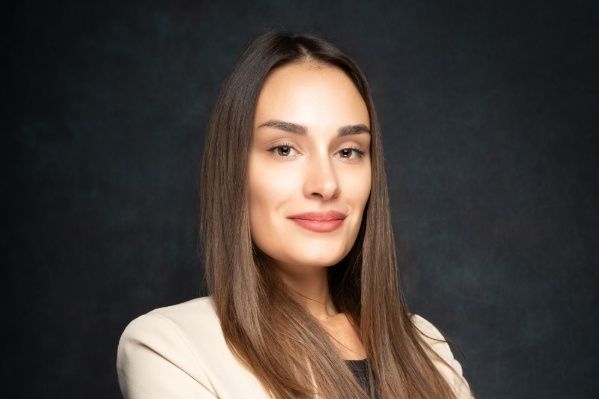
The direction of Paysafe is to continue being the reliable bridge to the future, where new technologies serve only one purpose – to guarantee the security of every transaction!
Introduce yourself.
My name is Demitra, short for Demi, and I have been part of the team at
Paysafe as a product manager for over 4 years. During this time, I have worked on various
product lines, which makes my professional experience dynamic and filled with
exciting projects.
What was that moment or project in your career that convinced you that the fintech
sector is your place, and what is your personal mission at Paysafe today?
Since I started my adventure at Paysafe, I have had the opportunity to work
on diverse projects - from solutions for end users to complex
payment tools for our business partners.
As a result of the years spent as part of different teams, I realized
how integral the fintech sector is to people's daily lives. Besides
professionally, I am also an active consumer of fintech services in my daily life –
I rely on digital wallets, online payments, and innovative financial
solutions, which gives me additional perspective and empathy for the real needs of
customers. It is this dual role - of creator and consumer - that motivates me to
think of products not just as functionalities, but as real experiences.
My personal mission at Paysafe today is to create intuitive and meaningful
products. I want the user to feel secure without feeling the weight of
regulations.
The term “Trust-by-design” sounds almost like an art. In a highly regulated
sector, many see regulations as a limitation, but for you, they seem to be
foundations for creativity. How do you manage to weave trust into the very “DNA” of
the product even before the first line of code is written?
The real challenge for
every product manager is to balance empathy and objectivity, without
allowing personal experience to cloud judgment. Instead of asking myself whether
I would personally trust the solution, I focus on validating it through
user research, data, and evidence. The question before us is:
"Would our users trust this solution and would it bring them
real value?".
When a specific regulation directly affects the user experience, it is important to understand in detail - when it
applies, what risk it addresses, what the effect is on the user. The goal is
to find the best possible solution that both complies with regulatory
requirements and offers a smooth user experience.
Last but not least, and something that is unfortunately often neglected, is
testing with real users. No matter how much we strive for objectivity, often
feedback surprises us. However, it is important that all this information is
analyzed strategically and that patterns are sought,
not isolated conclusions.
The product is only as good as the team behind it. How do you build
a culture of high accountability in your teams? Is there a specific “Paysafe spirit”
that helps your colleagues feel like explorers while operating
in a strict regulatory environment?
My mantra in my professional experience is that everyone should freely
express their opinion; good ideas arise from discussion. That’s why I encourage
a culture where everyone can (and should) challenge the status quo. Being
“challenged” is a driver for growth, not criticism.
The main goal is to create (if we quote the Scrum Guide) multifunctional
and self-sufficient teams, where people understand not only their role but also
the broader context. When information is shared transparently, both about
the challenges we face and the successes we achieve together, feelings of
empathy, unity, and accountability are built.
We all want our payments to be lightning-fast, but also 100% secure. Can you
share an interesting story or “battle” from the kitchen, where you managed to
turn a complex regulatory requirement into an elegant user experience?
Something your team is truly proud of.
At the beginning of this year, we launched a feature that allows
users to pay within “one click”, without requiring additional
integration.
The challenge was to combine the requirements for strong customer
authentication and strict risk control with the shortest and most intuitive
user journey possible. Our solution was initially to add a merchant as
“trusted” to go through all necessary checks, and subsequent payments to
happen with minimal effort from the customer, while the protective mechanisms
work in the background.
This way, we managed to reduce the steps in payment without compromising
security - something our team is truly proud of.
Working in a tech giant like Paysafe provides a huge stage. How has your experience
here changed your professional style? What advice would you give to
ambitious product managers who want to make a mark in the fintech
industry?
First of all, I learned to think at scale. How something you create today
will impact the future. Additionally, it taught me to think outside the box, because very
often in the fintech sector, the straightforward path is often blocked by regulatory
or technical constraints.
My advice to young product managers is: ask questions. “Why are we
doing this?”; “What problem are we solving?”; “How do we measure success?”. The constant
search for meaning behind every decision truly distinguishes good product people.
You are the mediator between technical teams and business stakeholders. How
do you manage to “sell” the importance of complex architectural protections in the language of
business benefits?
I would say this is at the core of our role - to be mediators, as
in practice, mediation is almost never just between business stakeholders and
technical teams. We are the ones responsible for key
performance indicators (KPIs) and revenues, but we know that without a solid foundation, everything is at
risk.
Simply put, in our daily lives, it’s the same way; you don’t do something,
just because you have an impulse, but because behind the decisions stand specific expectations and
results you want to achieve. The same thing translates into
the professional aspect.
In a dynamic environment, there is often pressure for quick decisions. This is where the role of
the product manager comes in - to assess the impact, effort, scope, and value
of a functionality or overall product. Intuition has its place, but
final decisions must always be based on and supported by
real data.
If we look three years ahead – what is the next big barrier that
Paysafe will turn into a bridge for its users? Where do you see the role of
trust in the era of artificial intelligence and decentralized finance?
The next big barrier we will turn into a bridge is the uncertainty of
the unknown. In the era of artificial intelligence and decentralized finance,
users are concerned not only about their money but also about how their
data is used. Trust will no longer be limited to the transaction
being successful; it will mean transparency. The direction of Paysafe is to continue
being the reliable bridge to the future, where new technologies serve only
for one purpose - to guarantee the security of every transaction.
• Reaction or prevention: Which requires more creativity?
- Reaction, because it requires a lot more thinking outside the box.
• Paysafe in three words through the eyes of a Product Manager:
- Global
- Reliable
- Innovative