Our technologies help, but do not replace human communication with clients
· Zornitsa Bankina - Agency for Collection of Receivables
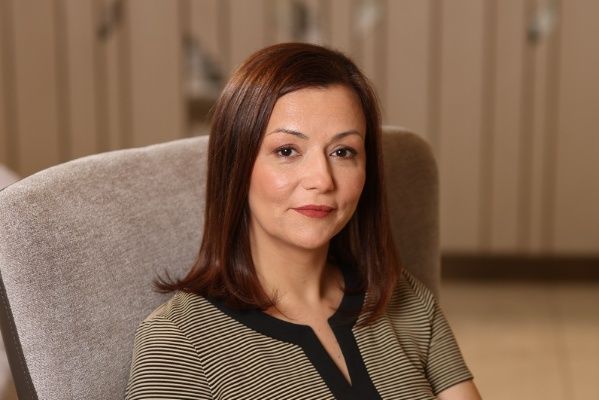
In the next 1-3 years, I expect some deterioration in the economy and the behavior of debtors, but in the long term - an improvement in the environment and achieving a true European appearance!
Introduce yourself briefly and tell us about your professional path to your current position as the executive director of the Collection Agency.
My name is Zornitsa Bankina and I have been working at "Collection Agency" since 2016. Since July 2024, I have held the position of executive director of the company. My professional path is entirely related to the financial sector and debt management, and over the years I have had the opportunity to be part of various management teams in leading international companies. This experience gave me valuable insight into operational work and the challenges in the field.
Before I turned to debt management, I worked in a large telecommunications company, where I developed key skills in communication and team management.
How has the structure and volume of work in ASV changed in recent years?
The changes in ASV are closely linked to the dynamics of the sector in which the company operates. It is no coincidence that the structure and volume of the debt portfolios have transformed several times over the years: from loans from non-bank financial institutions, telecoms, and utility companies, to portfolios with a significant share of secured bank debts, to today's main focus on unsecured loans from banks and non-bank financial institutions.
The last few years have brought new challenges and opportunities for ASV. In 2023, the company changed its ownership and is now part of a Bulgarian holding. The current management not only preserved what has been achieved but also actively develops and implements new technologies that contribute to the competitiveness, efficiency, and innovation of the company.
Even before the boom of artificial intelligence, ASV has been taking targeted steps towards process optimization through the implementation of robots, automation, and specialized software solutions for routine operations. These transformations inevitably lead to a change in the profile and thinking of employees – from traditional administrative tasks to more analytical and technology-oriented activities, which ensures the adaptability and sustainable development of the company.
What key results and achievements would you report for ASV in the last 3-5 years?
In recent years, ASV has established itself as a pioneer and leading force in the sector of debt purchasing and management, thanks to a number of significant results and achievements. The company has become a serious and reliable partner for leading banks, non-bank financial institutions, telecoms, and utility companies by offering a long-term commitment in the form of framework agreements.
ASV was also the first company in the sector to implement a modern online platform for direct customer service. This solution provided easy, fast, and secure access to information and services, significantly improving the customer experience and increasing the efficiency of processes.
The company was also a pioneer in introducing robotic processes into its operational activities. In addition, a large-scale software was developed within the company, with numerous integrations and automations that facilitate the daily work of employees. Last but not least - ASV remains a desirable place to work and is among the leading employers in the debt management sector in Bulgaria.
How did the COVID-19 pandemic affect the way you work and what changes in the approach to debt collection did it bring?
Even before the pandemic, we conducted our own research, which clearly showed that people prefer online communication when it comes to delayed payments. This motivated us to introduce chat communication through the ASV website and fully digital payment channels, allowing us to respond in a timely manner to emerging changes and be prepared for unforeseen circumstances. During the pandemic, we analyzed which activities could be performed remotely and which required presence, which continues to help optimize work today. Despite technological innovations, the actual work of debt collection maintains a focus on personal contact and an individual approach to each client and partner – something that, in my opinion, no technology can replace. The hybrid work model, introduced six years ago, remains an integral part of the social package for employees and proves its value over time.
Do you think there is a fundamental difference in market conditions and debtor behavior before and after COVID? If so - what is it?
I cannot say that there is a fundamental difference in market conditions and debtor behavior before and after COVID, but we certainly observe changes that are conditioned by the economic situation. Periods of economic uncertainty or growth directly affect the discipline in repaying debts – when conditions are favorable, clients are more likely to pay on time, while difficulties show the opposite. Ultimately, income management is key – if a person spends more than they earn, sooner or later they will encounter problems with debt repayment.
This is where our role becomes important – we not only help clients find a way to clear their debts, but we also encourage them to do so with the understanding that it leads to an improved credit history, the possibility of stable employment, access to financial products, and care for their financial health. Our goal is for people to live normally, without worrying about their debts, to avoid the gray sector, and to have confidence in their future.
What are the main differences in the agency's approach to debt collection from corporate clients compared to individual clients?
In both cases – when working with individual clients and when working with companies, communication takes place with the physical person. Rather, the approach changes based on other indicators – the amount owed, the client's behavior over time, whether there is collateral or not, etc. In addition, with corporate clients, the process often requires a more in-depth analysis of their financial condition and history, as well as consideration of business dynamics and the specific needs of each company. With individual clients, the emphasis is on a personal approach and understanding of personal circumstances, seeking the most flexible solution, tailored to the possibilities and motivation for repayment. In this sense, our strategies are adaptive – for corporate clients, we apply structured processes, while for individuals – more individualized and empathetic approaches, which I believe is the key to sustainable results and trust.
Which sectors in corporate debt have proven to be the most risky and which the most stable recently?
Unfortunately, the most risky sectors continue to be those that work with the government. The lack of a stable government further limits access to various financing tools for businesses. For example, I can mention – agricultural producers.
During the pandemic, for example, sectors such as hospitality and tourism, which are usually stable, also faced difficulties. Our sector was also seriously affected then, as our activities were severely restricted for several months in 2020.
Recently, labor market observations show stagnation in the IT sector and in small retail. The former – due to the emergence of artificial intelligence, and the latter – due to platforms like Temu, Shein. Such difficulties are felt by us not only because we work with corporate clients, but also from the perspective that these clients are also employers.
In contrast, the most stable sectors turn out to be those that are less dependent on government policies and global crises. For example, the pharmaceutical sector and food production maintain resilience due to constant consumer interest and relatively low susceptibility to external economic shocks. Additionally, companies that successfully implement digital solutions and automation show higher resilience to market changes.
What trends do you observe among individual debtors - are there new behavior or indebtedness models?
The profile of individual debtors is changing over time. While older people used to dominate among those with overdue payments, there is now a sharp increase in the share of younger individuals – between 25 and 35 years old. The reasons are various: easier access to credit, digitalization of financial services, and more active consumption. Regarding residence, we observe that residents of large cities are more prone to indebtedness, as they have more opportunities and offers for financing, while in smaller towns, the discipline in payments traditionally remains higher. Regular analyses show that in the northern and northwestern regions of Bulgaria, delinquencies are more frequent, mainly due to lower incomes and limited employment opportunities. In the capital and larger cities, despite the higher number of debtors, there is greater activity in seeking solutions and a quicker response to delinquencies. This is partly due to higher financial literacy and access to information. According to ASV's regular survey on the profile of the “Good Payer”, women продължават да demonstrate higher payment discipline compared to men.
In the last two years, there has been a clear trend for debtors to be more informed and actively seek contact with specialists when they encounter financial difficulties. People are increasingly exploring options for installment payments, consulting on contract terms, and inquiring about their rights. This is a result както от нашата работа and от broader access to information. Overall забелязвам, че a positive trend is emerging в посока more responsible attitudes towards obligations and seeking assistance in financial challenges.
To what extent do technologies such as automation, artificial intelligence, and digital channels already play a role in the debt collection process?
They help, but they cannot and should not replace the human factor. Нашата ежедневна работа е свързана с комуникация и мога смело да кажа, че AI не може да се справи с усложнена ситуация, която изисква гъвкавост и индивидуално решение по-добре. Общо взето, technologies have always provided a very good opportunity to assist us in our daily работа, but in no case should we consider them as substitutes for people. Със сигурност е, че някои дейности в компанията биха се случили много по-трудно и бавно без използването на technologies. Например, различен софтуер ни помага в създаването на модели за оценка, анализи, проучване на вероятности, но от гледна точка на отношенията клиент-кредитор - технологията определено не може да ни замести.
Which technologies, in your opinion, have the greatest potential to transform the industry in the coming years?
In addition to the private sector, transformation is also visible in the state apparatus. In the past 2025, the long-awaited electronic court began operations, which changed the way a number of legal processes and documents are administered. Many administrative services are now available online, significantly facilitating both individuals and companies.
Undoubtedly, digitization and automation are among the key technologies driving change forward. More and more companies are introducing innovative solutions such as cloud services, electronic document flow, artificial intelligence for optimization and data analysis, as well as robotic processes for automated service. This not only accelerates work but also makes the entire system more transparent and efficient.
I believe that in the coming years, integrated platforms for electronic management, machine learning, and automated processes will gain even greater importance, allowing the industry to be more flexible, resilient, and quickly adaptable to changes. Change is already underway with full force and is irreversible, and technological progress is an inseparable part of the daily life of both businesses and citizens.
What challenges do you face in integrating new technological solutions in ASV?
The introduction of new technological solutions in ASV is accompanied by a number of challenges that require careful planning and flexibility. Each new solution requires time for training and implementation, which е an investment в people and labor. Time and cost are the main challenge for us because especially for innovations that still need to prove their usefulness, patience and strategic thinking are necessary.
Moreover, the integration of new technologies often requires adaptation of existing processes and changes in organizational culture. We face challenges related to the adoption of innovations by the team – some employees are more open to change, while others need additional support and training.
It often turns out that for new technologies to be effective, not only technical implementation is necessary, but also building trust among all participants in the process. This means investing in communication, training, and gradual changes in work habits. Only in this way can we ensure that innovations will bring real and sustainable benefits to the organization.
How is the balance between effective debt collection and maintaining a good customer experience ensured?
The balance between effective debt collection and maintaining a good customer experience is achieved through a careful combination of professionalism and empathy in communication. In ASV, we strive not only for results but also for building trust with each client – even with those with overdue obligations. Our approach is individual and is based on respect for the personal situation of the debtor, which allows solutions that satisfy both parties. It may sound like these two things are difficult to combine, but we at ASV prove that it is not impossible. In fact, achieving this balance is one of our main goals in daily communication. We cannot avoid negative emotions, but we approach first with understanding, because without convincing the person on the other side that we have a common goal, we cannot achieve a situation where both sides win. I dare say that our communication with debtors runs smoothly, and a sign of the positive attitude, as I mentioned earlier, is the increasingly frequent proactive contact with us from people whose obligations we have acquired.
What legal or regulatory changes in recent years have affected your work and which do you think are most necessary for the future?
The market for overdue receivables in Bulgaria has undergone significant dynamics over the last decade and more. Along with this, the business has become much more regulated, as the first important legislative changes were related to the requirement for registration as a financial institution under Article 3a of the Law on Credit Institutions (ZKI), in order to professionally engage in the acquisition of receivables through assignment or factoring. These changes were adopted back in 2014 and contributed to disciplining the market of so-called “non-bank financial institutions,” as their registration and approval are under the strict supervision of the Bulgarian National Bank (BNB).
In the period 2016 –
2018, the legislation was further improved – the requirements for accountability and control were strengthened, more detailed rules regarding
the origin of funds and related parties were introduced. Since 2018, financial institutions and
entities that professionally acquire receivables are “obliged persons” under the Law on
measures against money laundering, which imposes complex checks on
clients, internal rules, and accountability for suspicious operations.
The market has transitioned
from almost complete lack of regulations to clearly defined requirements, minimum
capital and permitted methods of operation. This has led to positive changes – over
the years, unscrupulous market participants and companies with bad practices
that harmed the image of the sector and hindered the building of trust between
debtors and creditors have been eliminated.
From the end of June 2025, the Law on Persons Servicing Loans and Buyers of Loans (ZLOKKK) will also come into force, which introduces a separate regime for buyers and servicers of loans, requiring additional licensing, capital requirements, and management requirements for these companies. The law largely reflects the position of the sector, which has long insisted on such regulation. However, there are certain contradictions between ZLOKKK and other existing laws, which we hope will be cleared up and corrected over time.
What are the main ethical principles that you follow in your relationships with debtors, and how do you apply them in daily practice?
Respect is always first and foremost. Good tone, patience, transparency and actions solely within the framework of the law are an inseparable part of our daily communication. We strive to be dialogical, responsible, and to seek balanced solutions.
What are the main expected trends in the economy and debtor behavior over the next 1-3 years?
Our business is strongly dependent on the macroeconomic environment. In recent years, there has been a notable decrease in the percentage of non-performing loans. However, I expect a slight increase in the share of bad loans, which will likely be caused by the shrinking IT sector, which was on the rise in recent years, the withdrawal of international companies from the Bulgarian market, and the initial stress associated with the adoption of the euro. In the long term, however, I am convinced that this is the right path. I believe that Bulgaria will become significantly more attractive as a destination for foreign investors due to the currency, regulatory changes, and the more secure business environment that we are about to provide.
In summary: for the next 1–3 years, I expect some deterioration in the economy and the behavior of debtors, but in the long term – improvement of the environment and achieving a truly European appearance.
Are there examples of innovative practices abroad that you would like to adapt here?
For more than 7 years, the company was part of an international holding, where all companies actively exchanged good practices through regular meetings and dynamic communication. Before the sale, I had the opportunity to participate in a project for the implementation of the so-called “voice analyzer” – software that converts speech into text. This tool, which I got to know in Poland, significantly assisted the processes for researching trends, improving communication, and overall enhancing the quality in departments working with clients with outstanding obligations – and I believe it continues to be useful today. The integration of such a solution is something I would work on with great desire and dedication.
#Zornitsa_Bankina #Agentsiya_za_Sabirane_na_Vzemaniya #Finance