Digital Wallets: How the Way the World Pays is Changing
· Dejan Danailov - Paysafe
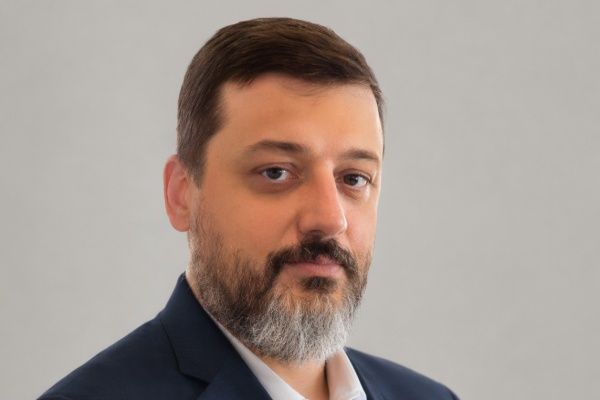
Start with a problem that truly hinders you, and solve it well. The rest will follow!
Dejan Danailov is Director of Software Engineering at Paysafe with over 8 years of experience in the company, where he has progressed from Engineering Manager to a leadership position. Over the years, he has established himself as a professional in building and developing strong teams, improving work processes, and implementing solutions in the payments sector. Dejan combines solid technical experience with strategic thinking and the ability to lead his team towards achieving sustainable results.
If you had to describe your professional journey from the first line of code to the position of Director of Software Engineering at Paysafe, what are the three key moments that defined your personal “brand” as a leader?
To be honest, the journey from the first line of code to now has not been a straight
line. I would rather define it as a tree-like data structure. Some moments
have deep roots, others are shallow, and you quickly have to go back and
continue on a new path. If I had to choose only 3 branches that have defined me
as a leader today, they would be:
- When I first showed senior programmers that the solution I chose was the right one for a given situation, using arguments and data. It showed
me that the time I invested in research and learning new things is
encouraged.
- Rewriting
the heart of the system in a previous company where I worked. A huge
challenge with many twisted human and technical problems. Late
nights that led to satisfaction after the work was done.
This was a moment that taught me what it means for someone to trust you with great responsibility.
- The
third moment is actually the present - my daily tasks, responsibilities, and
obligations. The opportunity to develop not only individual people but also
a vision for the future of a hundred people and all the technologies related to
them. This trust from Paysafe, particularly from Vasil Gichev, Ivan
Petrov, and the other wonderful people around me, has solidified my
leadership skills.
What does a typical day look like for you in the Sofia office - between strategic planning and the excitement of solving a complex
engineering issue?
Cliché or not - for me, there is no typical day. This is one of the great things about
Paysafe. My day starts calmly, but always with a hint of excitement. We operate
systems that work 24/7 on all continents, and when it’s morning in Sofia, it’s
"midnight" in the States. So the first fifteen minutes of my day are actually something like "situational
awareness". Has anything happened, is there an incident, is there anything I need to know before I get into work mode? After that, we go through
mandatory meetings with managers, teams, and of course with my colleagues from
the product organization. To create great products,
our collaboration is non-negotiable. A mandatory part of the day is lunch with
colleagues from different departments to keep our social batteries
charged. From there, I switch to "task execution" mode, which can vary from day to day, involving highly technical problems or purely human ones. It’s always interesting.
We often say that the world is small, but when we talk about millions of transactions per second - how big is the responsibility
of the team in Bulgaria? Is there a specific functionality in digital wallets
(Skrill or Netteler) that few people know was
“created in Bulgaria”?
Great question, because the answer often surprises people, including ourselves, who are part of the Sofia office of Paysafe. The truth is that Sofia is not an outsourced office of Paysafe, but one of the company’s engineering centers. Here we are more than 1,200 people, more than 650 of whom are part of the IT department. We are a huge hub that creates all kinds of incredible functionalities and products. The entire crypto integration of Skrill/Neteller has been developed from the first line of code in Bulgaria, as well as the "Remittance" part. Something I am very proud of is the Pago Wallet product. A digital wallet that we built from scratch to launch in just 4 months. An incredible success for all the people who participated in this project.
Paysafe in Sofia is not just a local office, but a key
technological hub. How do you manage to maintain a culture of innovation that dictates the pace of the global fintech market?
Behind the answer to this question lies something extremely simple. When someone in
the team comes up with an idea, 9 out of 10 times the answer is "go ahead, try it".
The rest happens on its own.
The digital wallet today is much more than
software - it is security and freedom. Can you share a story about a challenge your team faced, and how solving it changed the user experience for millions of people?
One of our partners, for whom we built a wallet from scratch, came with quite a
bold requirement. Our system had to handle up to 1500 transactions per second,
just for them. A huge technical challenge. But the people in Sofia were
more than ready to tackle it, and they did. Behind that number are
real moments. Someone is paying a bill, someone is exchanging currencies, someone is sending money to
their loved ones, and all of this happens in milliseconds, without them suspecting how much
engineering work is behind it.
If we look five years ahead, how will the “Sofia touch” of Paysafe have changed the way we pay for our coffee or
transfer money to loved ones across the ocean?
I believe the next five years will be about one thing - the money of ordinary
people moving at the speed of messages. Today, when you send a text message to someone in Peru or Canada, it arrives instantly. But when you send them money, it can take days. That will change, and it is changing right now. And
part of this change is being written and executed right here in Sofia. Not because we will
make it happen alone, just us at Paysafe, but because we are one of the teams building
the infrastructure on which it will happen.
What advice would you give to young software
engineers who want to step out of their comfort zone and start creating products with global significance?