How a Bold Step at 18 Creates a Life Without Limits
· Michaela Grancharova
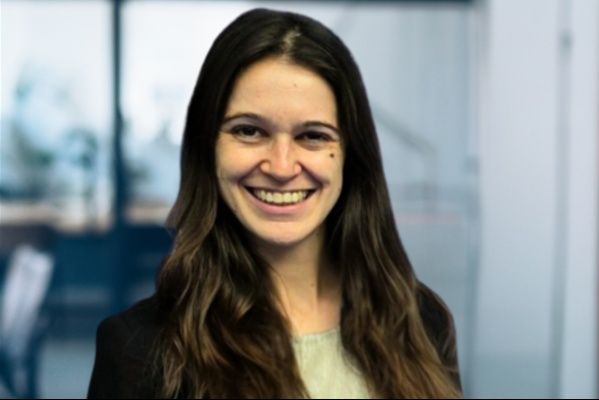
Marketing Among Machines and Markets: A Bulgarian in the Heart of Industrial Germany!
Introduce yourself
in a few sentences. What is your name, what do you do (position, company,
industry)? What does your work involve in terms of daily commitments?
My name is Michaela
Grancharova, I am 31 years old and I have been living and working in Germany for 12 years. I
am currently a marketing manager at Haver & Boecker Niagara (www.haverniagara.com) – an international family company in
machine engineering with over 100 years of history. Haver & Boecker Niagara develops machines and complete solutions for
industries such as mining, fertilizer production, processing of natural
resources and construction materials, recycling, and slag.
My journey began
in Bulgaria. At 18, I moved to Germany on my own to continue
my education and development – a step that largely shaped the way I
think and work today. This decision taught me early on to adapt; to take
responsibility; to manage my time effectively and to view daily issues
from different perspectives. It introduced me to people who broadened my worldview and helped me
understand where it is important to set our priorities.
My career at the aforementioned
company also developed gradually – I started as an intern and went through
various roles, which allowed me to understand the business in depth and to
build a more comprehensive view of internal structures, market development, industries,
marketing, interpersonal and business communication. Today I work in a highly
international context – within a common brand, we unite teams and
production from Germany, Canada, and Brazil, which requires constant
coordination and adaptation of communication according to different cultures, markets, and
business realities.
In my daily work, I
am involved in the development, management, and execution of marketing
campaigns and digital communication strategies in the industrial B2B sphere at local and international levels. In this process, I combine various
activities – from planning and executing campaigns to creating content and
analyzing data. I work collaboratively with various stakeholders – internal teams,
external agencies, sales representatives, and I train interns.
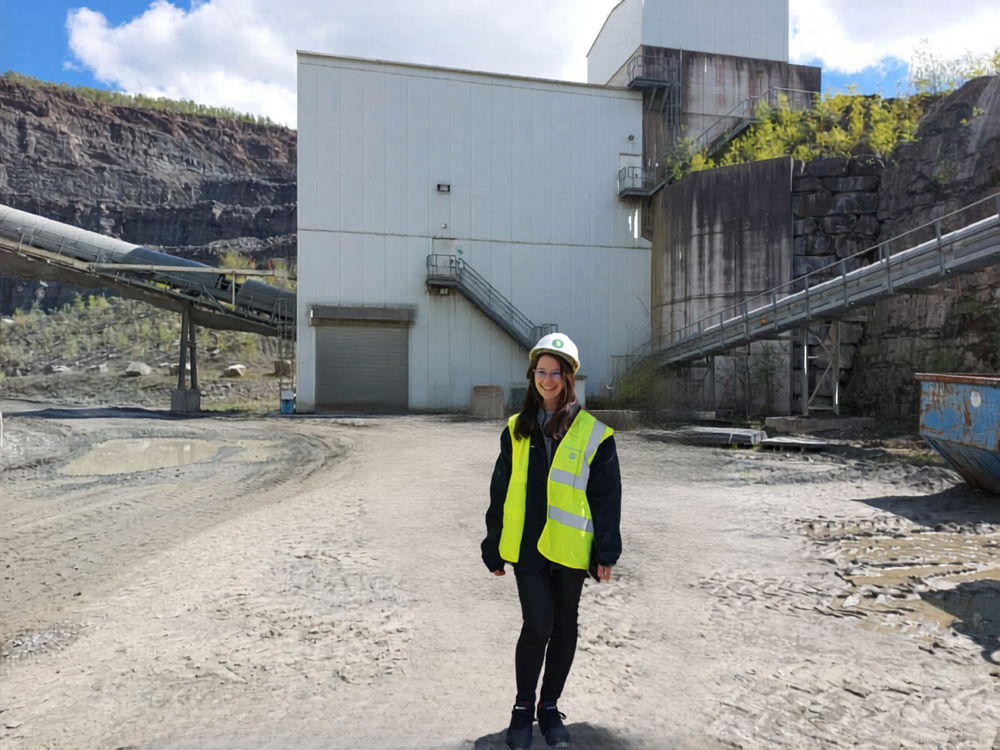
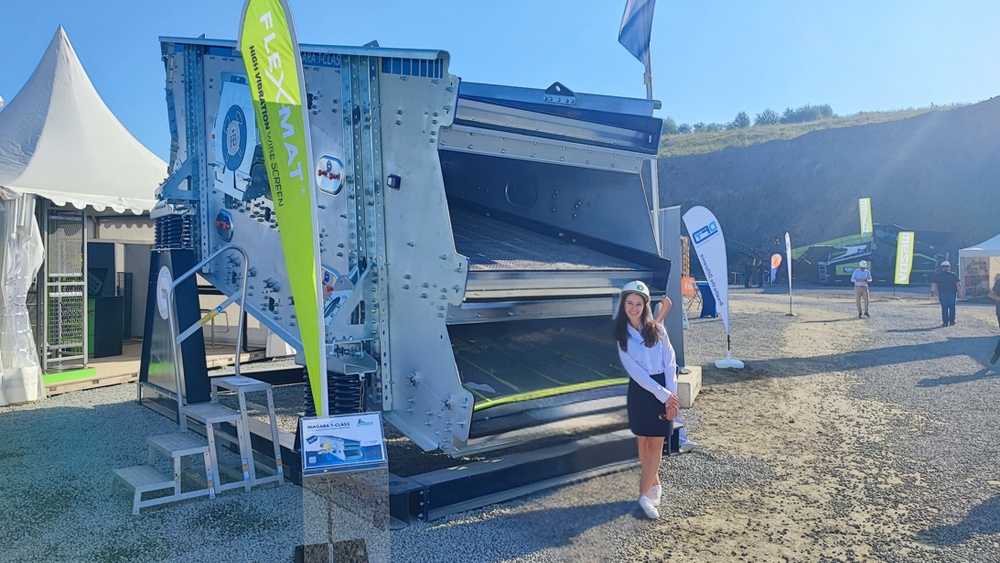
One of the things I value most in my work is its diversity. Within a single day, I can develop a marketing strategy at my computer, then be one floor down in production, shooting content among machines, steel, and an industrial environment, and the next day I could be with a client – in real conditions, amid dust, noise, and heavy machinery. After that, I might discuss our marketing strategies, plans, and budgets in a conference room on the other side of the world, and in a moment you can find me back at my computer, preparing PR articles for specialized industrial media or preparing reports, optimizing campaigns, analyzing markets. Part of my tasks includes preparing and executing digital campaigns for participation in over 28 exhibitions worldwide and participating in projects related to branding, market positioning, and product launches, or attending digital marketing events to stay updated with new trends.
In my daily life,
this means balancing between strategic thinking and practical
execution of tasks. I often have to translate complex technical topics
and solutions into clear, understandable, and relevant communication that reaches
people in the right way at the right moment.
For me,
marketing is not just promotion, but creating a meaningful connection and value.
I never forget that I work in an environment where technology is at the center, but
behind every machine are people – engineers, teams, clients – all with their
needs, challenges, and expectations. It is this connection between business, technology,
and people that defines the way we communicate and makes my work so significant.
In which country
and city do you currently live and how did you end up there?
I currently live in
Münster – a small and extremely picturesque student city in North Rhine-Westphalia,
Germany. How did I end up here? Germany has always been present in my life - initially through my family (my aunt is German), and later through
my education. I was born in Banско, but at 14 I moved to live in Blagoevgrad, where I graduated from the High School
“Academician Lyudmil Stoyanov” with a profile in German language, English language, and information
technology. After successfully passing the language exam and graduating from high school, I actively started looking for a university and
researching cities. That’s how I came across WWU Münster – one of the top five German
universities for humanities in Germany. Then my 18-year-old naive self looked
at a few pictures and saw the castle campus, boldly decided that this was the right place to
start my fairy tale… which definitely at the beginning did not turn out to be as
charming and fairy-tale-like as it was in my imagination.
What were the
biggest challenges you faced at the beginning of your stay?
The first two years
were perhaps the most difficult – both emotionally and practically. Nostalgia,
the language barrier, and building a social environment were the main
challenges.
I often say that
this was my “military service” – a period in which I had to grow up quickly. I found
myself in an environment where I knew no one, with a different standard of living, a different
way of thinking of people, and the functioning of the bureaucratic system. I had to
realize with the help of the people I met in life that Bulgaria is not the greatest
country in the world.
I worked at
several places to support myself, and at the same time studied hard. But the most important
thing was that I had to expand my comfort zone – to learn to seek
contact with locals, to overcome doubts and fears, and to navigate a new
system.
How did you
overcome the language barrier (if there was one)?
In my opinion,
there is almost always a language barrier – even when we think we know the language. In
Bulgaria, we learned standard German, but we quickly realize that when we go
on the ground, we know almost nothing. We need to speak conversational German and start
learning almost from scratch. We need time and patience to relax and
speak and to stop worrying about making mistakes. What always helps is practice and targeted constant communication with locals.
At some point, we stop worrying and start speaking freely.
What resources
or networks (local communities, colleagues, organizations) helped you adapt?
In my opinion, the most important
starting resources were not external, but internal -
time; patience; persistence; determination;
curiosity; a thirst for new adventures; openness to new cultures;
goal-oriented and a pinch of stubbornness.
Of course,
the environment also matters – working in different teams, contact with local and
international students, building a social circle. Later, I met a
Bulgarian family that also gave me support. But the key was not to close myself
only in a Bulgarian environment, but to actively seek integration.
What are the main differences between the work culture in your current country and that in Bulgaria?
I could not
answer this question appropriately, as I have professional experience only in
the German and international environment. I lack direct personal insight into the work
culture in Bulgaria and cannot make a direct comparison. All conclusions
I could reach would be based on rumors and conjectures from
foreign stories.
What values
and practices in the workplace impressed you the most?
Perhaps the most striking
in my mind is the well-structured organization of the work
process – everyone has their highly specialized role, knows their responsibilities, and performs their duties
precisely. Working in an industrial environment, I cannot help but mention the attention to
detail. The engineers who work with us can spend months searching for a solution to
a given technical problem, but for them, it is extremely important that the final result is
of high quality. At the same time, I am impressed by how highly family
is valued as a structure. Flexible solutions are often sought so that employees can
successfully balance their personal commitments with their professional ones.
Other key
values are freedom and trust. Even at a relatively early stage, serious responsibilities are taken,
with many cases requiring one to find solutions independently.
This is not always easy, as the path to them goes through numerous cases and
challenges, but this is how a deep understanding of the business is built; one takes
responsibility and learns through practice.
I am also strongly impressed
by communication – both within small teams and between
departments. Often through conversations with colleagues, you receive valuable information, a different
perspective, or practical advice.
Of course, there are also
several practical advantages – such as longer paid leave (36 days), flexible working hours, a 35-hour
work week, good social protection, and a stable working environment.
However, it is important to
emphasize that these impressions are based on my personal experience and are largely
related to the type of company I work for – a family, international company with a
more conservative structure.
Have there been
situations where cultural differences have hindered you?
I do not remember any
challenges due to cultural differences. On the contrary – in many cases,
they have helped me. My Balkan character – directness, flexibility, emotionality,
resourcefulness – often proves to be an advantage, especially in an international environment.
Thanks to it, I can more easily understand different types of behavior and
navigate dynamic interpersonal situations. Of course, there are moments
when you need to adapt – for example, in the way of communication or in
the expectations of the work process. But over time, this becomes more of a
skill than an obstacle. Ultimately, I believe that cultural differences are not a barrier, but an opportunity – as long as one is open to them and willing to learn.
How does finding
a job differ in your current country compared to your homeland?
I do not have direct experience with
the labor market in Bulgaria and therefore avoid making direct comparisons. However, I can
share what the process looks like in Germany.
Even during our studies in Germany, we are required to find internships in
our field and gain practical experience. Without certificates from these internships,
we could not graduate. That is, practical experience is highly valued.
Subsequently, building a stable business environment, so that for certain
positions you have a recommendation from an employee of the company, also plays a significant role.
The process of
finding a job follows standard steps: researching available
positions on specialized platforms; applying with a CV, cover letter, and interim reference from the employer; interviews; clarifying
details and hiring.
Did you have to
go through any additional qualification courses?
No, I was not required
to take additional courses. At my own discretion, I completed a master's degree while working full-time. This was a personal
decision for development that had financial implications, but was not a requirement.
Have you encountered
prejudices or obstacles due to your foreign origin?
I have not encountered prejudices related to my origin. Rather, locals have always been very
impressed by how at this young age I made the decision to leave everything
familiar and settle in their country. They often show interest in Bulgaria and
my personal journey, but this may also be due to the international context of
the place where I am and the company I work for.
What would you
advise people who want to take a similar step?
I would advise them to be open – both to the new environment and to the people in
it. Not to close themselves entirely in a Bulgarian community, but to consciously seek
contact with locals. Integration requires effort, curiosity, and a willingness to expand
their comfort zone.
It is also important
to approach without prejudices – often we ourselves carry preconceived notions
that can limit us. From personal observations, it seems that Bulgarians are more likely to have
prejudices against Germans as cold, rather than the other way around. Let them try to
understand the environment they find themselves in, without imposing their own culture and views
there.
And last but not least – patience, persistence, and a willingness to work hard.
If you could go
back, would you choose the same path?
Probably yes. This
is the only path I know, but it has shaped me both professionally
and personally.
If I had to make the same decision today, it would probably be more difficult because I now have
more experience and awareness. But it was that dose of courage and naivety of that 18-year-old kid that helped me take the first step.
Today I have a good
quality of life, a stable environment, fulfilling work, and opportunities for
development. Recently, I had to realize how important it is that I have access to free
health services. I live in the center of Europe and I am mobile to various
destinations. I have good infrastructure, a lot of nature and greenery just a step away from my home. All the people I interact with are intelligent and aware.
This is largely a result of this choice.
What do you miss most from your homeland in professional and personal terms?
Professionally, I still cannot give an opinion because I do not know the professional life in
Bulgaria. Personally – of course, my family and loved ones. I miss Pirin
and Bansko. And if I have to be completely honest - let’s not forget the greatest luxury
in summer, namely homegrown pink tomatoes :D
Have you considered
returning and under what conditions would you do so?
Throughout various
moments over the years, there have been phases when the idea has crossed my mind. I believe
that the world offers us an incredible number of opportunities and one should not limit oneself
geographically. Rather, the decisions are related to the personal stage you are in. For me, a
possible return would be more a matter of personal circumstances than professional ones.
What do you think
about money? What is their influence on your life? What is your advice to
people who often ask themselves questions related to money and how sufficient they are?
For me, money is a valuable
instrument. They are the material reflection of our immaterial aspirations. They provide
security, freedom, peace, and opportunities. Through them, one can meet
basic needs and build a stable environment on which to build.
If I were to connect it to Maslow's pyramid – money largely supports the first
levels: physical needs and security. They can also facilitate social
life or access to education and development. In this sense, they are fundamental.
But there is a limit – the higher we move up this pyramid – towards belonging, respect, and
self-actualization – the clearer it becomes that their role diminishes. They can
create conditions, but they cannot fill internal voids. They cannot
create genuine human connections, nor can they replace the feeling of meaning, direction, and
satisfaction.
Personally, what matters most is for one to have clarity about what lies behind their desire for more money.
Whether it is a pursuit of security, freedom, recognition, or simply comparison with others. Because when this motivation is not recognized, money can easily
turn from a means into an end. When you know what you are looking for, what your
priorities, goals, values, and direction are, you can manage your resources much more consciously – including financial ones. After that, there is a need for good
financial discipline, a stable personal finance management plan, and proper
investment.
How much is sufficient?
It depends on how big a person's goals and dreams are. Ultimately, I think, the question should not be how much is “sufficient,” but whether what we have allows us to live in accordance with our own values. Because the true value of money is not in the money itself, but in the freedom it gives us to choose how to live.
And something that often remains unspoken – life abroad is not an automatic path to financial prosperity. Yes, the standard is high, but it comes hand in hand with high demands, hard work, responsibilities, and a constant need to prove yourself. That is, money abroad definitely does not grow on trees. Still, if someone has discovered a tree there with money, let them share :D