HR Beyond Administration - How to Build a Strong Team During Rapid Growth?
· Michaela Mihaleva - Evrotrust
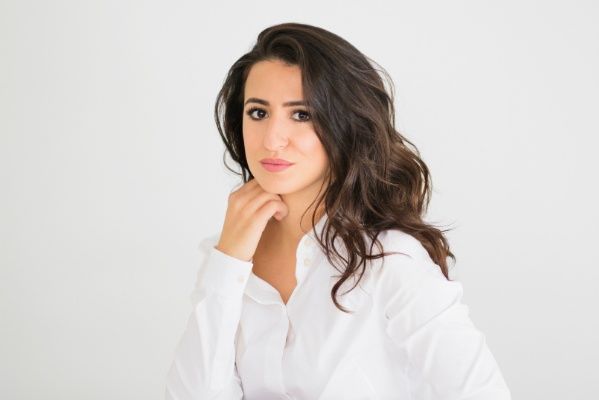
Michaela Mihaleva, Head of Human Resources at Evrotrust!
How would you introduce yourself in a few words – both professionally and as a person?
I am an HR professional by conviction, not just by profession. And perhaps that’s why I have never liked the literal meaning of the term “human resources” – it sounds as if we are playing the popular game Settlers of Catan and simply distributing wood, stone, and wheat. In reality, we work with people, their qualities, motivations, fears, ambitions, personal stories, and trust.
For me, a good HR professional is not someone who merely organizes processes, but someone who creates an environment where people can work calmly, develop, and feel that there is humanity behind the rules. As a person, I am organized, direct, and I manage to stay calm even in tense situations. I love clarity and order, but I know that when working with people, the most important things rarely fit into a table.
What attracted you to Evrotrust and what motivates you to take on the role of Director of Human Resources?
The company operates in the field of digital identity, electronic signatures, and trust, and trust is something you cannot imitate. It either exists or it doesn’t. This is a very stable foundation, both for the product and for the company, as well as for the relationships between the people within it. For me, this was a very strong sign because I believe that when a company builds a product based on trust, it has every reason to build its internal culture in the same way.
The role motivates me because it gives me the opportunity to build an HR function that is not on the sidelines of the business but is at its very heart. To help not just the company grow, but to grow in a way that does not lose its human face.
What situation did you find the company and the HR function in when you started?
I am fortunate to be part of the company’s development from a very early stage, and this has allowed me to see the growth not as an external observer but from the inside. Evrotrust has grown from a small team with a big idea to an organization with a much larger scale, a more complex structure, and far more interactions, including outside Bulgaria.
This is always an interesting moment for a company because enthusiasm and speed are no longer sufficient on their own. Processes, clarity, roles, and coordination are needed. The HR function also had to grow – from something more operational to a role that thinks strategically and helps the organization grow “healthily”.
What were the biggest challenges during the rapid growth and doubling of the team?
The biggest challenge during rapid growth is to not let speed outpace quality. Yes, it is possible to hire people quickly. The harder part is to welcome them properly, to onboard them meaningfully, to give them context, security, and a sense that they have come to the right place.
What were the most difficult moments for you personally and how did you overcome them?
The hardest times for me were during periods when the task list grows faster than the hours in the day. At one point, you realize that no matter how organized you are, you are not a magician, and that if you only move tasks from today to tomorrow, that is not a strategy, but rather a form of self-deception.
What helped me was to accept that not everything can be accomplished and that success is not about ticking off every item, but about distinguishing what is truly important.
There have also been situations where I felt that something was coming and that there was no way to completely prevent it. These moments are difficult because they confront you with the limits of control. But that’s where the more mature part of the role comes in – not to promise the impossible, but to be prepared, calm, and honest in the way you navigate through the situation.
What results would you report today – in terms of team, culture, and processes?
Today we have a clearer structure, better coordination, and more organized processes. But the most valuable result for me is that people are not just part of the environment, but actively participate in building it.
I believe that culture is not created unilaterally by HR. It is a collective process in which we all have a role. HR can set direction, adjust, and help with clarity, but it is the people who give it real form every day. And when this happens together, the result is much more sustainable.
How has the role and influence of HR changed in Evrotrust?
The role of HR is changing not only in Evrotrust but everywhere. Rapid digitalization and the advent of artificial intelligence are finally bringing to the forefront the true meaning of the function, which has never been about administration.
The more routine tasks are automated, the more visible the real value of HR becomes - in understanding people, in building trust, culture, and a sustainable working environment. In this sense, technology does not render HR meaningless, but rather returns it to its essence.
In Evrotrust, this is also clearly felt when processes are digitized, HR has more space to be useful where it matters most – with people.
What impressed you the most about the company and the people?
What impressed me the most is that the people at Evrotrust think in terms of solutions, not excuses. This is a very valuable quality, especially in an environment that is changing rapidly and requires adaptability almost daily.
But besides professional flexibility, there is also something else – a willingness to take responsibility, to support a colleague, to step into a situation that is not entirely comfortable if it will help things happen. For me, a strong team is not just a collection of capable people. A strong team is a place where you can rely on each other.
How is a strong corporate culture built and maintained in the context of dynamic growth?
Culture is not a slogan, it is not a poster, and it is not something that exists only in the recruitment process. Culture is what people feel in their daily lives - how they communicate, how decisions are made, how they react in difficult situations.
How do you see the development of Evrotrust in the near future?
I see Evrotrust as an increasingly strong and recognizable company in the field of digital identity and certification services, with significant potential both locally and internationally. This is a field that will only become more important as digital interactions increase, along with the growing need for security, verifiability, and trust.
For me, the most valuable thing is that the company has the opportunity not just to follow this change but to be part of shaping it. And that is a rare and very responsible position.
How do technological revolution and the company's own solutions change the way people work?
We believe that technological innovations, including Evrotrust's solutions, make things more pleasant and convenient. When you can identify an employee remotely, sign a contract with a qualified electronic signature, and have verifiable delivery, HR processes become almost invisible, which is the goal. Moreover, our solutions make hiring remote teams and working with international businesses much easier documentarily, which in turn gives employees more freedom and flexibility in the labor market, not just in Bulgaria.
What are the key priorities of a modern HR director?
A modern HR director must understand both people and the organization, as well as the context in which it operates. They must be able to think simultaneously about structure, culture, and the future. This is a role for someone who helps the company grow sustainably without losing its internal connectivity and direction.
How is balance achieved between business goals and care for employees?
By stopping to see them as two opposing things. The truth is that a sustainable business is not built despite people, but through them. When people have clarity and a sense of purpose, it directly helps the results.
Of course, balance does not mean everyone is always completely satisfied. It means decisions are made fairly, clearly, and with respect for the person on the other side. Sometimes this is a matter of policy, sometimes of communication, and sometimes simply of maturity.
What motivates you to keep moving forward in the most stressful moments?
I am motivated by the feeling that what I do has a real effect. Not necessarily loud, but real. When you see that a process is working better, that someone has entered their role more calmly, that a difficult situation has been navigated more maturely, that has great value.
In HR, often the most important results are not the most visible. They are in the atmosphere, in our cohesion as a team, in how people feel in the company.
What advice would you give to people who want to develop in HR?
To understand from the very beginning that HR is not a profession for people who necessarily want to be in the spotlight. Because this is not a job where you will always receive visible recognition for a job well done. On the contrary, very often the most important things you do remain behind the scenes. No one sees it in detail, no one applauds it, and sometimes no one even understands how much it depended on you.
HR requires you to be able to put your ego a little aside and find satisfaction in helping something happen better, even when your name is not at the forefront.
And of course, it is essential to have a clear understanding of the business, to be able to work and communicate with different people, and not to be afraid of technology, because modern HR requires all three.