Leadership Without a Face: Is a CEO Without Human Presence Possible?
· Career Daily News
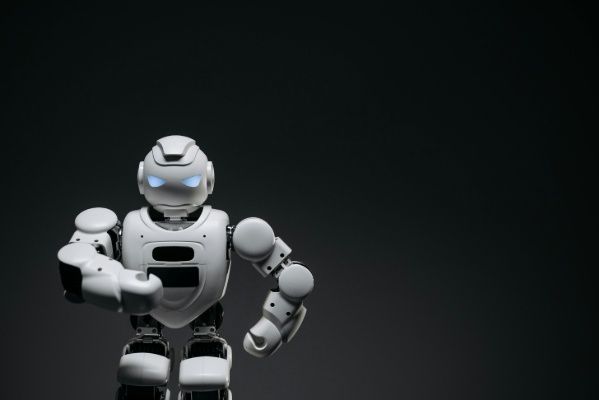
From Visionary to Algorithm: The Transformation of the CEO Position!
Robot as CEO? Between Efficiency and Humanity
The idea that artificial intelligence can manage an entire
company is no longer science fiction, but a logical continuation of processes that are happening
today.
The real question is not whether it is possible - but what we gain and what we risk,
if we allow it.
1. Efficiency vs. Context
FOR:
AI can analyze vast amounts of data in real time and make decisions
without delay, emotions, or fatigue. This means higher efficiency, fewer
mistakes, and better results.
AGAINST:
Data does not always capture context. Humans understand nuances - cultural,
social, human. A decision that seems “correct” on paper can be
destructive in reality.
2. Objectivity vs. Hidden Biases
FOR:
Algorithms can eliminate subjectivity - no favoritism, no
internal games, no “gut feeling” decisions.
AGAINST:
AI is trained on data created by humans. This means it can reproduce
and amplify existing biases, but in a way that is harder to
recognize and challenge.
3. Speed vs. Responsibility
FOR:
Decisions can be made instantly - without delay, without hesitation. In
a dynamic business environment, this is a huge advantage.
AGAINST:
When something goes wrong, the question arises:
👉
Who is responsible?
The lack of a clearly responsible person can become a serious ethical and legal
problem.
4. Optimization vs. Humanity
FOR:
AI will optimize processes to the maximum - costs, resources, productivity.
The company can become more competitive than ever.
AGAINST:
Optimization does not automatically include empathy. Decisions like layoffs,
employee overload, or corporate culture can become too
“rational” and devoid of human element.
5. Consistency vs. Flexibility
FOR:
AI will apply rules and strategies consistently, without deviations. This creates
stability and predictability.
AGAINST:
Human leaders sometimes intentionally break the rules - due to intuition, experience
or moral judgment.
👉
Flexibility often comes precisely from “imperfection”.
6. Data vs. Vision
FOR:
AI can identify trends and opportunities that a human would not notice.
This provides a strong foundation for strategic decisions.
AGAINST:
Vision is not just an analysis of the past - it is the ability to imagine something
that does not yet exist.
👉
Can an algorithm truly “dream”?
7. Control vs. Dependency
FOR:
Companies can achieve higher control over processes through
automation and predictive models.
AGAINST:
With the increasing role of AI comes the risk of complete dependency. If
the system fails or is compromised, the consequences can be
critical.
8. Liberation vs. Dehumanization
FOR:
People can be freed from routine management tasks and focus
on creativity, innovation, and human relationships.
AGAINST:
The risk is that people may be reduced to executors of decisions made by systems -
👉
which can lead to a loss of autonomy, motivation, and meaning.
9. New Type of Leadership vs. End of Leadership
FOR:
A new type of leader will emerge - a person who manages AI, not directly people. This
can elevate the role of leadership to a higher level.
AGAINST:
It is possible that leadership may “dissolve” - remaining as a formal role, while
real decisions are made elsewhere.
Accent
A company managed by AI can be faster,
more efficient, and more objective -- but also colder, harder to understand, and
further from humanity.
The real dilemma is not technological, but philosophical:
do we want a business that thinks like a machine, or a machine that serves
human thinking?