When the World is Your Office: From the Dominican Republic to Global Business
· Milena Milanova
Are you ready to step out of the 'familiar' to grow?
Introduce yourself in a few sentences. What is your name, what do you do (position, company, industry)? What does your work involve in terms of daily commitments?
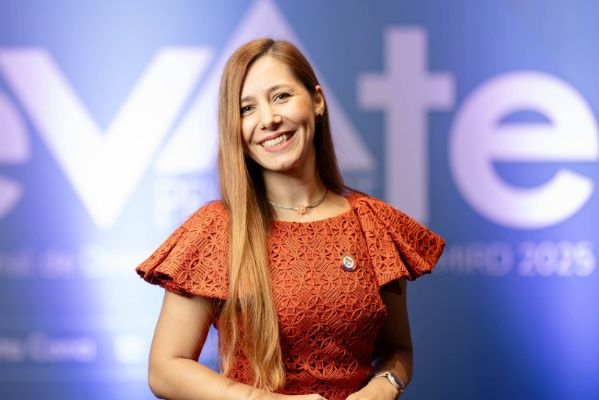
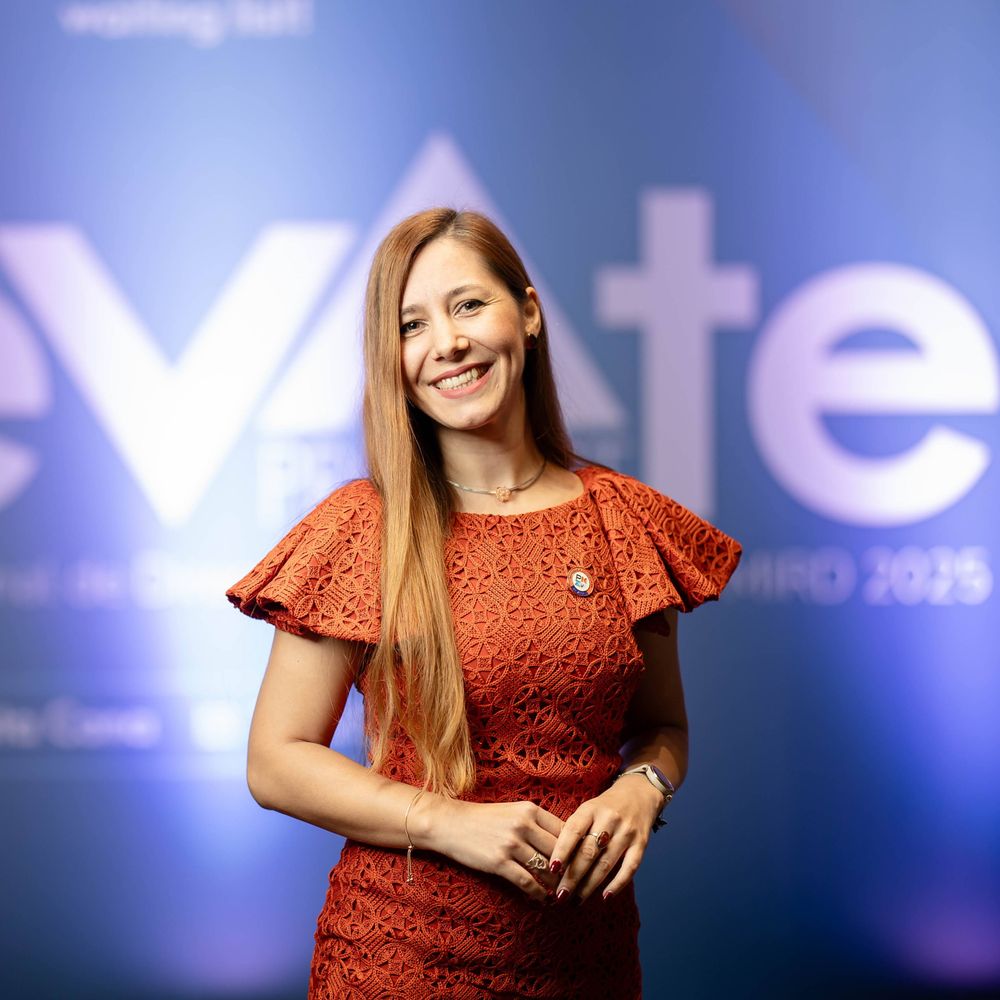
My name is Milena Milanova, and for nearly two decades, I have been building an international career in the fields of marketing, innovation, and digital project management. I am based in the Dominican Republic, where I run a consulting company called MILLENIO, specializing in growth strategies, marketing automation, and innovation models for companies with an international reach.
Alongside my entrepreneurial activities, I have also developed an active leadership role in the Project Management Institute (PMI®) - the largest global professional organization in the world for project management. In January 2026, I officially handed over my mandate as President of the local chapter of the organization, and this year I continue my leadership role as a mentor and board member.
My daily routine is a dynamic combination of strategic consulting, working with global teams, mentoring, participating in international forums and professional events, and managing projects that combine technology, leadership, and long-term influence.
Which country and city do you currently live in, and how did you end up there?
I primarily live in Santo Domingo, Dominican Republic, although our family rhythm often moves between the capital and Punta Cana, where we also have a home and where my husband’s office (also Bulgarian) is located. Traveling between the two cities is a natural part of our lifestyle and reflects the dynamics of our family - balancing business, international projects, and personal space.
My relocation was a personal life choice that naturally evolved into a professional platform for international development over time. I first visited the country in 2007, and I settled here permanently at the end of 2008.
Although the initial impulse was personal, for me, every major life decision has always been linked to a vision for growth, international cooperation, and professional development. This perspective turned the Dominican Republic into a starting point for projects on several continents.
Today, this multicultural lifestyle is also reflected in our family. Our daughter attends a French school, which is an important way for her to maintain a natural connection with European culture and language - something that also has personal significance for me, as French is one of the languages I have grown up with both professionally and personally.
What were the biggest challenges you faced at the beginning of your stay?
The strongest initial shock was related to the social environment and the sense of security during that period nearly 20 years ago. As someone who grew up in Europe, where tranquility and cultural life are part of everyday life, adapting to a different social reality was palpable.
However, if there is one thing that impressed me from the very beginning, it was the human warmth. Despite the challenges, people in the Dominican Republic are incredibly open, welcoming, and naturally inclined to create connections. This greatly facilitates both personal and professional integration.
How did you overcome the language barrier (if there was one)?
I have never perceived language as a barrier, but rather as a bridge between two cultures that connects people and opens new opportunities for development. When I arrived in the country, I already spoke several foreign languages, including French, Italian, and Romanian, which significantly eased the natural transition to Spanish, which also belongs to the Latin language group.
Right from the start, I began working in an international French company, where my daily routine was conducted in French and English, while the office environment was entirely Spanish-speaking. This multicultural dynamic helped me relatively quickly master the language in a real business environment.
Today, nearly 20 years later, I am writing my first book in Spanish - a fact I consider a personal challenge and a symbol of deep adaptation.
What resources or networks (local communities, colleagues, organizations) helped you adapt?
In my case, adaptation was the result of a combination of professional environment, international communities, and a personal network of contacts. Right from the beginning, the international French company I worked for kept me in daily contact with colleagues from different countries, which helped me not only overcome the language barrier but also understand the local business context and how relationships are built here more quickly.
The natural ease with which human and professional contacts are created in the Dominican Republic also played a very important role. It is a multicultural society with a rapidly developing economy, where people are extremely open, welcoming, and willing to help, making integration much more natural.
At a later stage, international professional networks and guilds became a huge support for me, especially the Project Management Institute (PMI) - a global organization where I built not only a leadership position as president of the local chapter but also a strong community of colleagues and professional friends from across Latin America and the world, mentors, and like-minded individuals with whom we support and collaborate at every opportunity. Such organizations create a sense of belonging, regardless of where you are in the world.
Of course, family was also an important factor in this process. When a person has stability in their personal life, it is much easier to build confidence in a new professional environment.
What are the main differences between the work culture in your current country and that in Bulgaria?
I would rather describe it not as a comparison, but as a skill to respect the context in which we find ourselves. I have always believed that a person should give their best where they are.
However, the differences are felt in the pace, interpersonal closeness, and the way trust is built. In the Caribbean region, business is heavily influenced by human connection, personal relationships, and long-term trust. This is an environment that teaches you to work not only with strategies and processes but also with culture, emotional intelligence, and social responsibility.
What values and practices in the workplace have impressed you the most?
One of the things that impressed me the most in my early years here was the importance of human connections and trust in the professional environment. This taught me that long-term results are rarely achieved solely through strategies. They come when there is an environment where people feel heard, respected, and motivated to contribute. This context has greatly influenced the way I build teams, partnerships, and client relationships today.
At the same time, the international environment in which I work has also taught me another very important practice - adaptability. Working with teams and clients in Europe, Latin America, North America, and the Middle East requires you to be able to adapt your style without compromising on quality, ethics, and professional discipline. This balance between human relationships and high standards is perhaps the most valuable lesson I have taken with me.
Have there been situations where cultural differences have challenged you?
Cultural differences have never challenged me; I have always viewed them as a wealth and a tolerance - an opportunity to expand the way I perceive people, processes, and expectations.
This was most evident in the different attitudes towards time, priorities, and the way consensus is built in a work environment. When you come from a more structured European framework, where clarity, deadlines, and direct communication are often paramount, it takes time to understand that in other cultures, the human context and building interpersonal relationships can be just as important for the final outcome.
Over time, I realized that success does not come from imposing your own model but from the ability to create a bridge between different ways of thinking. This has greatly helped me in working with international teams and in my leadership roles, including in global professional organizations where cultural intelligence is a key competency.
Today, I view these differences as one of my greatest professional assets.
How does finding a job differ in your current country compared to your homeland?
Today, in the context of the global digital economy, I would say that the differences between countries are gradually diminishing when it comes to finding a job. It is becoming increasingly important not where you are located, but what value you can contribute to the company, how well you communicate, and whether your skills are applicable.
Did you have to go through any additional qualification courses?
I wouldn’t say it was a matter of necessity related to moving to another country, but rather a natural part of my professional philosophy.
In the fields I work in - innovation, marketing, digital strategies, project management, and new technologies - knowledge has an extremely short life cycle. This means that one cannot rely solely on accumulated experience, no matter how valuable it is.
For me, maintaining professional qualifications is a continuous process. It includes both international certifications and leadership programs, as well as constantly keeping up with new models, technologies, artificial intelligence tools, and best practices from various markets. This discipline allows me to remain relevant in an international environment and work with clients and teams across several continents.
In fact, I would say that in today’s world, continuous learning is no longer an additional qualification but part of professional development itself. Especially when working in fields that change so rapidly, the ability to intellectually renew oneself is key.
Have you encountered prejudices or obstacles because of your foreign origin?
I wouldn’t say I have encountered prejudices because of my origin, not only here but wherever I have been. Rather, in the earliest stages of my career, there were situations where I was both the youngest person in the room and the only woman at the table for international negotiations.
But I have never approached it with a sense that I needed to prove more because of my gender or nationality. For me, authority is built through consistency, preparation, results, and the ability to create trust.
Perhaps it is this combination of discipline, adaptability, and genuine passion for my work that allowed me to quickly launch my first entrepreneurial venture in the technology sector, which later naturally evolved into the consulting company I am developing today.
What would you advise people who want to take a similar step?
I would advise them to view moving to another country as a conscious choice for personal and professional growth. The new environment does not solve problems by itself; it simply places a person in a different context where their strengths, limitations, and potential become clearer.
The most important thing is for a person to start with an open mindset, respect for the local culture, and a willingness to learn continuously. Adaptability does not mean giving up your identity but being able to integrate the best of yourself into the new system while respecting its rules, rhythm, and values.
I would also advise investing in language, a network of contacts, and skills that have international applicability. In today’s world, the ability to create value beyond geography is what makes the transition successful.
And perhaps most importantly: don’t wait until you feel completely ready. Sometimes the greatest growth comes precisely at the moment when we step out of the familiar and begin to build our new version in real time.
If you could go back, would you choose the same path?
Yes, without hesitation. Every stage of this journey, including the difficult moments, has shaped me as a leader, entrepreneur, and person.
Living in different cultures teaches you humility, flexibility, strategic thinking, and the ability to create value beyond borders. This is at the core of everything I do today.
What do you miss most about your homeland, both professionally and personally?
I miss my family and friends the most, whom I do not see as often as I would like. Personally, this is the only real deficit of life abroad.
Professionally, however, I have been fortunate to build my environment in an international context that constantly stimulates me towards learning, development, and new qualifications. Perhaps this is why adaptability has become one of my strongest personal competencies.
Have you considered returning, and under what conditions would you do so?
I have always felt like a citizen of the world. My work is related to innovation and high technology - a field that allows for great flexibility and regional, even global influence, regardless of physical location.
What do you think about money? What is its influence on your life? What is your advice to people who often ask questions related to money and how sufficient it is?
For me, money has never been an end goal. It is a tool, a resource that multiplies what we want to create: freedom of time, investments, new ideas, opportunities, and most importantly, creating value.
Many people view money solely as a result. I see it as a mechanism for multiplying value - a means through which we can increase our impact, build resilience, and turn good ideas into reality.
My advice is for people not to measure financial success solely in quantity but in its ability to create sustainability and progress.