The Truth About Children's Success That No One Talks About
· Maria Amzina - Eduteh.eu
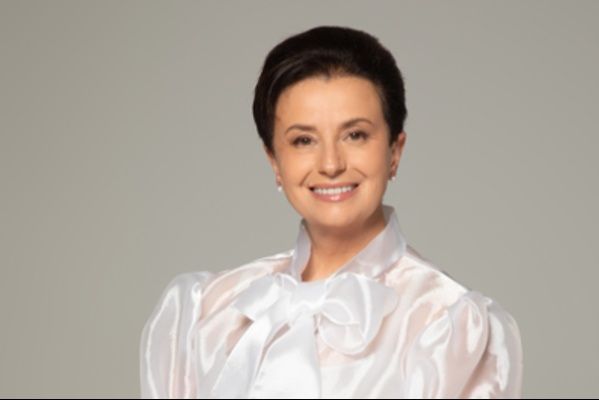
“Being a Good Person” – The Most Valuable Lesson According to Maria Amzina!

Introduce yourself – how did your journey in education begin and how did the idea of creating your own school come about?
My name is Maria Amzina. I have always dreamed of being a teacher. From the very first classes, when I stood in front of students for the first time, I realized that this is my calling. What has been leading for me since then is the search for meaning in every detail, as part of the lesson - from the way it is presented to the way of learning and techniques for lasting knowledge retention by students, which they confidently apply. This has shaped me as a teacher.
The creation of two private schools was not planned in my vision for my professional growth. The establishment of the schools is a confident decision based on proven successful experience from 17 years in informal education – in building schools for students applying after 7th grade and for prospective students. The high success rate of students from Educational Technologies schools in Sofia and cities across the country gave me the confidence that I could offer this educational system as licensed for a private school.
What I believed then and believe even more strongly now, and prove it today, is that school is not just an educational process. Students grow in school. If learning is disconnected from personal growth, it does not make any student successful. Learning for its own sake and achieving excellent results does not form personalities. And this is proven by the new conditions of the new era we live in. The times dictate the need for those skills that shape character culture, which is crucial not only for success but for true satisfaction in life.
Even in building the schools, I focused on a mentoring program to motivate the students we teach, which realized the high success rate.
This is what I focused on when creating the two private schools Educational Technologies ™ - a proven effective educational system and personal development program.
What is the philosophy of your school and how does it differ from the traditional educational model?
Our educational philosophy is focused on creating a stimulating and inspiring educational environment, as well as an element of personalization of our educational service.
To clarify what an educational environment is – it is not just the educational base. It is the necessary condition for the place of the educational process. The true educational environment must have spirit. This spirit is carried by the teachers, which is why teachers are the asset of this environment. Here comes my conviction that teachers should be models of successful individuals, well-prepared to inspire students, competent in their subject, with an aura that conveys trust, respect, and exceptionally well-prepared as mentors for their students. Not least – they should love children.
The second element of the educational environment is a well-developed and outlined educational system as a method of teaching, learning techniques, and developing critical thinking, which is a leading skill in the new digital world.
The third element of the educational environment is a personal growth program. I call it the “Confidence Program.” This program is our patent. It has been developed with upgrades according to age and life and business needs. It forms confidence in stages. It goes through emotional experiences to achieve emotional intelligence, through beliefs and values, through needs that define our lives, to reach the development of skills and competencies with international certificates that provide clarity for perspective, build character culture, and imply not only confidence but also competitiveness for students graduating from high school.
At the core of our educational philosophy is that elementary school is a place where a community of trusted adults between parents and teachers should be created, to give children the opportunity to grow loved and confidently discover their strengths.
Our philosophy defines high school as a base camp in the mountain of career, as well as a base camp in preparation for life, which places our personal development program as a priority in the growth of children into confident young people.
Our personal development program won first place at the international forum “Global School”
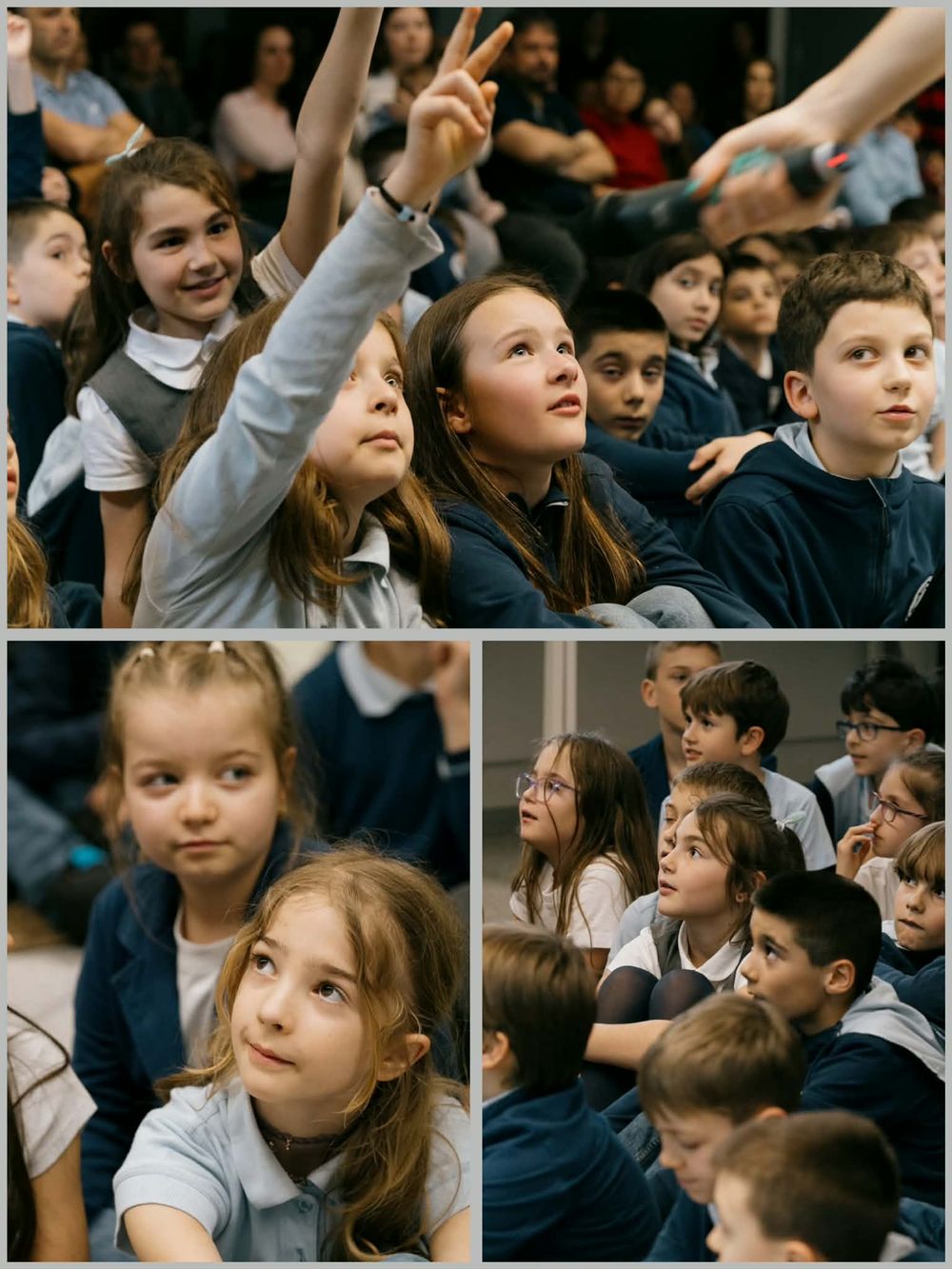
Photo: eduteh.eu
What does “successful child” mean to you and why does society often get this definition wrong?
“The successful child” is a dream of every parent. “The successful child” is perceived as a child with high achievements.
My definition of a “successful child” is: “a successful child is a happy child.”
What is the truth about child development and success that “no one says”?
It is normal for parents to strive to create all possible conditions for their children to achieve success. Moreover, they plan their child's success, and that is normal. It should be that way. Furthermore, they organize maximum engagement for the child from courses, from sports. I often hear that children go from one sport at 5:00 PM to another sport at 7:00 PM. They come home, have dinner, and are tired – they fall asleep.
Often, there is no time for children and parents to talk. To see each other, to plan a topic to discuss preventively.
It is important for children to play sports. Sports, besides health, has another essential contribution. Sports teach discipline. If we look from a marketing perspective, parents do not buy sports; they buy discipline.
I am talking about sports that build character, not professional sports.
At the same time, parents expect their child not only to “cope” in school but to have high success. I repeat “high success.” They plan which subjects are important, depending on what the child will study at university.
As a teacher preparing prospective students, I have worked with ambitious and unmotivated students. With the former, it is easy – you show, give direction, and they achieve success on their own. But the teacher takes the credit. But with the latter, it requires not only more work. It requires sensitivity, skill, dedication, care, calling, mission. And here lies the difference. Some children follow the direction of “the right,” while others have not discovered themselves. But if they have a mentor, if someone believes in them, then they gain strength from the push they receive.
And here comes the truth. Often, ambitious children, those who will achieve success on their own, move purposefully and determinedly toward success. They learn to deserve success. And if something important is missed here, it is to be taught to be good people, to be emotionally mature, to accept others, to develop empathy, to let go of their expectations and give their personal contribution without immediately expecting “cash,” then this is the ideal case. Then both parents and teachers have done their job and have been blessed with that child. But if only ambitions remain, then this “successful child” is an intellectually arrogant adult.
What a child achieves, who has no ambitions, even if they have motivated parents, does not push off the springboard of their plans but adapts. They do not do things that “should” and in which they “do not burn” with their desire. But if this child comes under the influence of someone who cares, a teacher who sees potential in them and believes in their superpower, then this child can achieve extraordinary development, become a good person, and acquire those skills that were modeled by their mentor-teacher.
If we look from the parents' side, they also need to have this role – the role of coaches, literally mentors. Especially when the child does not meet their expectations for “success.”
Here is a phenomenon – often this type of children, children without ambitions, do not hear and do not want to hear their parents, even though they speak correctly to them. They would hear another person who can influence them, inspire them. And if this is not a “cool friend” but a teacher, a mentor, then this child has found themselves where they need to be. Then their path begins to align.
In these two comparisons of the path of the ambitious child and the child who does not “meet expectations,” there is something more priority. Something much more important.
Something we know is important but do not always work for. Moreover - we forget it. We parents and teachers forget an important truth – that the child must first be healthy – physically, mentally, and psycho-emotionally.
I will focus on mental health. It is related to our thoughts.
If a child experiences situations from their communication with friends, from situations at home, their thoughts are not directed toward their success. Their thoughts are directed toward questions: “why,” “am I to blame,” and questions to which they find no answers. And on top of that come the expectations placed on them – the expectations of the parent to cope and the expectations of teachers to cope. These expectations are a barrier that prevents us from reaching the child. A barrier to empathy, a barrier to harmony, a barrier that repels, shows misunderstanding, non-acceptance, and imposes guilt. It creates emotional trauma. At that moment, the child asks questions: “Do they see me?”, “Do they care how I feel?”, “Am I enough?”. Every child wants to be sure that someone hears them, sees them, and accepts them even as imperfect.
“The truth is beautiful,” says an Indian proverb. This means that when we accept it without defending ourselves, justifying, or imposing guilt, then we can do the right things.
The truth about children's development and success that “no one says” is the truth that few parents and teachers understand.
First – for parents: parents need to prepare to be parents. Parents need to build a culture of character with emotional maturity and learn to communicate with their child through the language of virtues, through non-violent communication, through openly sharing their feelings, through the ability to show perspective for the child without hurting, to create an environment for preventive conversations. This requires a desire to learn how to be mentors to their child. If parents have the self-assessment “I know it all,” they suffer from the disease of “intellectual arrogance.” Then they do not learn. They do not accept advice. But being a parent in the new era with a new type of children requires learning, accepting that you do not know, and seeking the best model to contribute to the mental health of your child and raise a stable personality in every relationship.
Second – for teachers: Teachers must first love children to become teachers. If they do not love children, they should immediately change their profession.
Teachers must purposefully develop to leave benefits for the children and moreover, to leave them with love. A teacher must be an empath, set goals for the children, seek meaning in what they do for the benefit of the child, and acquire those mentoring skills that make them a leader, a guide in the child's success.
And here comes the next important truth about children's success – it is the synergy between parents and teachers. What we can do together and lay as a foundation is to show the child the model of being good people and instill in them the idea of what it means to be a good person. When a child is built as a good person, when they know boundaries, when they understand the meaning of efforts, when they have trust in us adults, then they can move mountains. I strongly believe in this.
To what extent does a child's success depend on school and to what extent on family?
A child's success depends equally on both sides. The future of the child is built from the family and the educational environment. Therefore, creating a community of teachers and parents as trusted adults for the children, accepting common values in favor and support of the children, discovering the child's strengths and the support from teachers and parents to develop them is the most valuable gift a child can receive in their life.
What is the real role of parents in building the child's personality?
Parents are a model for their child. Children do not learn from what we tell them to do; they learn from us, from what they see as a model – how we speak, how we react emotionally, how we do things. This remains as a leading map in the child's life. The other may be perfect, but the model they follow is what shapes them as a person.
Where do parents most often make mistakes, even when they want the best for their children?
Parents make mistakes when they are not emotionally mature. Emotional maturity is rarely a natural gift. It is built willfully, consciously. The ability to speak as parents with their children is a higher skill. It includes the ability to allocate enough time, to predispose for conversation, to listen actively, to accept, to support, while analyzing the situation, even when the child is to blame, as well as to be prepared to lead a preventive conversation.
Other mistakes of parents are their personal ambitions for the child, without considering their strengths and directing the child toward schools, profiles, and professions that do not correspond to those strengths and the child's desires. Even if the child makes efforts, accepts the parents' decisions as the most correct for them, they may not realize their full potential if it is “not theirs” and sooner or later, if they develop confidence, they will change their profession on their own.
What should a healthy relationship between parent, teacher, and child look like?
When parents and teachers are a community of trusted adults for the child with clarified and commonly accepted values, then the child has the mentors they need in their growth.
What happens when this relationship is absent or disrupted?
When there is no such relationship, the child either “does not know who they serve,” or takes advantage of a situation to present it in their favor, and if a problem is created by the child at school and they receive protection from their parents, then a premise is created for situations with the child that go beyond normal boundaries and without control.
Conversely, if the parent needs support from teachers for their child, but they are not involved, then parents are left alone with this. The one who bears the consequences is the child.
Why does a happy child have a greater chance of being successful and entrepreneurial in the future?
A child is happy when they have trust in their parents and teachers. They develop their potential because someone believes in them. They feel understood, listened to, supported, even when they do not succeed. They hear words that support, not words that judge. This creates a sense of security, and security implies inspiration for development. And this inspiration also brings a sense of happiness and success simultaneously.
How do you create an environment where children feel confident, calm, and motivated?
From the very beginning, I emphasized in our educational philosophy that the educational environment is built with teachers. First and foremost, teachers must be prepared to be teachers and mentors for their students. But again, I emphasize – this can be learned and developed only if these teachers love children.
Secondly, our personal development program, which we present to parents and hold meetings with them to introduce them in detail to communicating with children in the language of virtues and the language of non-violent communication and I-messages.
Thirdly, there are personal development classes from grades 1 to 12, which are part of our curriculum.
What does “individual approach” to each child mean in practice?
This is not an easy task when viewed from the perspective that each child learns differently, has their own peculiarities in perceiving and assimilating information and behavioral patterns in the learning environment. Often, “individual approach” is understood as how teachers adapt their lessons according to the different intelligences in children. We know that there are 12 basic types of intelligence through which we humans process information.
But a creative teacher, if they master the learning technique and consider neuroscience for memory, i.e., the science of mental work, can structure their lesson in such a way that all students learn 50% during the class. Thus, with proper teaching and the use of proper lesson design, the teacher can reach the individual peculiarities of information perception for each child. But for this, I say that mastery is needed. Only teachers who are seekers, who seek meaning, only they create such lessons.
But there is another aspect here. I call it not “individual approach” but personalization of the educational service or more specifically – personal attention. This means the teacher should monitor whether they are reaching every child, whether each child understands their instructions, whether each child is listening and looking at them with their eyes, whether each child is correctly executing what the teacher wants them to have in their notebook. And more – for a child who works slowly, faces difficulties, to stay closer to them and plan support with meaningful approaches.
How do you discover and develop the talents of children that often go unnoticed in the standard system?
By observing them in the learning process, in their interactions with other children, by encouraging them to share what they do best. The main direction is also the personal development classes and the analysis of the main virtues that contain various strengths. When children know the content of each strength, they can identify with it. We also introduce parents to the meaning of strengths and together we define the child's profile. In higher grades, we also have career counseling with a specialized matrix for determining career profiles.
How do you balance academic requirements and personal development?
Let me clarify what academic requirements are. Academic requirements refer to formats of exams such as national external assessment and maturity exams, as well as exams at universities, exams for foreign language certificates or key competencies. All of them fall under a specific academic framework with specific criteria that must be met. In this direction, we follow the framework of the exam format and criteria and develop a comprehensive program with exact time for teaching, practice, review, training exams, and corrections where necessary.
In this preparation, the support of the teacher-mentor has a strong impact on personal growth. Every child needs such a teacher to overcome the burden and organize themselves to study effectively. Here, motivational lectures help a lot, some of which we conduct in the presence of parents.
In addition to the academic program, personal development classes on various topics run parallel, as well as extracurricular seminars and training for certificates in key competencies as additional courses.
What skills are truly key for the future of children, beyond grades?
There is an increasing opinion that soft skills weigh much more than hard skills. Soft skills account for 85% of a person's confidence and competitiveness. Hard skills – subject competence, digital, foreign language, and technical skills are only 15%. Based on this, I believe that children must first grow as good people, mentally healthy and psycho-emotionally resilient individuals. However, it is important that they understand very well the essence of soft skills such as proactivity, assertiveness, flexibility, personal contribution, teamwork skills, active listening, and acceptance of criticism, resilience to stress, and the ability for continuous learning and improvement. These skills form the superpower for every child as a confident individual, which also implies a drive for personal achievements.
How is confidence and independence built in a child from an early age?
When we believe in them, trust them, and support them even when they make mistakes or fail. When we talk to them without blaming. When we see a strong side in them and create conditions for it to develop. And not least, by giving them the opportunity to name their feelings without shame and fear.
What is the role of technology and artificial intelligence in modern education?
Technologies and artificial intelligence are positively changing the world. Things are becoming easier, faster. But this can distract a child from their personal growth from experience, from learning, analyzing situations on their own, and thinking critically. The most important thing in the modern world is for children to grow through purely human systems, to apply them in their lives both personally and professionally, and to remain good people.
Is AI a helper or a risk for children's development?
Artificial intelligence is a double-edged sword. It is precisely here that it is important what I said above – to be used to facilitate but not to erase creativity and purely human systems of communication and personal growth.
How can parents and teachers find a balance between technology and real communication?
The balance depends on the need. If a technology is beneficial for learning, the school is obliged to develop it, and parents should support the process. But if a technology or media is just entertainment and a source of dopamine, then both parents and teachers should adopt the same principles and rules for use, without fearing that others around the child do not respect these principles.
What should parents know about the world their children will live in?
The first thing is to realize that they are parents of a new type of children. Children with pure souls and a thirst for knowledge. The second is to learn to change themselves, to step out of the models of their parents and find the best way to be trusted adults. New children need exactly that – trust and recognition. They become alienated when we reject them, when we do not see their achievements, but see their failures and mistakes. Then they seek an environment where they can be recognized because they need to feel significant. Here, the role of parents is leading – they should be the ones who recognize success, highly value efforts, and provide their support. Parents should stay close to their children, not reject them at every problem they create. Because they will lose them in a ruthless world that offers them wonders. Let the wonders be at home.
What are the biggest challenges facing education today?
To teach children to learn. Education must take into account neuroscience, which provides a clear direction for the functioning of memory. It is necessary to teach meaningful things that bring benefits, not just information. The content must be specific and direct toward thinking. Children must learn how to learn to have knowledge they can use. What is important to be accepted by both parents and to be a vision in education is that children should not learn for grades but be motivated to know and be able to use what they have learned.
What would you change in the educational system if you had the opportunity?
First – the criteria for teachers – first and foremost is understanding the role of the teacher in the life of every child and building a value system that creates teacher-leaders, teachers who do not stop learning, allocate time for it, and see it as an investment in themselves and for the benefit of the children.
Second – the educational content – it is necessary to have educational content that fosters critical thinking. Educational content that fosters confidence in applying knowledge, forming skills and competencies that contribute to the development of the world.
Third – creating a community of parents and teachers with shared values – this means organizing forums for working with parents and jointly creating an environment for the growth of children by teachers and parents.
What distinguishes a child who will be successful in 10–15 years?
This is a confident young person with developed virtues, who knows their strengths, has built emotional maturity, and is developing to leave benefits.
What is the most valuable lesson a child should learn in school?
To be a good person.
And finally – what advice would you give to parents who want their children to be not just successful but happy and fulfilled individuals?
To learn to accept their children. To teach them first what it means to be a good person, to show them what it means to give a personal contribution, especially when they are part of a team, as well as to teach them to take responsibility for their actions. To support children when they have not achieved the expected success. To value not the child itself but the efforts they put in. And not least – to teach their children gratitude.