The leader of the future must first manage themselves
· Aneta Natova - LeadFit
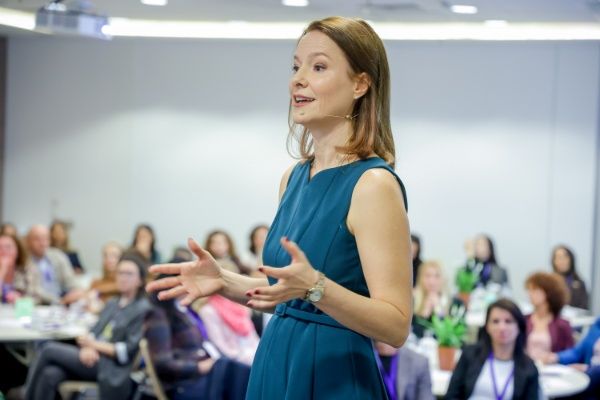
Success does not heal emptiness!
Introduce yourself - who is Aneta Natova
beyond the professional role?
Beyond
the professional role, I am a person who loves life very much.
I love
movement, travel, meetings with people, conversations where something real
happens. I love beauty - in places, in words, in the way a person can
be present. I need depth. It is not enough for something to just look good
on the outside. I have always been interested in what lies beneath.
I am also a person
who has been very active for a long time. I have taken responsibility from an early
age, I have worked a lot, and I have often been the one who takes charge, makes decisions,
and moves things forward. This has given me strength, but also many lessons.
Over time,
I began to understand that a person can be very successful on the outside and at the same
time need to return to themselves. To hear their quieter questions. To
understand not only what they can do, but what truly makes sense to create.
Perhaps this
is exactly what lies at the core of my character - a combination of a lot of energy and a lot
of searching. On one hand, I am a person of action. On the other, I increasingly believe
that the most important things are not born from haste, but from inner clarity.
And somewhere there,
the idea for LeadFit was born. For me, this is not just a company. It is a continuation of my personal
journey – from a lot of Doing to more Being, from achievement to deeper presence,
from success to meaning.
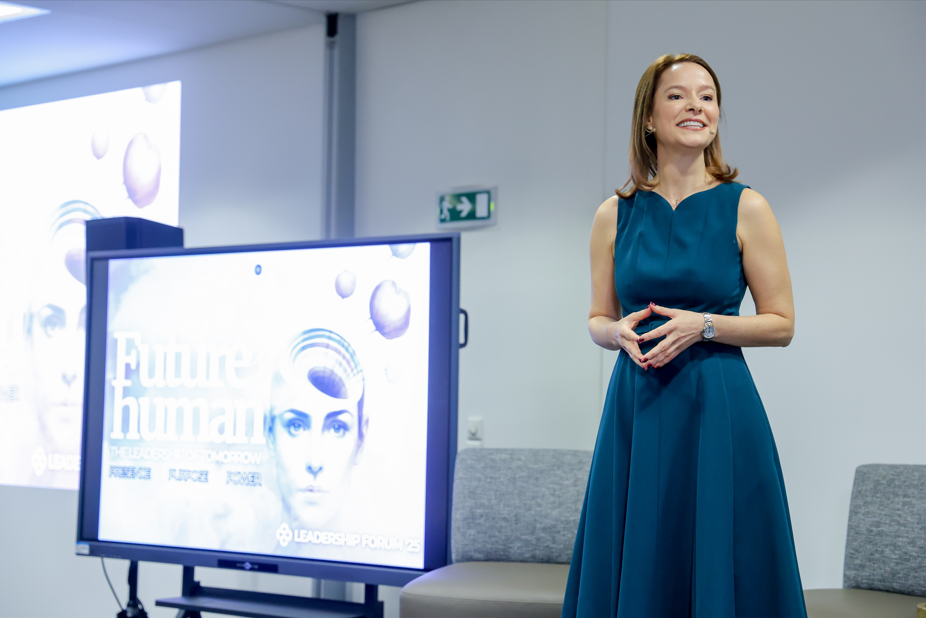
How was the idea for the company born - was there
a specific moment when you said: “This is missing in the market”?
LeadFit did not
come to life in a specific moment. Rather, it was a natural continuation of my entire
professional journey.
For years,
I worked in the corporate world, and then in the development of leaders and teams.
I saw many trainings, programs, models, beautiful presentations. But I also saw something
else - that often people understand many things in the room, get inspired, talk
about change, and then return to their daily lives and the old reactions kick in again.
The same meetings.
The same pressure. The same avoidance of difficult conversations. The same patterns of
control, silence, or haste.
Then it became
clear to me that development cannot remain only at the level of knowledge. It is not
enough for a person to understand an idea. What matters is what they do with it later -
when there is pressure, when they need to give difficult feedback, when
the team disagrees, when there is no clear answer.
From this feeling,
LeadFit was born - as a space for development that not only inspires
people but helps them change the way they are present, decide, communicate, and
lead in the real moments when leadership is most evident.
What provoked you to take the risk of
starting alone?
My personal
story is connected to a moment of great change.
I was in
an international position and was responsible for eight countries. At the same time, my colleague
from Ukraine was responsible for just as many countries. The war in Ukraine began.
It coincided with a reorganization in the company. One of us had to stay and take
on all the work.
For me, the choice
was clear.
I didn’t even want
to be asked. I knew I had to go. For her, everything was shaky at that moment - her
country, her security, her life. I couldn’t imagine her staying without a job.
So I left.
After that, for
the first time in my life, I had time. Real time. I took a year off.
I traveled like never before. I spent one month in South Africa. One month in
Peru. At first, it was very difficult for me to do nothing. I was used to being in
motion, to taking responsibility, to solving, to acting.
But gradually,
this time began to work within me.
I looked back. I saw what I carry. I saw what I really want to do. I talked to
friends and told them: “I wonder if I should work alone or do something
bigger than myself.”
And almost always,
the answer was the same: “Of course, something bigger.”
That’s how LeadFit
began.
What did LeadFit Global look like in the beginning
and what is it today?
In the beginning,
LeadFit was a very personal vision. There was a lot of energy, a lot of faith, and a lot of work
that no one saw from the outside.
Today, LeadFit
is already a system. We have methodology, a team, partners, international clients,
programs that are developing in different countries.
But the most important
thing is that we have a clear philosophy.
We do not believe
in training for the sake of training. We believe in development that changes the way
people think, speak, decide, and collaborate.
LeadFit started
as an idea. Today it is a living organism.
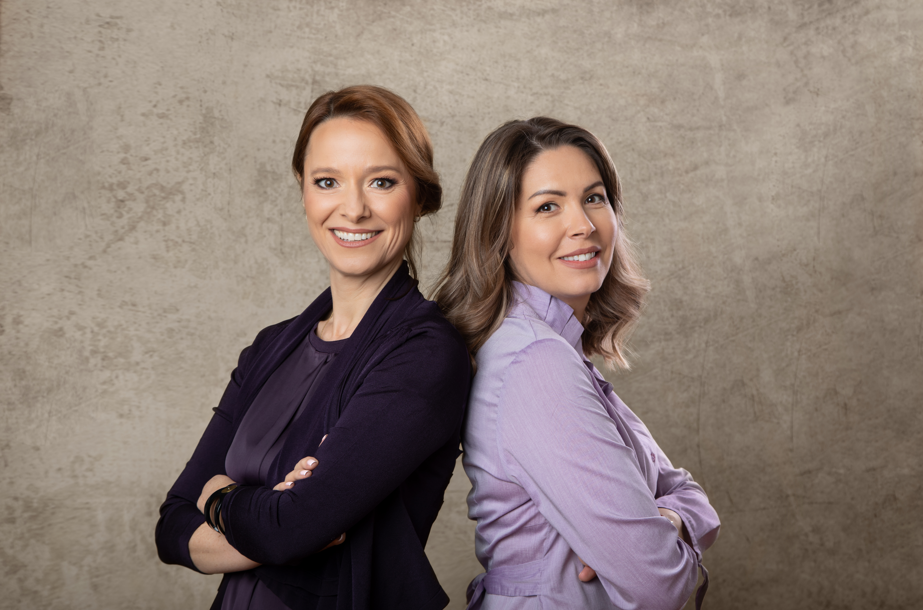
What moments bring you the greatest joy?
I feel immense joy
when we win an international project.
Especially when
the decision is not made in Bulgaria, but for example in Belgium, Hungary, or Italy,
and we are competing with European competitors. This is a very strong moment for me.
Not only as a business result but as a sign that the quality we create here
can be competitive at a European level.
We have a project with
a company in the automotive sector that started in 18 countries – including
Europe, the USA, and the APAC region. This is a great trust. And for me, it is proof that
a Bulgarian company can create work at an international level when it has
a clear methodology, high standards, and genuine care for the client.
But I also find joy
in the small moments.
When a leader tells me: “For the first time, I understood what I do under pressure.” Or when a team
starts to speak more honestly. Or when someone leaves a program not just with new knowledge,
but with new clarity about themselves.
This is why I love this work.
What were the most difficult moments along the way -
those that are not visible from the outside?
The most difficult
moments are not always dramatic on the outside.
Sometimes they are
quiet. For me, these are the moments when I carry responsibility, but there is still no clarity.
When I have to make a decision without having all the answers. What people
see is the result, but they do not see how much internal work, doubt, and resilience
lie behind it.
And if I have to
be completely open, the most difficult moments are those when I feel alone.
This is a particular loneliness. Not because there are no people around me, but because in the end,
there are decisions that no one else can make for me.
What helps me is not to turn loneliness into identity. To seek conversation. To seek
a mirror. Not to close myself in the role of a person who has to carry everything alone.
Has there been a moment when you doubted whether all of this would succeed? What keeps you in the game?
Yes, of course.
Anyone who builds something real has moments of doubt. If there is no doubt, there is probably
not enough honesty.
What keeps me is the meaning. When I see how a leader begins to hear differently.
How a team stops protecting itself and starts to speak more boldly. How an organization understands that culture is not a poster, but daily behaviors.
These moments remind me why I do it.
What have you learned about people after so many
years of working with leaders and teams?
I have learned that
people do not resist change as much. They resist being forced to change without meaning,
without respect, and without participation.
I have also learned something
else: behind many difficult behaviors lies fear.
Behind control,
there is often fear. Behind aggression - fear. Behind procrastination - fear. Behind
perfectionism - fear.
But fear is not
the biggest problem. The problem is the armor we put on when we are afraid.
Some people arm themselves with control. Others with distance. Others with perfectionism. Others with always
looking strong.
The real work begins when a person can see this armor - without shame, but also without justifying it. And gradually choose another way.
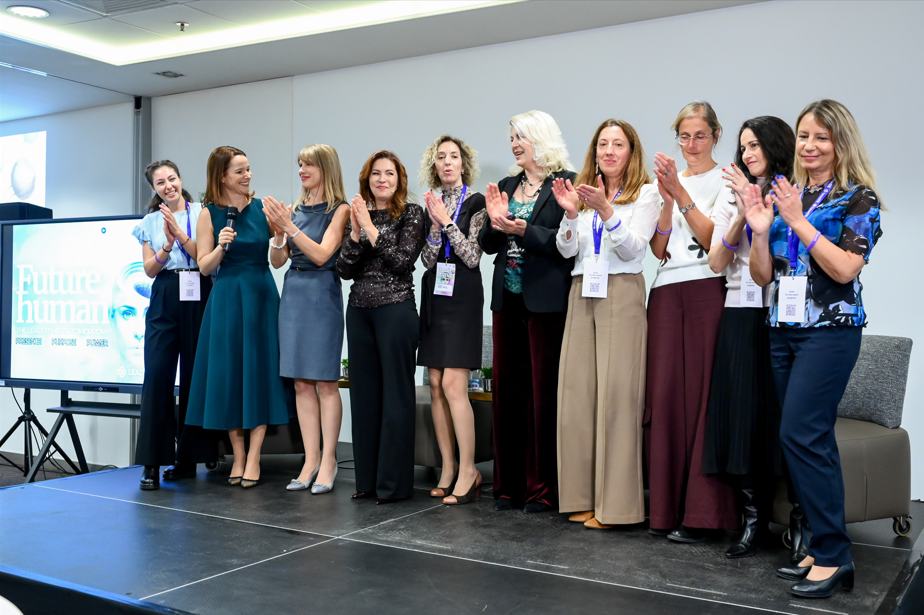
The world constantly talks about leadership.
What is actually missing in modern leaders?
I think many leaders today lack inner support.
Not because they lack
knowledge. On the contrary - most leaders have a lot of knowledge. They have experience, strategies,
goals, KPIs, systems. But we live in a time of constant uncertainty. Priorities
change quickly. Teams are under pressure. People are tired. Decisions often
have to be made without full clarity.
And it is precisely in
such moments that true leadership is revealed.
When there is
strong pressure, many basic reactions are triggered in a person - fear, defense,
control, the desire to quickly close the uncertainty. Neuroscience shows us that
when we are under strong stress, the brain easily shifts into survival mode.
Then we become more reactive, less able to listen, to think long-term, and to see the whole picture.
Therefore, a leader
today must be able to manage not only processes and people but first their own
internal state.
If they cannot
manage themselves, it is very difficult to manage others.
Because the team
senses the leader's state. If the leader is anxious and reactive, the tension
is transmitted. If they are tense, the room tightens. If they are clear, calm, and honest,
people start to think better.
Today, there is no lack
of information. There is a lack of the ability to remain human under pressure.
This, for me, is
one of the most important leadership abilities of our time.
What is the biggest myth in the corporate
world today?
That if people
are very busy, they are effective.
Many
organizations confuse movement with progress. They confuse meetings with work. They confuse speed with
clarity.
You can do
many things, respond to many emails, have a full calendar - and still not create
real progress.
At LeadFit, we often
talk about the difference between Doing and Being.
Doing is what we do - tasks, decisions, meetings. Being is the state from which we do it - clarity, presence, awareness, internal order.
When there is
much Doing but a lack of Being, Autopilot begins.
Then there is
much movement, many words, many meetings, but not always direction, clarity, and
effective decision-making.
Work
begins to require more effort than necessary. Hasty or unclear decisions are made. Then we go back.
We do something twice. We give a task, the person completes it, and in the end, we realize that we actually wanted something else.
This is very
typical for Autopilot - everyone is busy, but the system spends too much energy
for the result it achieves.
And that is why, for me,
effectiveness today is not just about doing more. It is about being aware enough
to do the right things, in the right way, with less unnecessary noise.
Technologies and artificial intelligence
are changing the way we work. How do you think this will change leadership and
human relationships in companies?
AI will make
many things faster. But that does not automatically mean it will make people
wiser.
Technologies
can give us speed, analysis, automation, access to knowledge. But they will not
replace the human ability to create trust, to have difficult conversations, to sense what is unsaid in the room, to remain connected when there is
pressure.
In this sense,
AI will not make leadership less human. On the contrary. It will make it even
clearer where humanity is lacking.
Will AI make people freer… or
more lost?
Both are
possible.
AI can
free up time, energy, and capacity. But if a person lacks inner clarity,
the freedom can turn into even more noise.
The question is
not just what AI can do. The question is who we are when we use it.
If we are in
Autopilot, AI may simply accelerate the Autopilot. More tasks, more
content, more reaction.
If we are
more aware, AI can help us free up space for more human work - thinking, connecting, meaning, creativity, leadership.
What human qualities will become increasingly
valuable in a world where technologies can do almost everything?
Clarity.
Presence. Insight. Emotional maturity. Courage.
The ability to
not react immediately. To listen. To ask a good question. To bear tension,
without throwing it onto others. To admit when you don’t know. To correct,
when you’ve made a mistake.
These are very
human qualities. And I think they will become increasingly valuable because they cannot be
imitated just with words.
People sense
whether you are genuine. They sense whether you are present. They sense whether you see them.
Is there a difference between a “successful person” and
“a fulfilled person”?
Yes. And sometimes
the difference is huge.
A successful person
may have achieved a lot on the outside - position, recognition, money, influence. But that does not
mean that they are at peace with themselves internally.
A fulfilled
person has a connection with themselves. They may have ambition, but they are not entirely consumed by
it. They may want more, but they do not live constantly with the feeling that they are not enough.
Many people
lose themselves not because they fail, but because they succeed in a way that distances them
from themselves.
When does a person start to lose themselves in
their career?
When they start
to give up their inner truth to maintain an external image.
They simply start
to set aside small parts of themselves to be convenient, successful, approved.
At first, it’s small.
You don’t say what you think. Then you accept something that is not in your values. Then
you start to play a role because the role works. Then people like the role and
it becomes increasingly difficult to return to yourself.
A person does not
lose themselves suddenly. They lose themselves gradually. And after years, they realize that they have achieved a lot,
but do not feel at home.
And often from the outside,
everything looks very successful.
What is the biggest transformation you have seen in a person or team after working with you?
True
transformation is when the way people behave with each other in difficult moments changes.
I have seen
teams that at first are very polite but not completely honest. Everyone is
professional, everything looks fine, but beneath the surface, there is tension,
unsaid things, caution. People do not say directly what they think.
They wait. They go around. They protect themselves.
And gradually,
when enough trust is built, something changes.
They start to
talk more honestly. Not aggressively, but more clearly. They start to say: “We are not
aligned here.” “This is not working.” “I have a different perspective.” “I need
support.” “I did not take responsibility here.”
For me, this is
a huge change.
Because at that
moment, the team no longer spends so much energy protecting itself. The energy begins to
go into real work – into decisions, into trust, into moving forward.
On an individual
level, the strongest moments are when a leader sees their own pattern.
For example, realizes: “I thought I was helping, but I am actually controlling.” Or:
“I thought I was decisive, but sometimes I just rush because I can’t stand the
uncertainty.”
These are quiet
moments, but they are very deep.
Because when
a person sees their pattern clearly, they already have a choice. And for me, development begins
right there - at the moment we stop acting automatically and start choosing more consciously.
How important is emotional
intelligence in modern business? And can it be learned?
Emotional
intelligence is no longer a “nice to have”. It is a business skill.
If you cannot
recognize what is happening in you and in the people you communicate with, you will make
weaker decisions. You will miss signals. You will create tension that you will later
call “team problems”.
Yes,
emotional intelligence can be developed. But not just with theory. It develops
through practice, feedback, real conversations, pauses, self-observation.
It’s not about
becoming “softer”. It’s about becoming more precise.
Is there a quality that immediately shows you that a person has the potential to be a true leader?
Yes -
the ability to learn without immediately defending oneself.
When a person
can hear difficult feedback and remain open, that is a very strong sign.
It does not mean that
it doesn’t hurt. It does not mean that there is no ego. We all have an ego. But there are people who
can place reality above the need to appear right.
This, for me, is
the leadership potential.
This question reminds me of the so-called paradoxical leadership - the leader must hold two truths
simultaneously, without rushing to choose only one.
Think about it, today
leadership is full of paradoxes. You need to be fast, but not hasty. Human,
but not soft without boundaries. Decisive, but not closed to listening. To bear ultimate
responsibility, but not to carry everything alone. This is very difficult. But it is precisely there that
the maturity of a leader or their potential is revealed.
What do you think people still do not
understand about success?
That success does not
resolve inner emptiness.
If a person does not
have a connection with themselves, success can even amplify that emptiness. Because on the outside,
everyone says: “You have it all.” And inside, a person thinks: “Then why don’t I feel alive?”
Success is
wonderful when it is connected with meaning. But when it is just proving oneself, it becomes
very exhausting.
What tires you the most in today’s
world? And what gives you hope?
I am tired
of the fact that many people no longer argue to understand. They argue to win.
We see it
everywhere – in society, in business, in teams. When there is disagreement, we quickly start to defend ourselves,
to harden our tone, to categorize the other. Instead of remaining human with each other, we start to see each other as
positions, roles, camps.
This tires me a lot.
I am also tired of
how often fear is masked as strength. Control is presented as leadership. Hasty decisions are presented as decisiveness. The unwillingness to hear
the other is presented as confidence.
And often underneath,
there is simply fear. Fear of losing control, of looking weak, of saying “I don’t know”, of not being truly seen.
And then a person
puts on armor. For some, the armor is control. For others, it is distance. For others, it is
perfectionism. For others, it is constant busyness.
But armor is not
strength. It is protection.
Hope gives me
the opposite - when I see a person who has the courage to take off the armor at least a little.
To stop. To listen. To say: “I reacted out of fear here.” Or: “I don’t know yet, but I want
to understand.” Or: “I was wrong. Let me correct it.”
These are small
moments, but for me, they are huge.
It also gives me hope that there are more and more leaders who understand that the future cannot be
led only through power “over” people. More power “with” people is needed - more
shared responsibility, more trust, more genuine connection.
Small moments
of humanity - this gives me hope.
I am not
a naive optimist. Sometimes I am both very hopeful and very angry about what I see.
But perhaps this
is the healthy position today - to not give up hope, but also to not settle for what is not right.
If you had to describe the time we live in with one sentence?
We live in
times where speed is growing faster than our inner maturity.
And that is why
leadership needs to become deeper, more conscious.
What kind of world are we leaving for the next
generation of leaders?
We are leaving
them a complex world. Very fast, very technological, but also very fragmented.
But we are also leaving
them a choice.
They can continue to lead through control, fear, and exhaustion. Or they can build another
type of leadership - more conscious, more human, more courageous.
I think the
next generation will not easily accept hollow words. They will want meaning,
honesty, and real behavior.
And that is good.
What do you want people to feel when they
hear the name LeadFit Global?
I want them to feel
trust.
To know that
behind this name there is depth, quality, and genuine care. But not care that strokes
the ego. Care that helps people and organizations grow.
I want LeadFit
to be associated with development that is both human and business relevant.
Not abstract.
Real.
Is there a dream or direction that
the company is heading towards?
Yes. I want
LeadFit Global to become a recognizable European company for leadership development,
which brings a new standard.
Not just to
run programs. To build a language, methodology, and community around more conscious
leadership.
My dream is
for LeadFit to help leaders and organizations be both more effective and
more human.
For me, these are not
two different directions. This is the future.
And finally - what would you say to people
who look successful from the outside but feel lost inside?
I would tell them:
you are not alone.
And I would invite them not to rush to fix the feeling. First, to hear it.
Sometimes feeling lost is not a failure. Sometimes it is a signal. Part of us says: “The way I
live and work no longer serves me.”
This does not
mean that we have to destroy everything. But it means that we need to stop pretending that everything is fine.
The path back
to oneself usually begins with a very simple question:
Where in my life do I look successful, but
inside I no longer feel at home?
This is a difficult
question.
And here I really like the thought of Joseph Campbell:
“The cave you fear to enter holds the treasure you seek.”
I think this applies to leadership as well. True leadership often begins right where avoidance ends.