Trust is Earned Beyond Social Networks
· Denitsa Dimitrova - Manager Magazine
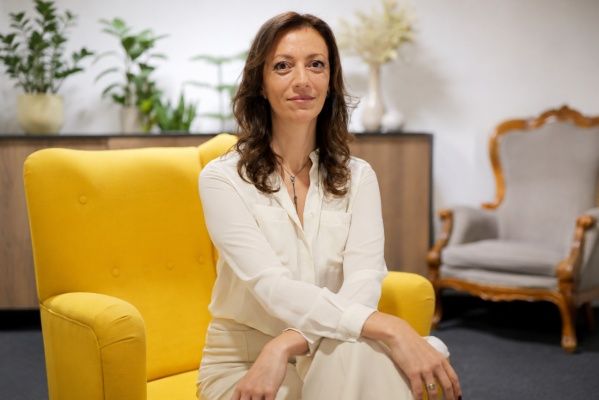
First, be a person. Then, a professional!
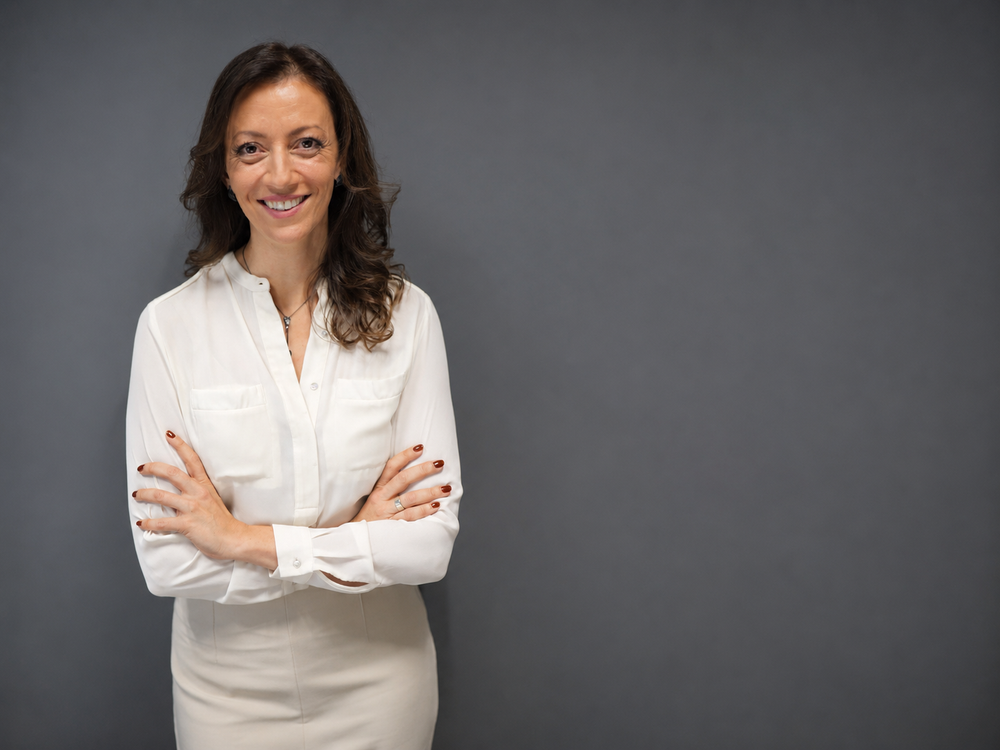
If you had to introduce yourself beyond the CV, positions, and social networks – who is the person behind the profession?
If I had to set aside all positions and professional definitions, I would say that I am a person who loves to discover. I discover ideas, people, places, perspectives. Sometimes I find them in a professional conversation, other times in a friendly piece of advice, sometimes on a blank sheet when I draw, during a long hike, or in a book that I started without any expectations.
I don’t think we should fit into a single role. I like diversity and believe that the broader a person’s horizons, the more interesting life they live.
I love to challenge myself with new things; I can’t stand still. Even in my work, I am most inspired when we have to create something new, come up with a new project, a new event, a new design, etc.
I love people with a sense of humor and laughing with them; it makes everything easier.
What are the three strongest qualities that you believe best describe your character and way of working?
I think I would put first that I was born with rose-colored glasses. Somehow, I always manage to see the good, the beautiful, the kind first, and only then the other side, if there is one. I find it very hard to get discouraged, and in the most complicated situation, I will find the light at the end of the tunnel, and even if it’s not there, I will imagine it and focus on it.
Another thing that drives me is that I am terribly curious. However, my curiosity doesn’t have much logic. I can spend hours analyzing new AI models, then read annual reports and company documents to track their development, then talk to someone about manga or impressionism, and finally be inspired by someone who has created a new concrete mix, for example.
Last but not least, I can define myself as quite organized, and in a very short time, I can accomplish a lot. And that seems more than important these days, especially if you have three children. True, my life consists of task lists and plans, but somehow I manage to fulfill them and even inject a dose of spontaneity between them.
What problem in the world, business, or society provokes you enough to dedicate your life and career to what you do today?
For over 20 years, I have been involved in media - business, lifestyle, parenting, science... Media is essentially information. But one of the biggest problems today is not the lack of information, but rather the opposite. We have too much of it. It overflows from everywhere. And in this context, the real deficit is meaning and usefulness. And setting criteria that are above mediocrity.
I believe that good journalism is not just saying what happened. Everyone can do that now. Good journalism is helping people understand why it happened and what it means for their lives, how it could change for better or worse. In the best case, the media should provoke them to take action, not just stand by as observers of what is happening around them.
If you had to name your life after a famous movie, what would it be called and why?
There is a Japanese film “After Life” by Hirokazu Kore-eda that I watched many years ago, but it left an incredibly strong impression on me. In it, people after their death have one week to choose only one memory from their life that they will take with them into eternity. The rest is symbolically “erased”. I try to look at the events in my life in such a way that if I were to find myself in such a situation, it would be incredibly difficult for me to choose among hundreds of thousands of memories that are worth it.
Which people – in Bulgaria or around the world – do you consider your mentors or individuals whose philosophy, behavior, and thinking you truly respect?
The most important mentors in my life are my family and the people I interact with every day – colleagues, friends. Not someone famous, but rather normal people with whom we exchange thoughts, ideas, argue, learn from each other, and inspire each other. A person is built from real life, from experiences, not from postulates and wise thoughts carved on signs (including virtual ones).
What do you love to do outside of your profession? Do you have hobbies that help you maintain balance and “restart” your mind?
I love spending time with my family. I relax by reading books; it encapsulates me, I enter a kind of hibernation, and my mind rests. I love to draw – graphics, painting, my latest passion is watercolor. I enjoy wandering along a forest path, for example. Or playing board games. Swimming, playing table tennis or badminton, etc.
What do you think distinguishes a truly valuable professional from just a “successful person”?
This is a person who has not lost their humanity along the way to becoming a professional. To have something to give to others, to help someone believe they can do more and provoke them to surpass themselves, to set a good example of morality and high standards, and to motivate them not to settle for just ticking off the next task. And all this time to treat them humanely. And yet, success is not a word with a single meaning and carries a lot of individual context.
Tell us about a project, solution, or situation that you are most proud of and that best describes your way of thinking and working.
In the first year of Covid-19, 2020, our biggest event – Manager of the Year was unable to take place live at the Sofia Opera and Ballet, where traditionally the guests number nearly 1000. At the same time, we had applications from amazing professionals in the competition that we wanted to showcase to as many people as possible. Then, with the team, we decided to do something completely unconventional for a business media. We decided to produce a television documentary about the competition. We reframed everything through the metaphor of sports, making the candidates row boats, climb walls, run on the athletics track, and score points in the basketball hoop. And from a truly serious difficulty we faced, it turned into an incredible project that we aired on bTV. Hundreds of thousands of viewers saw how business people, who until then were perceived only in a corporate light, could actually be very interesting, challenge themselves in something atypical for them, and show that business is not a boring territory at all. There was incredible energy in the entire team; every day we came up with something new to incorporate into the project to make it better. An incredible memory of an apparently hopeless situation but with an incredibly successful ending!
How do you want people to feel after a meeting, conversation, or work with you? I hope they feel calm that they can trust me, that they can count on me to do my best for them, and that the openness and dedication with which I will approach them will always be the foundation of our relationship.
What is the most valuable thing you have learned about people and communication over the years?
The most valuable thing I have learned over the years is that I should not project my own views, expectations, and ambitions onto others. Everyone has their own worldview and filters their actions through it. So it is important to adapt my approach to people once I get to know them and understand what would motivate or prompt them to act. At the same time, when you declare through your actions that you are not willing to make serious compromises with your beliefs and criteria, then others respond and start to measure by that. The most important thing all the time is to be sincere.
How do you build trust in a team, partnership, or friendship?
The thing is that I usually immediately vote trust, at the very first moment possible. I always approach with a hand extended. I have experienced disappointments, but regardless, I do not intend to give up this approach. I give my all, and if the other side gives the same, things work out, and the bond is there. If it doesn’t work out – everyone learns their “lesson” and we move on.
When you are under pressure, in conflict, or in a difficult period – what helps you not to lose your direction? Usually, in such situations, it helps to try to metaphorically detach myself from the situation, to try to look at the scene from above, as if I were a turned-off lamp on the ceiling in a dark room, to quiet my mind so that my thoughts can organize and the solution can come.
How are AI, technologies, and changes in the world transforming your profession and how do you adapt to this new reality?
We are witnessing the greatest transformation in communication and media since the advent of the internet. We are currently in the midst of a change in the entire model of providing and discovering information. The uncertainty is great. This is frightening on one hand, but on the other hand, it offers a lot of creativity in approaches. It is essential to stay updated with everything that is happening, not to be afraid to experiment, to introduce new forms of media content. Despite everything, I still believe that nothing can surpass human imagination.
How do you keep your knowledge, thinking, and skills current in a constantly changing world? I read a lot; I am omnivorous in this regard, and I do it intentionally. I don’t believe that knowledge comes only from specialized literature. Purely technical and hard skills - yes, but in today’s world, it is increasingly necessary to be able to react correctly, to adapt, to change something on the fly and quickly, and this can only happen if you have skills beyond those on your CV. I really enjoy talking to unconventional people; they ground me, help me step out of the bubble of professional tracks we all get into, and often this provides breadth and a new perspective on the world and events in life. I strive not to fall into the trap of professional arrogance because it is detrimental. I see it very often around me, and that’s why I always seek something grounding.
What is your opinion on social networks and personal branding today? How should a person be present online, what is good to share, and where do you think the boundary lies?
Social networks are a wonderful tool, but they are not an identity. They can show what you do, but they can hardly show who you are.
In recent years, there seems to be pressure for everyone to constantly build a personal brand. But in 99% of cases, this is just some kind of mask. It seems much more meaningful to first build a reputation and earn people’s trust outside of social networks. If that is stable, the personal brand comes much more naturally (if you are even looking for it).
I don’t believe a person should share everything. If you post something just because you think it will bring more likes, it probably isn’t worth it. If you post it because you can be helpful, give an idea, perspective, or food for thought, then it makes sense. If you just share something to express your emotion in the moment, that shows there is someone real on the other side.
I like people who are the same online and offline. Consistency always makes a stronger impression than a perfect profile. Generally, I prefer interacting with people far from any showiness and declarative nature.
What is the biggest misconception people have about success in your field?
Perhaps that journalism is a profession for people who talk. In fact, it is a profession for people who listen.
Another big misconception is that success comes from one big story or one big interview. It doesn’t work that way. Reputation is built much more prosaically – with persistence, preparation, and hundreds of small decisions that no one sees.
What would you like people to say about you when you are not in the room?
I would be happy if they said that working with me is calm, that I am a person they can rely on, and that I understand my work.
I don’t need them to say that I am the smartest person in the room. There is always someone who knows more in a given field, which is the best thing about a good company.
And if someone says that we laughed a lot together and that work goes smoothly that way, I will take that as a real compliment. Humor does not diminish serious matters. It simply helps us experience them more lightly.