Authenticity, AI, and Influence - How is Influencer Marketing Evolving?
· Talent Media
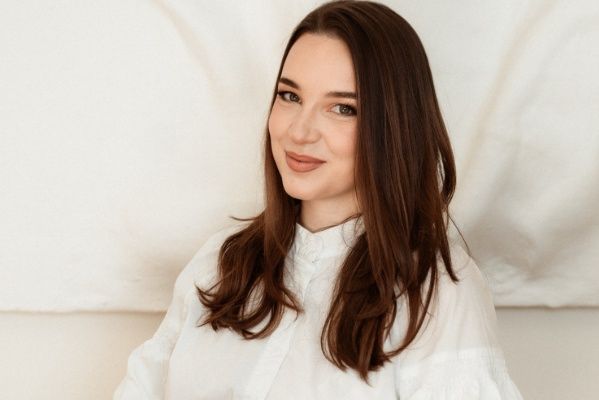
AI will not replace influencers, but mediocre content will!
Introduce yourself in a few words. What is your professional path and how did you get to Talent Media?
My name is Elena Emilova and I am an influencer marketing strategist at Talent Media. My professional journey over the years has primarily been through advertising and PR agencies, where I have actively engaged in influencer marketing. I often joke that I have been in the field for so long that I remember the times when influencers were called bloggers.
Tell us more about Talent Media - what is the company's mission, what services does it offer, and what sets it apart in the market?
For me, Talent Media is not just an agency, but a place where a lot of creative energy and positivity flows, as it is primarily made up of young and very ambitious people. Our team understands equally well the algorithms of social networks, but also that you need to put your heart, soul, and creative spirit into it to create the magic and truly good content in the end. I believe we stand out with the passion we invest in creating influencer campaigns. We never do anything aimlessly, and behind our decisions and proposals are serious justifications, knowledge in the field, and a mandatory strategy. Some of our services include creating influencer marketing strategies, as well as their execution, talent management, social media support, and event organization.
What is the philosophy you follow in building campaigns and relationships with both brands and content creators?
The agency has quite clear business values that we have followed throughout all the years of its development, but if I had to highlight one of them, it would be sincerity. We value being as direct and honest as possible with our clients and talents. This helps us build long-term relationships and brings peace to the workflow in the truly dynamic field we work in.
Influencer marketing is evolving extremely dynamically. How has the market changed in recent years and what are the biggest challenges facing businesses today?
The dynamics I mentioned earlier is what keeps the agency and the team in shape, as we strive to stay constantly informed and on the crest of the wave of new trends. There were many assumptions about a decline in our business, but that never happened, and fortunately, budgets continue to grow, and influencer marketing keeps evolving in creativity, with different approaches on social networks, types of influencers, and diverse formats. The biggest challenge turns out to be creating the right mix of influencers, formats, and channels so that this mix is homogeneous and meets the brand's set goals and strategy.
We are increasingly talking about artificial intelligence. Do you see AI as a threat to influencers or rather as a tool that can make campaigns more effective?
I wouldn’t say that AI is a threat to influencers. It is more of a threat to mediocre content. For good creators, AI is a huge advantage, especially if they know how to use it.
Artificial intelligence is already helping at every step of the process - from generating ideas, writing scripts, and analyzing the audience, to video editing, translations, and content optimization. This means that influencers can spend less time on technical tasks and more time on what no AI can replicate, namely personality, emotion, and the authentic connection with the audience.
At the same time, AI has raised the bar. If it was previously enough just to shoot a beautiful video, today that can also be done by artificial intelligence. Therefore, real experiences, personal stories, trust, and consistency are becoming increasingly valuable - things that cannot be generated with a single prompt.
Which processes in influencer marketing can already be successfully supported by AI and where does human creativity remain irreplaceable? The short answer is that AI can never replace the relationships between people, empathy, human feelings, and the value that an influencer can convey with their personal story. The long answer can be obtained by anyone who poses this question to chatGPT 😀
Today, companies have various options – UGC creators, brand ambassadors, influencers, public figures, and celebrities. What are the main differences between them and how do we choose who is most suitable for the brand?
We always, really always, need to start from the brand's goals, the stage it is in, and what result we want to achieve. The most important question is: What do we expect to gain from this partnership?
If the main goal is to create quality content that the brand can use on its own channels or in paid advertising, the most suitable choice is UGC creators. Their focus is on the content, not on their own audience.
If the goal is to reach a specific community, build trust, and stimulate engagement, then the right choice is influencers. They bring not only content but also the connection they have already built with their audience.
Brand ambassador is the right solution when the brand is looking for a long-term partnership. Instead of a one-time campaign, the person gradually becomes a natural extension of the brand's identity and builds sustainable trust over time.
And when the goal is to quickly achieve high recognition and strong public resonance, public figures and celebrities come to the forefront. They provide massive reach and PR effect, but do not always create the same level of closeness and influence on consumer decisions as a well-chosen influencer.
However, it is important to keep in mind that the most successful campaigns rarely rely solely on one type of content creator. Usually, the best results come from a well-chosen mix. Ultimately, there is no universal choice - there is a right choice according to the specific business goal. This is what we value at Talent Media!
Many companies still believe that it is enough to choose a famous influencer and the campaign will be successful. Why is this no longer sufficient?
Consumers have long been unimpressed by just the number of followers. They can sense when a partnership is authentic and when it is just another paid post. Therefore, today it is much more important to align the values of the brand and the influencer, the quality of the content, the trust they have built, and how much their audience is actually influenced by their recommendations.
Why do you think every company, regardless of its size, should have a clearly defined influencer marketing strategy rather than relying on random partnerships?
In marketing, assumptions always need validation, but certainly, too frequent experiments and work based on randomness and subjectivity lead to unnecessary budget expenditure. This is an approach that not only does not yield results for the current campaign but also does not help with future planning. If a brand wants to build sustainable partnerships and base its decisions on statistics, consistency, planning, and strategy are required.
What are the most common mistakes brands make when organizing influencer campaigns independently, without the support of a specialized agency?
Subjective evaluation of influencers based on personal preferences rather than results. Piecework without clearly set goals and with numerous experiments that lead to budget expenditure without results. And last but not least, a lack of long-term vision, because as I like to say: Influencer marketing is not a sprint, it is a marathon!
What is the added value of working with an agency like Talent Media – what does a client receive that they would find difficult to achieve on their own?
Working with an agency does not just mean access to more influencers. The greatest added value is that the client receives strategy, experience, and security. We start not with the question “Which influencer should we choose?”, but with the question “What is the business goal of this campaign?”. Then we build a comprehensive concept - from selecting the right individuals and the creative idea to negotiating, managing the process, controlling the content, and analyzing the results. Thanks to our experience, we know the strengths of different content creators and can predict which partnerships will be successful even before the campaign starts. This saves brands time, budget, and often costly mistakes and experiments.
How do you see the future of influencer marketing in the coming years? What trends will determine the success of companies and what role will AI, authentic content, and long-term partnerships between brands and content creators play?
I believe that influencer marketing is increasingly oriented towards results. If before the main question was “How many followers does this person have?”, today we are asking “What influence do they have on their audience?” and “What business value do they bring?”. I have my top 3 things for influencer marketing that I believe will impact and are already impacting the field.
The first is artificial intelligence. AI is changing the way we plan, analyze, and optimize campaigns. It will help us choose more precisely, forecast results, and automate a number of processes. But AI will not replace human creativity and trust - it will be a tool that makes us, the specialists, even better.
The second trend is authenticity. Consumers can now recognize overly promotional content and expect real stories, genuine experiences, and naturally integrated products. That is why content that looks like a recommendation rather than an advertisement will be the most valuable.
And the third trend that has not gone out of style for several years now is long-term partnerships. Instead of working with dozens of different individuals for one-time campaigns, more and more brands will build sustainable relationships with a limited number of influencers. This will create consistency, trust, and a much stronger connection with the audience.