Happiness is a way of thinking
· Desislava Banova - Nova Television
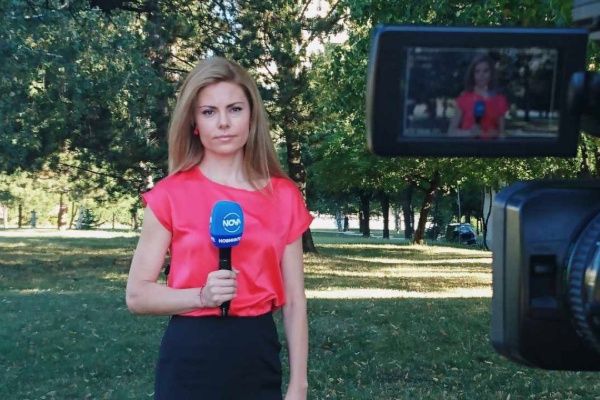
Success is making the world around you a better place!
How would you introduce yourself to people who mainly know you from the television screen, but do not know Desislava Banova as a person?
It’s hard for me to talk about myself, but I would define myself as very sociable, responsible, disciplined, calm, curious, kind-hearted, at times even naive, having preserved the child within me, a mother of two children and a happily married wife :)
What kind of child were you – a dreamer, a rebel, an achiever, or someone who always sought new challenges?
I was the absolute top student, the only grades below five I received were in sixth and seventh grade in practical training, mainly due to the difficulty of metalworking for me. I was also a member of the youth organization and a pioneer, and I was the class representative as well as the assistant to the flag bearer. Additionally, I either led or participated with a poem in school celebrations. Otherwise, my childhood was wonderful with lots of outdoor games, riding a bike, building houses, playing rubber band games, paper cones, drunk carrot, and folk ball, which of course came with many scrapes on my knees, a broken collarbone, and a host of headaches for my parents. Moreover, I was a big dreamer and my imagination was constantly at work.
What are the most valuable lessons you received from your parents that guide you even today?
I am endlessly grateful to my parents for the invaluable advice and lessons that have shaped my character. They have always taught me to be a good person, to stand up for myself, and not to give up in difficult moments, which helps me immensely in life.
Was there a moment in your childhood that somehow predetermined your future professional path?
The strangest thing is that when I was asked what I wanted to be when I grew up, I always answered that I wanted to be famous. Apparently, the Universe really hears our desires, so we must be careful what we wish for. I graduated with a master's degree in International Tourism from UNSS and imagined that I would be more involved in the tourism sector, but fate led me to television, and that is truly an addiction that is hard to escape from :)
How did your student years go and how did they change you as a person?
I studied while also working at a German-Bulgarian company, RAAABE, as it was important for me to support my family financially and to gain experience, which was truly invaluable. I studied and worked, and these were the first years in which I developed as an independent and responsible person.
Do you remember your first appearance in front of the camera? What emotions did you feel then?
Yes, I was probably 14 years old when I took a modeling course and was selected to participate in the show “Quarter” on the now-defunct television channel 7 Days, where along with a few other girls, we were something like a Timur team and had a specific mission in each episode. It was truly an amazing thrill.
What was the most difficult period at the beginning of your television career and how did you manage to overcome it?
I never had concerns during my first appearances in front of the camera. The worries and responsibilities came with the live broadcasts at Nova Television when I had to get up at 4 in the morning for the morning block and join the live news due to extreme weather events. This usually happened from the roof of Nova Television or during extreme heat or strong winds and storms, which in itself was challenging, as at the same time, I had to convey specific information that concerned many people.
For the past four years as the author of the series “Here and Now,” I have been responsible for many things related to the overall realization of these interviews.
The years in television introduced you to thousands of people and countless stories. Which encounters left the deepest mark on you?
I have several unforgettable encounters and stories that will last a lifetime. The first such encounter was with Mary Kerry Kennedy, who is the niece of John Kennedy and the daughter of Robert Kennedy. She said something that I believe she has never shared on television, namely that she was 5 years old when she learned from television that her father had been shot. At that moment, she prayed for the children of the killer, that they would not suffer as she was suffering at that moment. Not only did I get goosebumps, but I was also in awe of this incredible woman:
The second unforgettable meeting was with the President of Ukraine from 2005-2010, who also shared stories that I believe had never been told publicly until that moment. He said that after the Russians had put dioxin in his food, which was supposed to kill him, he underwent 26 operations on his entire body. On Friday, he would go in for surgery and by Monday, he was back at the helm of the state, without telling his people, because no one wants a sick president. He broke down in tears and said that his own children did not want to hug him, he looked so terrible, and he hid from his mother for months what had happened to him and did not let her watch television so she wouldn’t find out about his tragedy.
The third impactful meeting for me was with Nobel Peace Prize laureate Kailash Satyarthi, who has saved over 115,000 children from slavery and who donates his award for the same cause. This person has an incredible aura and the meeting with him was very emotional.
An unforgettable meeting for me was also with Nathalie de Gaulle, the granddaughter of Charles de Gaulle. When I asked her how it is to live with the de Gaulle name, she replied that she is regularly asked why she is named after the Paris airport :)
I also had an online interview with Petro Poroshenko, the President of Ukraine from 2014-2019, who had incredibly strong messages and who, despite his position and the post he held, helped at the front:
All these meetings remain for a lifetime, and after each one, I feel even more enriched. Here is a link to all my interviews.
How does a person change when they are a recognizable face for years and live under public attention?
I believe it is a great opportunity to set a good example and support various causes; I hope that goodness is contagious.
Sometimes the excessive attention and interest of people in my personal life is concerning, but I think I have learned to protect my personal space.
What does a day in your life look like today – how do you manage to balance professional commitments, family, and personal time?
It is a difficult task, but with good organization, I manage to allocate the necessary time for my family.
What brings you the greatest satisfaction at this stage of your life?
It is probably this balance between invaluable time with my loved ones and the wonderful interviews with valuable personalities.
What is your personal philosophy on happiness? Do you believe it is achieved or built every day with small choices?
Happiness is a way of thinking, a way of life. After all the tragedies that, unfortunately, have become almost daily occurrences, I have learned to be grateful for the smallest things and to cherish every moment. For me, the greatest happiness is in the smiles of children and the embrace of a loved one, in conversations with my mother and friends.
When life presents you with difficult decisions, what do you rely on more – reason, intuition, or accumulated experience?
Probably on all of these combined, but I believe that reason is the leading factor for me. I often consult the opinions of my loved ones.
What does success mean to you today? Do you perceive it differently compared to twenty years ago?
Definitely! Success for me today is making the world around you a better place and feeling satisfied with what you do.
Is there a cause or topic you would like to talk about much more and which you believe deserves greater public attention?
There are many topics. What has been concerning me lately is the brutal hate and division in our society on various issues. I am shocked at how, when a tragedy occurs, some people instead of offering sympathy direct a lot of hatred and malice towards those who have lost a loved one. I wonder what happened to people, where humanity has gone…
Otherwise, I have always been interested in issues related to peace, climate, and human impact on it, the preservation of nature, and the care for children and animals.
What are your expectations for the development of Bulgaria in the coming years and what would you like to see change most significantly?
I would like to have wise politicians who set aside their egos and work for the people, so that our children can stay in Bulgaria. Unfortunately, however, I am not optimistic.
What would you say to young people who today dream of a career in media and television? What qualities will be most important in the era of artificial intelligence and digital technologies?
For television, the most important qualities are discipline, responsibility, as well as social skills. I would tell them that working in television is challenging and dynamic, and they risk becoming addicted :). Otherwise, probably in the coming years, digitalization will continue and television will continue to lose its market share, but in Bulgaria, this process will be slower than in the United States, where for several years now very few people watch television and prefer sports channels and podcasts.
If you could go back in time and give one piece of advice to 20-year-old Desislava Banova, what would it be?
To be bolder, not to take things personally, and to believe more in herself.
And finally – if years from now someone tells the story of Desislava Banova in one single sentence, how would you like it to sound?
I would like it to be something like: This is a story of miracles, happiness, and well-being! :)