The hardest decisions are those you can justify to yourself
· Nikolay Hadzhidonchev
Success is dangerous when you start to believe that you are never wrong!
Introduce yourself in a few sentences..
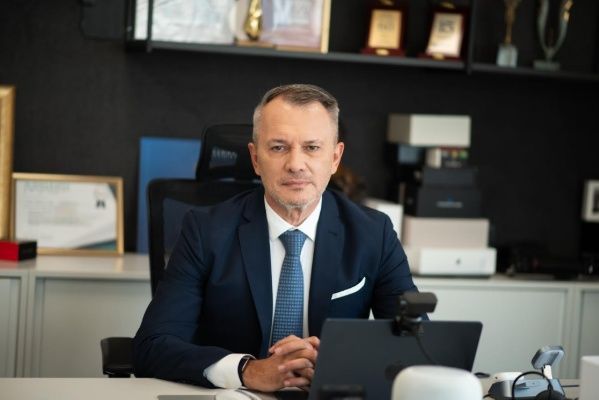
My name is Nikolay Hadzhidonchev and I am the Executive
Director of Teva Pharmaceuticals for Bulgaria and Greece. I have over 30 years
of management experience in international companies in the fast-moving consumer goods and pharmaceutical
sector. In my work, I believe in professionalism, humanity, and responsibility towards
people.
Outside of my professional environment, I am a husband, father, a happy
grandfather, and a passionate underwater photographer.
What is the hardest business decision you have made - not in terms of
consequences, but as an internal dilemma?
The hardest decisions are not those with
the greatest financial impact, but those where you have to choose between
short-term security and long-term meaning. There have been moments when
the rational choice seemed obvious, but internally you ask yourself: “Is this right
for the people, for the organization, for the direction?”
Over time, I have realized that leadership often means bearing the pressure of
the unpopular but necessary decision. And that the internal dilemma is a sign that
you are approaching it responsibly, not from weakness.

Has there been a moment when you knew what the “right” decision was, but
you hesitated to make it? What prevailed?
Yes. And I think every leader who
claims otherwise is not being entirely honest. Sometimes you know what the right decision is,
but you hesitate because of the cost — for people, for relationships, for stability.
What prevails for me is the question: “Will I be able to justify
this decision to myself later?” If the answer is “no,” then comfort has no
meaning.
How do you know that a decision is good enough to act on, rather than
waiting for more information?
There comes a moment when additional
information no longer brings clarity, but only postpones responsibility. In business, you never
have complete certainty.
I usually look for three things: enough facts, clear risk, and clear direction. If they
are present, the moment for action comes. More dangerous than a wrong decision is often
a delayed decision.
When was the last time you completely changed your mind on an important issue? What triggered it?
In recent years, I have completely changed
the way I view the speed of change. For a long time, I believed that sustainable
organizations change gradually. Today, I believe that in many industries, particularly in healthcare and
technology, excessive caution can be a risk.
This was triggered not only by technology but also by the way people
changed their expectations of leaders and companies.
What is the most dangerous self-deception that a successful manager can
fall into?
To start believing that their success
is always the result of their own correctness. Success often creates an illusion
of infallibility.
The truth is that good results are sometimes a combination of correct decisions,
a good team, the right timing, and a dose of luck. A leader who stops doubting
themselves begins to lose touch with reality.
When does confidence start to hinder good decisions?
When you stop asking questions.
Confidence is necessary to lead people, but it becomes dangerous when it drowns out
curiosity and differing opinions.
For me, a good leader is not the one who is always certain, but the one who knows how to
remain open even when they have power and experience.
How do you make decisions when there is no “good option,” only a less bad one?
These are the real leadership decisions.
Then you are not looking for a perfect outcome, but the most responsible one.
In such moments, it is important to be honest — both with yourself and with others. To
acknowledge that there is no ideal solution, but that inaction is also a decision, and often
it is the worst one.
What mistake has taught you the most, but you would not want to repeat?
To believe that good intentions
automatically lead to good results. I learned that in management, intention has no
value if there is no clarity, consistency, and timely actions.
Sometimes postponing in the name of “one more chance” costs the organization more
than a difficult but timely decision.
When have you been most wrong in your judgment of a person? What did you learn?
I have most often been wrong when I have
assessed people solely on competence and intellect, rather than on values and character.
Over time, I have realized that skills can be developed, but a lack of integrity
or respect for others is hard to compensate for.
What is something you do not tell your team, but think about often?
That the leader is sometimes afraid too.
People expect confidence and direction, and you bear the responsibility to maintain
calm even when you do not see all the answers yourself.
But perhaps that is part of the role — not to be without doubts, but to not
allow doubts to paralyze actions.
How lonely are really the big decisions?
Much lonelier than they appear
from the outside. When the decision is heavy, in the end, you are left alone with your own
conscience.
You can hear opinions, analyses, advice. But there comes a moment when no one else
bears the consequences but you. And that is the price of leadership that is rarely
talked about.
What does leadership cost that people outside do not see?
It costs time, internal tension, and
often personal compromises. People see the position, but do not see the weight of
the constant responsibility.
Leadership means carrying uncertainty without passing it on to others. And
sometimes it means staying calm just when everyone around you is losing
their calm.
How do you envision the world in 5 years in the context of the rapid development of
AI – what is important to learn today and what should a future leader do to
stay close to this topic?
In five years, artificial intelligence
will not be a “technological topic” — it will be part of every industry, every
decision, and almost every profession.
In my opinion, the most important thing will not be just technical knowledge, but the ability to
think critically, ask the right questions, and make ethical choices.
The future leader must understand
technologies, but even more — understand people. Because the more
automated the world becomes, the more valuable human qualities will be:
trust, empathy, moral judgment, the ability to unite people around meaning.
AI will change the way we
work. But leadership will remain the art of providing direction when there is
too much information and too little certainty.