Burnout or Balance? How to Manage Your Energy in a Dynamic Fintech Environment
· Tonislav Toshev
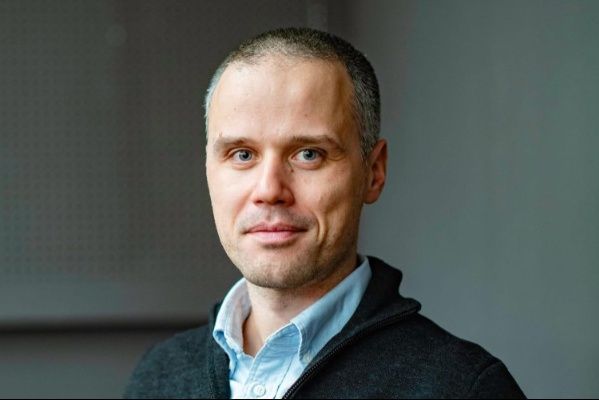
Over time, you learn to allocate your energy wisely and prioritize in a dynamic and complex environment!
Could you introduce yourself through the history of your professional journey – what moment led you to the fintech sector and what keeps you in this highly dynamic environment?
My professional journey began in the financial sector in Bulgaria and went through various managerial roles. I have worked both in a bank and in a debt collection agency, as well as in the insurance sector. While working for Bulgarian companies, I primarily interacted with our local market and partners.
The opportunity to join Paysafe came at a time when I wanted to be part of an international company and develop in an international environment. This was one of the main reasons for my career change. Entering the fintech sector allowed me to further develop my skills and work on new challenges on a significantly larger scale and at a much higher speed.
The fintech industry often operates at high speed – with regulations, technologies, clients, and constant change. Do you remember a moment when this dynamism strongly motivated you, but also showed you how important it is to protect your personal energy?
From day one, the speed of changes and the dynamism are what best describe my daily life in the various positions I have held over the years at Paysafe.
To this day, this dynamism motivates me because it gives me the opportunity to constantly learn new things. This, of course, also involves working on myself, controlling my ego, and accepting the fact that I do not always have all the answers. Mistakes and omissions are part of the development process.
I particularly realized how important it is to manage my own energy during periods when transformational initiatives, regulatory changes, and operational challenges were happening simultaneously. In such moments, you understand that you cannot personally participate in everything. You have to assess where you can add the most value, when it is necessary to delve into details, and when you need to trust your team.
Over time, you learn to allocate your energy wisely and prioritize in a dynamic and complex environment. In my opinion, balance comes from the ability to delve into details when necessary while managing processes by delegating effectively.
Where do you think the fine line lies between healthy ambition and the risk of burnout, and how can one recognize it before it’s too late?
In my opinion, ambition in a profession should be balanced with responsibility towards personal life and what one of my mentors calls “Team One” – family.
Outside of work, I have interests that are no less important and interesting to me, and I invest time and effort in their development. I believe that everything starts with bringing clarity both for ourselves and for others regarding our goals and what we want to achieve.
A red flag is when we find ourselves in a constant “work mode” and work begins to consume both our time in the office and our free time. If we feel that at every convenient opportunity we think about work or bring up work topics even with our closest people, that is a clear sign that we are not effectively slowing down and switching off. If such a state lasts too long, it inevitably brings consequences.
Personally, I try to maintain calm in the face of the flow of tasks and remind myself that if something was not possible to be completed today, we will find another way or another moment to prioritize and finish it. I also realize that in this process there are numerous opportunities for development for both myself and the people in my team.
Over the years, I have learned to be patient, to seek lessons in everything I do, and to adapt my approach without losing focus on the end goal. This helps me to sift through important tasks from those that rather create noise.
In my practice, I have seen colleagues who want to achieve everything immediately, as well as others who, in their desire to develop, start taking on more and more tasks until they reach a point where they cannot effectively complete any of them. It is precisely then that the boundary can easily be crossed, and one can reach burnout.
Balance lies in understanding that not everything depends on you, but what does depend on you is your responsibility, and you must seek ways to achieve it while adapting to the environment.
As a team leader in a high-responsibility environment, how do you create a culture where people achieve results but do not pay for success with exhaustion?
I see my role as one where I must effectively manage the people I am responsible for, as well as meet the expectations of my managers.
I strive to create an environment where teamwork is key, but at the same time, everyone takes personal responsibility to see their tasks through to completion. I constantly try to be aware of the company’s strategy and convey it to my teams in a way that is meaningful and understandable.
I also always strive to actively manage the expectations of management by openly communicating what can be achieved within our current operational reality.
I often discuss goals and priorities both with the people in my team for whom I am directly responsible and with those whose work is related to the decision. This gives me the opportunity to hear different perspectives and then together achieve clarity regarding the next steps.
My message is clear: once we understand what is expected of us and clarify our tasks, we must act and fulfill our commitments.
I also believe that my personal responsibility is crucial for the team’s performance. When I make a commitment to my people, I always strive to fulfill it because it helps them manage their tasks and know that they have my support.
Many young professionals want to prove themselves quickly and often say “yes” to everything. What advice would you give them about setting boundaries without losing motivation, visibility, and opportunities for development?
Career development is a marathon, not a sprint. If we make good decisions, maintain the humility to learn and make mistakes, stay open to new ways of working, and show patience, success will inevitably come over time.
When we talk about development, it is important to translate it into concrete actions in the context of our current position and reality. What we want to achieve is an important question, but it should be followed by the question: “What do I need to do to get there?”
From experience, I have learned that if I want to develop, I need to leave time for learning, for conversations with people who can broaden my perspective, and for filling the gaps in my knowledge. This is difficult to achieve if you are overwhelmed with too many tasks and never step outside your own role.
Saying “no” to some tasks does not mean you are refusing development. Often, it means consciously choosing where you can make your best contribution and result.
Discipline is also useful in this aspect. When we set clear boundaries and take responsibility to follow them, we gain more freedom and reduce the anxiety that comes from feeling overwhelmed with work and not seeing real results from our efforts.
In my career development, I have taken it step by step and have not skipped stages. The common thread in all my role and position changes is that I have never pursued them solely for the sake of reward or image. What has guided me is whether the new role comes at the right time for me, how it will affect my personal life, and what opportunities for development to the next level it will provide me.
If you had to leave readers with one personal rule for resilience in their careers – something learned from experience, not theory – what would it be?
Goals, priorities, and management change dynamically, sometimes even in very short timeframes. Therefore, it is important to develop the skill to objectively explain to ourselves the reasons for certain events and to seek meaning in the current situation.
For me, development is a process without a deadline and endpoint. It will continue as long as I find meaning in the process and feel a sense of sufficiency with each subsequent step. Resilience comes not from constantly pursuing the next goal, but from finding value in the journey towards it.
Another important thing that has helped me a lot is the conscious need to work with a mentor. Fortunately, I have had and continue to have mentors who have left a lasting mark on my development and have helped me achieve my goals both personally and professionally.