How to Build a Human Culture in a Technological World
· Petya Pissarsка - Schneider Electric
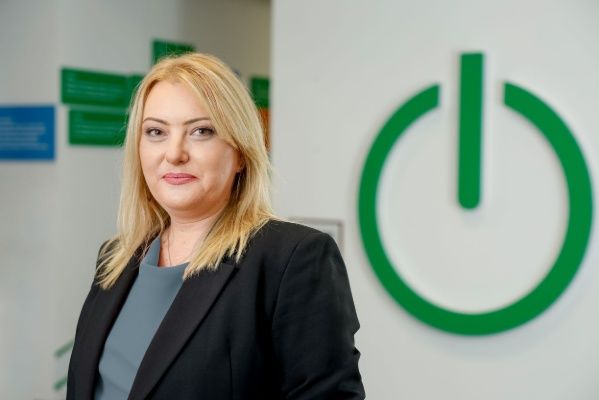
The engineer of the future will not just be an engineer!
How has your professional path developed and what attracted you to HR and Schneider Electric?
I stumbled into the HR field more by chance than by planning, and my main motivation was the mix of many disciplines, skills, and dynamics that the profession entails. From then on, my professional path has always been connected to working with people and organizational development. Early in my career, I realized that the greatest value for a company is not the processes or technologies themselves, but the people behind them.
I was attracted to Schneider Electric by a combination of several factors: the global scale of the company, its leadership position in energy efficiency, and sustainability. However, the most fundamental aspect was, and continues to be, the culture and values that place people at the center of the business - something that resonates with me personally. This led to an easy integration and recognition of everyday tasks, connecting with strategic goals and the team. For me, it has always been important to be part of an organization that not only talks about development and inclusion but actually turns them into daily practice.
What makes a technology and engineering company like Schneider Electric an attractive employer today – beyond salary and benefits?
Compensation is important, but it is increasingly rare to be the only factor in choosing an employer. People seek meaning in their work, opportunities to grow, not necessarily just professionally, but also personally, an environment where they are respected and heard, which is flexible and meets their needs and values.
At Schneider Electric, employees see the real impact of their work. Our solutions support sustainable development, digitalization, and energy efficiency on a global scale. Additionally, we offer opportunities for international careers, access to training, work with modern technologies, and a culture that encourages diversity of ideas and perspectives.
The engineering profession is changing very rapidly. What does the “engineer of the future” look like and which skills are now as important as pure technical knowledge?
I also find it very interesting to consider what the “Engineer of the Future” will look like. What I see now is that the job requires not only technical expertise but also many other skills, such as analytical thinking, quick reactions, communication skills - a brief and clear explanation of a complex problem to non-engineering colleagues, understanding requirements and behavior in a multidisciplinary environment, curiosity and openness to new technologies, etc. Technical knowledge remains fundamental, but it is no longer sufficient on its own.
The so-called “soft skills” and adaptability are becoming increasingly important. Engineers are more frequently involved in global projects, working with colleagues from different countries and using technologies such as artificial intelligence, automation, and the industrial internet of things. Therefore, the ability to learn continuously is perhaps the most important quality..
Young engineers enter the labor market with different expectations. What is the biggest discrepancy between what they seek and what companies traditionally offer?
Perhaps the biggest discrepancy is related to the speed of development. Young professionals expect rapid training, diverse projects, and opportunities for growth in the early years of their careers.
Traditionally, many organizations build careers in a phased model, where gaining experience takes more time. Today, successful companies are those that manage to combine a stable foundation of knowledge and processes with sufficient opportunities for early responsibility and participation in significant projects.
What do the new generations actually expect from their employer – and which of these expectations do you believe are completely justified?
The new generations expect transparency, honest feedback, rapid development, work-life balance, flexibility, hybrid work models, and of course, work that has meaning.
In my opinion, these expectations are completely justified. The ideal employer would likely be one who manages to incorporate all expectations into specific programs and actions while balancing more traditional development models and the expectations of the more mature team members. At the same time, young professionals need to realize that development requires persistence, effort, and a willingness to learn.
Can a company be both highly efficient, technology-oriented, and human-centered? How do you build this environment at Schneider Electric?
Not only can it be done, but I believe it is the only sustainable model for success. High efficiency and care for people do not contradict each other. On the contrary, they complement each other.
At Schneider Electric, we invest in both technology and innovation as well as in employee development. We encourage open dialogue, trust-based leadership, and a culture of mutual respect. We also seek innovations in work models, higher efficiency in communication and interaction between different generations, and ways and programs to work with talents from all ages and social groups.
“Sustainable work environment” is much more than a modern workplace. What does it mean in practice and how do you know that people actually feel good in an organization?
A sustainable work environment means that people can be successful in the long term without it coming at the expense of their health, motivation, or personal life.
We understand that we are on the right track when we see high engagement, a desire for development, internal mobility, and employees who recommend the company to their friends and acquaintances. The best indicator is always the people themselves and their willingness to stay and grow within the organization.
Is there a moment when an employee has to choose between security and development? How do you help people avoid falling into the trap of “comfortable work”?
Sometimes development requires a person to step outside their comfort zone. This does not mean sacrificing their security, but taking on challenges that will help them build new skills.
Our role as HR is to create opportunities for internal rotations, training, and career steps that allow employees to grow within the company. We encourage people to view their careers as a series of developments rather than a fixed position.
Artificial intelligence is already changing the HR profession. Which tasks in your work can AI take over and where does human judgment remain irreplaceable?
AI can significantly facilitate administrative work, data processing, trend analysis, initial screening of applications, and generating reports.
But when we talk about leadership, building trust, resolving conflicts, organizational culture, or making sensitive decisions about people, human judgment remains irreplaceable. Technologies can provide information, but empathy, values, and context continue to be human territory.
And how is AI changing Schneider Electric itself – which processes are already being transformed and how does this change the way people work?
AI and digitalization are transforming numerous processes – from planning and production to supply chain management and customer service.
This does not mean that technology replaces people. Rather, it automates routine activities and frees up time for tasks with higher added value. It is becoming increasingly important for employees to be able to work collaboratively with technologies and use data for better decisions.
If today a young engineer asks you, “Why should I choose Schneider Electric over another technology company?”, what would you answer – without corporate clichés?
I would say the following: if you are looking for a place where you can see the real impact of your work, work with modern technologies, and at the same time have the opportunity to grow in a global environment, it is worth considering Schneider Electric.
Here you can build a career in many different paths – engineering, automation, production, digital technologies, project management, or leadership roles. The most valuable thing is that people are not boxed in and often get the opportunity to develop in directions they initially did not even plan.
And finally – if you had to give one piece of advice to a young person just starting an engineering or technology career in Bulgaria, what would it be?
Do not strive to know everything right from the start. Instead, strive to learn faster than others.
Technologies will change, tools will change, even professions will change. But curiosity, discipline, the desire for development, and the ability to work with people will remain valuable regardless of how the world looks in ten years. It is these qualities that turn a good specialist into a successful professional.