China and Pleven Connected Two Operating Rooms in One Surgery of the Future
· Prof. Dr. Dobromir Dimitrov
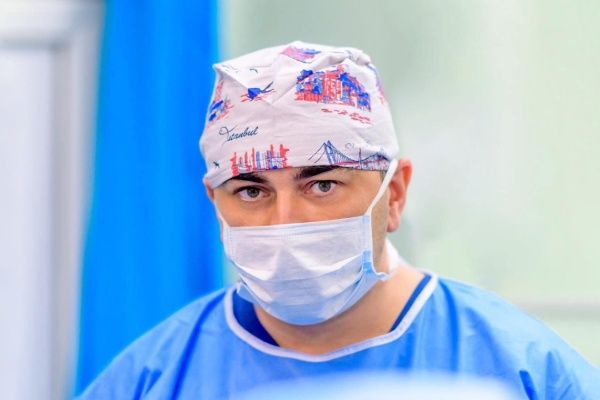
Surgery Without Borders: Prof. Dobromir Dimitrov Operates on a Patient in Pleven from China
Could you introduce yourself to the readers of
CareerDailyNews? What is your professional path and when did robotic
surgery and remote medical technologies become an important part of
your work?
Thank you for the opportunity to introduce myself to
the readers of CareerDailyNews. I am Prof. Dr. Dobromir Dimitrov, a specialist
in surgery, Head of the Oncology Surgery Clinic at "UMBAL Dr.
Georgi Stranski" EAD, Pleven, and Rector of the Medical University –
Pleven. My professional path is inextricably linked to the development of minimally
invasive, oncological, and robotic surgery – fields in which
scientific progress and technological innovations continuously expand
the possibilities of modern medicine.
At the core of my professional philosophy has always
been the belief that the true value of technologies is determined not
only by their innovativeness but above all by their ability to improve
the quality of medical care, to expand the capabilities of the surgeon, and to
provide more precise and effective treatment for patients.
Over the years, my efforts have been directed towards
the introduction and development of modern surgical methods and technologies, among
which are robotic interventions, focused ultrasound, and remote
surgical mentorship. The accumulated experience gradually turned the idea of surgery
without geographical boundaries from a professional interest into a specific goal and a natural
continuation of my pursuit to expand the possibilities of modern
surgery.
Today, I am convinced that the future of medicine will be
determined by the increasingly close interaction between human expertise,
robotic technologies, and digital connectivity. It is in this combination
that I see the potential for a qualitative transformation of modern surgery into
a model where highly specialized knowledge, skills, and medical assistance can
overcome geographical limitations and reach patients regardless
of physical distance.
How did this operation between China and Pleven come to
fruition? What was its purpose and why does it represent an important
step for the development of surgery?
The idea arose as a result of our long-standing
collaboration with partners from China and our desire to overcome geographical
limitations in surgery. After months of thorough preparation, technical
testing, and organizational coordination, on October 20, 2026, we performed
a remote robotic surgery on a patient in Pleven, controlling
the surgical system from Shanghai, China, at a distance of approximately 8000
kilometers.
Our goal was to demonstrate that with a reliable
technological infrastructure, qualified teams, and guaranteed patient safety,
highly specialized surgical interventions can be performed regardless of the physical
location of the surgeon.
This achievement marks an important step towards a future in
which patients will have the opportunity to receive highly specialized
surgical assistance from leading specialists around the world, without the need to travel.
For me, this is not just a technological success, but a new perspective for the development and
accessibility of modern medicine.
Could you clarify the roles of the participants? What was
your role from China, what was the role of Assoc. Prof. Martin Karamanliev and his team in
Pleven, and how did the Chinese specialists get involved? Who performed the surgical
actions and who provided remote expert support?
During the operation, I was in Shanghai,
remotely controlling the robotic surgical system and performing
the surgical actions on the patient in Pleven. Assoc. Prof. Dr. Martin Karamanliev and
Assoc. Prof. Dr. Polina Marinova led the surgical team on site, ensuring
the immediate supervision and safety of the patient. Their role was of
crucial importance, as such types of interventions require the presence of
experienced and fully prepared surgeons who can take over the surgical
intervention if necessary.
Our partners from China provided the necessary
technological, engineering, and organizational support for the functioning of
the robotic system. The realization of the intervention was the result of
precise coordination and the joint efforts of surgeons, anesthesiologists, nurses, and technical
specialists from both countries.
The success of this operation is an achievement of the entire
international team and is compelling evidence of the importance of professional
interaction, mutual trust, and shared expertise.
What technologies made this cooperation between China and
Bulgaria possible? What was the role of the robotic
system, communication infrastructure, and remote collaboration platform?
The realization
of this high-tech intervention became possible thanks to
the integration of several key technological solutions, each of which made a
significant contribution to the final success.
A key
role was played by the robotic surgical system Toumai from the Chinese company Shanghai
MicroPort Medbot, which allows for remote control of surgical
instruments in real time. The system is the first in Europe to receive CE
certification under the European Medical Device Regulation (MDR) for
performing robotic tele-surgery. To ensure a reliable connection
between Shanghai and Pleven, we used high-speed optical internet
infrastructure and a specialized communication platform for transmitting
video images and control commands.
During the
operation, the communication delay was approximately 180 milliseconds,
which allowed for precise execution of surgical movements. Backup
communication channels, independent power supply, and protocols for
response to potential technical failures were also provided. The preliminary
preparation, including multiple tests of connectivity and
functionality of the system, was of significant importance.
The successful
realization of the intervention is the result of the effective integration of
modern technologies, combined with professional expertise and precise
coordination of the teams. It is in such achievements that the true
potential of innovations is revealed – to expand the possibilities of modern surgery
and to open new perspectives for providing high-quality medical
assistance, regardless of geographical distance.