Life Beyond Positions, Titles, and Companies
· Dinna Temelkova
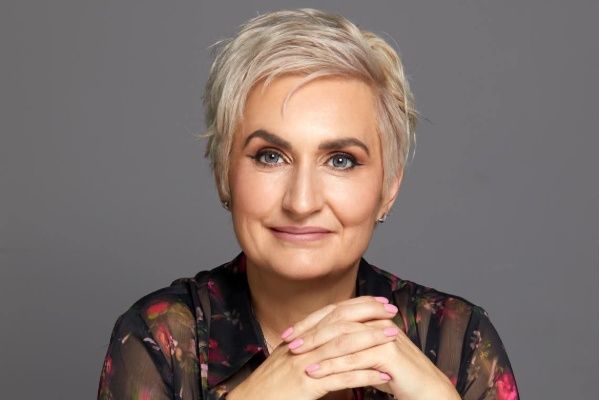
"When the workday ends, you realize who is looking for your position and who is looking for you!"
Who is Dinna Temelkova today – beyond the positions, titles, and companies she has led?
First and foremost, I am a person who continues to be curious about the world. I love learning new things, traveling, meeting interesting people, and taking on challenges. It is hard for me to stay in one place, even when I have consciously decided to take a break. I am constantly on my phone and in the flow of information.
My professional life has always occupied a huge space. I love the world of business, large projects, negotiations, and the challenge of turning an idea into reality. To make my world less boring, there are also many colors, paintings, music, and art. Everyone tells me that this is noticeable in my vision and personal style – not just in appearance, but also in my more unconventional approach to management. I take this as a compliment.
If I had to point out one of my strongest professional qualities, I would say that I am a good salesperson. I have a knack for opportunities, for people, and for finding common interests even when positions seem very different. I believe that sales skills can be developed, but true sales intuition is something you largely carry within yourself.
Interestingly, over the years, many of the people we initially met in the roles of client or supplier, partners or colleagues, have subsequently become my close friends. Some of my most valuable friendships have started precisely in business, in the office, or in the gallery.
And this helps me a lot professionally. Because when you know people beyond the specific deal or project, communication is different. You can have a difficult conversation, disagree on a particular issue, and still maintain respect and good relations.
But outside of business, I am also a mother, a wife, a friend. And I have never really believed in the theory of work-life balance, as if professional and personal life are two separate parts that we must constantly keep in equilibrium.
For me, the concept of work-life blend is much closer. When you have work to do and have taken on a commitment, you must fulfill it! I feel that responsibility is coded in my DNA, regardless of whether it is Friday evening or Sunday morning. But when your family needs you or when you want to take time for yourself, you must be able to be truly present – without constantly thinking about the next email or meeting. In both cases, I believe in full dedication.
I also believe that there are not two different versions of a person – personal and professional. Character, values, and our attitude towards others do not change when we enter the office. If you are honest, responsible, and capable of showing empathy in your personal life, this inevitably manifests in your work as well. And vice versa.
Perhaps that is why today I no longer feel the need to introduce myself through my business card. Professional achievements are an important part of my story, but they are not the whole story.
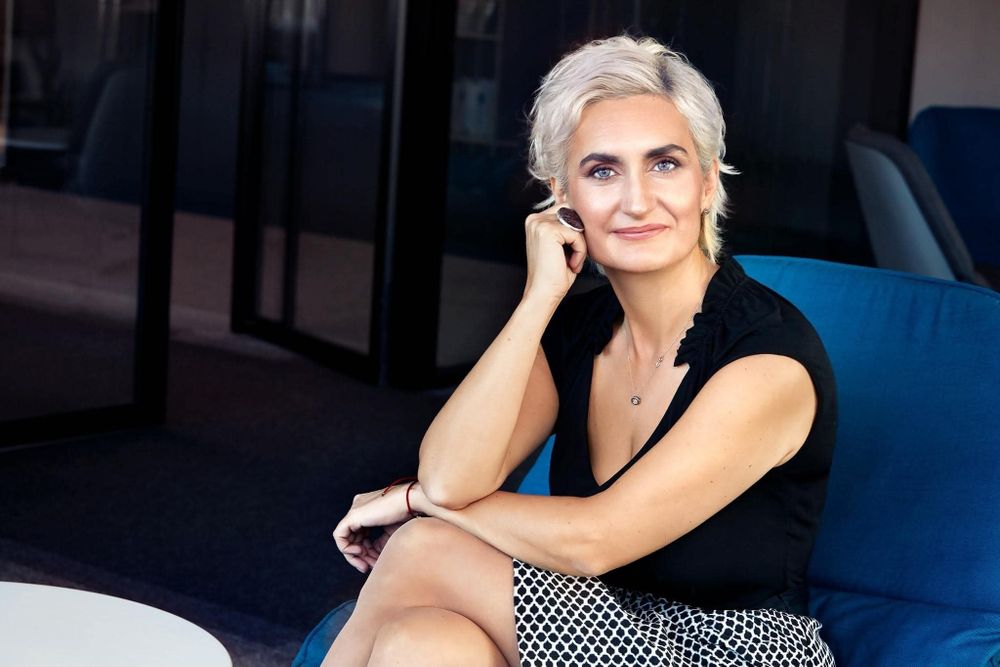
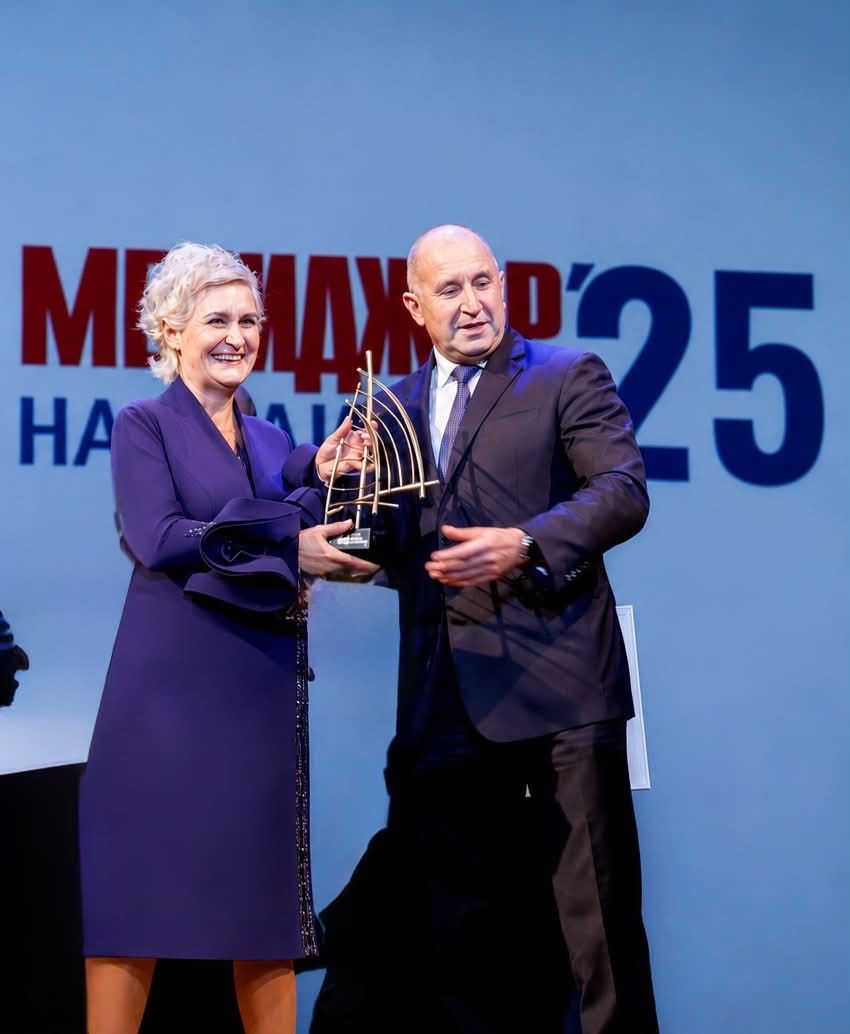
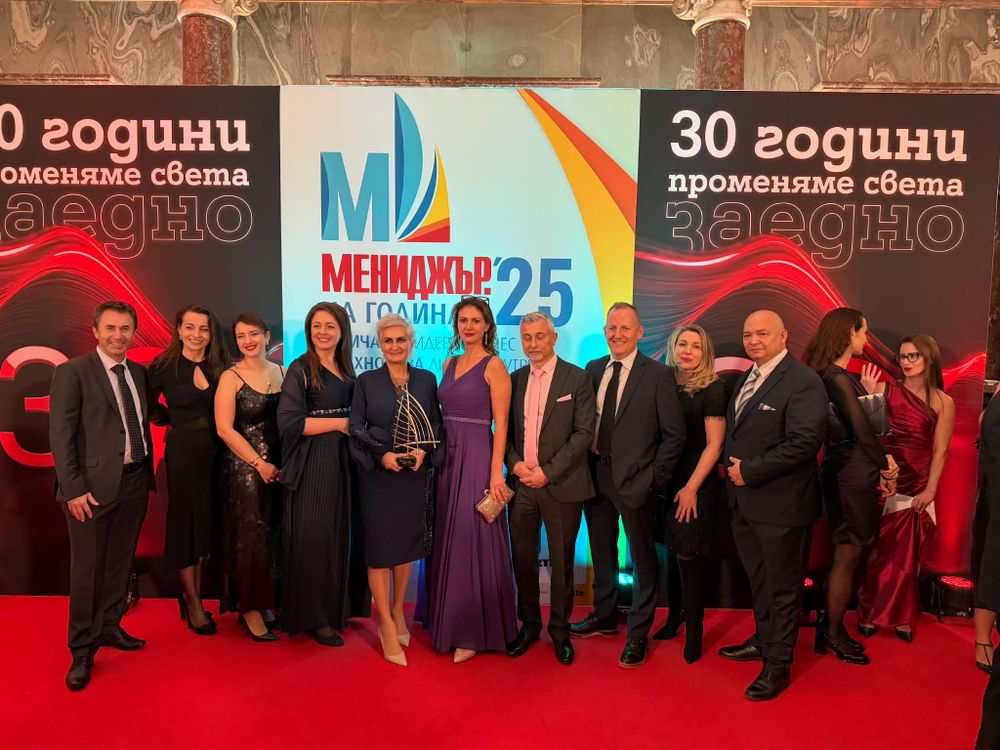
It has been almost a year since you won the most prestigious business award "Manager of the Year." What are you currently working on?
The past year has been extremely dynamic and transformative for me both personally and professionally.
After four very intense years at the helm of Telelink Infra, during which my team and I achieved great results, I decided to make a change in my professional path.
I am currently involved in several different projects, mainly in the field of energy efficiency solutions and large infrastructure projects. I consult companies regarding new business opportunities, partnerships, and strategic positioning. I work on specific projects in the energy sector and participate in organizing business events and professional forums.
What is new for me is the feeling of ease and the freedom to determine what I engage in, how much time I dedicate to different projects, and with whom I work. And I must admit that this new stage is very interesting to me.
When a person reaches a high management level, what do they understand about themselves that they couldn't grasp at the beginning of their professional journey?
That they can do much more than they ever imagined. And that many of the limitations we impose on ourselves actually exist only in our own minds.
At the beginning of my career, I felt that I had to be prepared for every question, to know every detail, and to be able to solve every problem.
Over the years, I realized that this is impossible. Especially when managing a large company with various business directions, markets, and complex projects.
I learned to rely more on the people around me. To listen. To ask questions. To accept that someone else might have a better idea than mine. And perhaps most importantly – I understood that you don't have to be the smartest person in the room.
As the years go by, I increasingly realize how significant energy and attitude are in everything we do. I believe that when you invest true passion, dedication, and conviction into something, you can achieve results that seem impossible to many. And this energy is contagious. People feel it, they start to believe along with you, and gradually the impossible becomes possible.
However, over the years we understand that energy is not inexhaustible. When you are younger, you often try to "win every battle," to prove that you can handle all challenges. You realize that true strength is not just in how much you can achieve, but also in the ability to better assess what truly deserves your efforts.
What are the biggest challenges that life has brought you, and which of them have changed you the most?
I think the situations that have changed me the most are those in which I realized that not everything depends on me.
Professionally, I have gone through difficult transformations, crises, and projects that at certain moments seemed almost impossible to complete. There have been sleepless nights, tough decisions, and disappointments. But when I look back, I see that it was precisely these moments that have given me a lot.
However, the biggest challenge in my life has not been professional. It is being a mother to a child on the autism spectrum.
What I initially saw as a huge challenge has over time become my greatest blessing and the most important lesson in growth.
I learned patience that I never suspected I had. I learned to accept differences, to rejoice in small victories, and not to measure a person's development according to others' expectations.
And perhaps most importantly – I learned that not everything has to happen the way we envisioned it for it to be wonderful.
This has changed me not only as a mother but also as a person and a leader. It has given me a much deeper understanding of empathy, individuality, and the strength that everyone carries within themselves.
I believe that the most valuable lessons come in difficult moments. That is when true growth occurs. And sometimes what initially seems like the greatest trial turns out to be the greatest gift that life has given us.
I have learned to speak openly on the subject, without hesitation, because I believe that our society owes it to children and people in disadvantaged situations. I believe that together we can contribute to better awareness, acceptance, and above all, tolerance towards these individuals!
What have you learned about leadership from the moments when you didn't have a ready answer?
That there is nothing wrong with saying "I don't know".
I have had situations where the entire team expected a solution from me, and I myself was not sure what the best option was.
In such moments, it is very tempting to demonstrate confidence, even when you don't have it.
But over time, I realized that people value honesty much more. You can say, "I don't know how we will solve this problem, but we will find a way."
And then you can sit down with the team and actually find a way.
Is there anything you would do differently today if you could go back to the beginning of your management journey?
Oh, many things!
I would delegate more. I would say "no" more often. And I would definitely try not to take every problem so personally.
When you are a young manager, you have a huge desire to prove that you can handle everything. Sometimes this leads you to take on more than necessary.
Now I know that I don't need to be involved in every decision. And that people grow much more when you give them space to take responsibility.
Of course, it's easy to say this after twenty years of experience. I'm not sure that the younger Dina would have listened to me.
Moreover, going forward, I wouldn't miss my child's birthday or their concert for a work commitment! Which, unfortunately, I have done...
When should a person fight to the end and when should they have the courage to say, "This is no longer my path"?
This is a difficult question for someone like me, because by nature, I am a fighter. I don't give up easily. Sometimes I probably fight longer than is reasonable.
But over the years, I have learned that not every battle is worth fighting to the end.
There are moments when you have given everything you can. You have achieved the results you worked for, built a team, gone through difficulties. And you start to feel that it is time for something different.
I don't believe that a person should stay somewhere just because they have invested many years and efforts.
Sometimes moving on is courage. Other times, courage is to walk away.
Do you believe that there are signs in life that show us which direction we should take, or do we rather create our own path?
I believe in both. And I strongly believe in intuition.
I think that sometimes we feel what is right for us long before we can explain it rationally. Even on a purely physical level, our body hints at when something is good for us and when it is not. Over the years, I have learned to pay more attention to these feelings instead of always seeking a logical explanation for everything.
I also believe that life sometimes sends us interesting signs. There are encounters that happen at just the right moment, and opportunities that arise exactly when we least expect them.
Let me give you a personal example. Years ago, I reached a point where I was convinced that I was done with the corporate world. I wanted to dedicate my time and energy to culture and the arts, as well as to projects supporting vulnerable groups. These are topics that have always been very close to my heart.
And just then, on the same day, I received calls from two different executive search companies with offers for management positions.
I remember how surprised I was by this coincidence. I took it as a sign that perhaps I was not yet done with large companies and that I had something to contribute to the management of large organizations.
Of course, I do not believe that we should just sit and wait for fate to make decisions for us. I have always been a person of action. But I believe it is important to be able to hear ourselves, to notice the opportunities that life offers us, and to have the courage to follow them.
Because sometimes the most interesting paths are those we never planned at all.

How does the perception of success change when a person has already achieved professional goals that once seemed distant?
It changes a lot.
At first, success is associated with specific goals – the next position, greater responsibility, more significant projects, recognition.
And there is nothing wrong with that. I have always been ambitious and continue to be.
But in recent months, I had the opportunity to look at success from a slightly different angle.
Do you know, when you are at the helm of a large company, your phone rings constantly. Everyone wants to meet, discuss something, invite you to an event, or propose collaboration.
And one day, you are no longer in that position. The phone becomes quieter.
This is a very interesting moment. And very useful.
Suddenly, you realize which people were seeking you out and which were seeking your position. Who were just business contacts and who became true friends.
For me, it was invaluable that among the first people who called me after the change were clients with whom we had worked on some of the most challenging projects. People with whom we had tough negotiations, disputes, and complex situations that sometimes seemed hopeless.
And yet, or perhaps precisely because of that, trust remained between us.
These calls meant an incredible amount to me. Because there was no longer a position, contract, or project that connected us.
There were human relationships.
This made me rethink some things. Not because I stopped valuing business results, but because I realized how important it is what remains after them.
In business, we often talk about results, but how many of the big results are actually due to the human relationships behind them?
Much more than we usually acknowledge – especially in complex infrastructure and energy projects with many participants, large investments, and serious deadlines.
I remember a large project that was on the verge of contract termination halfway through its execution. This would have led to tens of millions in damages and lost benefits for both parties. This situation arose due to poor communication, accumulated tension, and egocentrism, which gradually shifted the focus away from the common goal.
At one point, I had to intervene decisively. We changed the way we communicated, brought the discussion back to the facts and responsibilities, and created conditions for people to set their egos aside. This required tough and prolonged negotiations, as well as willingness from both sides to make compromises.
In the end, the contract was not terminated. On the contrary – the project was completed extremely successfully for both the investor and us as the contractor.
This case showed me how easily trust and immense effort can be destroyed when personal positions become more important than the overall result. But it also showed me that timely and decisive intervention can steer the conversation in the right direction and save not only the project but also the relationships between the parties.
Big results are not achieved solely with resources and expertise. They also depend on people's ability to listen to each other, take responsibility, and work together, even when it requires stepping back.
How do you understand when a person is truly a good professional and when they just know how to appear as one?
Over time. The first impression can be very misleading. There are people who present themselves brilliantly in an interview, speak confidently, use the right terminology, and create the feeling that they can do anything. And then comes the real work.
For me, a good professional is recognized by whether they take responsibility, whether they keep their promises, and how they react when things do not go according to plan. Character is most clearly seen not when everything is easy, but when there is pressure, a mistake, or a difficult choice.
I also observe how a person treats those from whom nothing depends on their career. This often tells me more than their professional biography. True professionalism is not just about what you can do, but also about how you treat others.
Can a leader be successful without empathy?
Of course. We all know successful managers who do not stand out for their particular empathy.
But I would not want to work for such a person, and I would not want to be such a leader.
For me, empathy does not mean being nice to everyone and avoiding difficult conversations. It means remembering that behind every role, position, and result stands a person.
Sometimes I have been very demanding and have made decisions that people did not like. There have been moments when I had to be categorical. But I have always tried to understand the other perspective.
This does not necessarily mean agreeing with it. It means making a decision with respect for the person who will live with the consequences of it. For me, this is the difference between power and leadership.
What happens to the team when people stop being afraid to tell the truth to their leader?
Then the real conversations begin.
In large organizations, there is a serious risk – the higher you are in the hierarchy, the more filtered information you receive. People do not always want to tell you that something is not working, especially if they think you will not like it.
I strive to encourage the opposite. I do not want people around me who always agree with me. I want people who can tell me: “Dina, I think you are wrong.” Of course, it is good if they have arguments. But for this to be possible, trust and the creation of a calm and supportive work environment are necessary.
And trust is not built with declarations and beautiful corporate values. It is built every day with small and large actions. With whether you keep your word, whether you are consistent in your decisions, and most importantly, how you react when someone tells you something you do not want to hear.
I believe that trust is two-way, but it starts with the leader. You have to give people freedom, allow them to make decisions, sometimes even to make mistakes. You cannot expect initiative and courage from a team where everyone is afraid of the consequences of every mistake. Sometimes it is precisely our mistakes that give us the most valuable lessons. It is no coincidence that after the completion of every project, an analysis is made not only of the results achieved but also of the mistakes made and what was learned from them.
What is more difficult – to build a strong team or to keep a strong team in times of change?
In my opinion – to keep it.
When the company is growing, there are new projects and opportunities, it is relatively easy to maintain motivation. But when difficult periods, uncertainty, or major changes begin, people need much more than a good strategy. They need honesty.
You cannot always promise them that everything will be alright. But you can tell them what you know, what you do not know, and what you intend to do. It is also important not to forget that for you, one decision may be part of a business strategy, while for someone else, it may change their entire life.
In such moments, it becomes clear whether the team is built solely around goals or also around trust. A strong team is not one where there is never fear or doubt, but one where people know they will not be left alone to carry them.
What have you learned about human nature from the years you have worked with many different people?
That people can surprise you a lot – in both directions.
We often say that true friends are recognized in difficult times. I now think there is another very good test – who can genuinely rejoice in your success.
Unfortunately, we do not always know how to celebrate others' achievements. Sometimes, someone else's success seems to make us feel less successful.
Over the past year, I had the opportunity to see this side of recognition as well. The "Manager of the Year" award was a huge honor for me. I accepted it as recognition for the work of our entire team. Behind it were years of effort, many difficult decisions, and results that I am genuinely proud of.
But great public recognition sometimes changes relationships between people in ways you do not expect. Not everyone experiences someone else's success in the same way. This is one side of the coin and it is normal. I have not stopped believing in people, in goodness, in authenticity. On the contrary – today I value even more those who can genuinely rejoice in the success of others. And I strive to be such a person myself.
I was surprised by how many unfamiliar people reached out to me after the award to congratulate me. How many parents shared with me that they are inspired by my story and that they too are fighting with the educational system for their children with special needs.
AI is changing the way we work, but can technology change the way we understand humanity?
I think it can. And not just because AI gives us access to more information, but because it makes us rethink how we make decisions and how we evaluate people.
In business, we are often used to judging by experience, CV, results, and first impressions. Technology can help us see patterns that we would otherwise miss and question our own biases. This is a huge opportunity.
But there is one important boundary. Data can show what a person does, but not necessarily why they do it. To understand their motivation, fears, or potential, you need to talk to them, observe them in real situations, and sometimes just give them a chance.
Therefore, I do not see AI as a substitute for human judgment, but as a tool that can make it more informed. Especially in leadership, the responsibility for decisions remains ours.
Which human qualities do you think will become even more valuable as AI takes on more of the routine work?
Curiosity, critical thinking, creativity, and the ability to work with people.
It will become increasingly important not just what you know, but how you ask questions and how you evaluate the answers you receive. AI can offer you ten different solutions to one problem, but someone has to assess which is appropriate for the specific situation, what the risks are, and how it will affect people.
We will also need to adapt much faster. Professional experience will continue to be valuable, but it will not be enough if we stop learning.
The more technology takes over routine tasks, the more important the qualities that are difficult to automate will become – integrity, empathy, the courage to take responsibility, and the ability to earn the trust of others.
Is it possible that in an AI world, "trust and reputation" could become even greater professional capital?
Yes, and I think this is already happening.
Today, you can create an impressive presentation, analysis, or professional profile in minutes. It will become increasingly difficult to understand who is truly behind an external representation.
Therefore, real experience, recommendations, and relationships between people will become even more important. You can use AI to write a wonderful strategy, but you cannot replace the years during which you have proven to your partners that you keep your word.
Trust builds slowly and is lost very quickly. It is not created by well-formulated messages, but by consistent actions – being correct when it is difficult, admitting mistakes, and standing by people when the outcome is not what you expected.
Where do you think the line is between personal branding and personal vanity?
The line is crossed when you start to care more about the impression you create than about what you actually do.
There is nothing wrong with being proud of your achievements and talking about them. But personally, I prefer to have results first and then discuss them.
And sometimes the best things you have done do not become public at all. And that is perfectly normal.
Not everything valuable needs an audience.
How does a person build a reputation that lasts when there is no specific position behind their name?
I believe that reputation is built precisely when you are not constantly thinking about it.
Through the way you work, your attitude towards people, the decisions you make, especially when they are difficult. Whether you keep your word and whether you are willing to take responsibility when things do not go as expected.
Today, I have the opportunity to look at this from a different perspective. I receive proposals for joint projects and new professional opportunities from people with whom we have worked over the years.
For me, this is very valuable. It shows that professional relationships can continue to develop regardless of the specific organization you represent.
And it reminds me that the strongest recommendation for a professional is not their title, but the personal experience of the people who have worked with them.
What has your family taught you about leadership that no business book could provide?
That you are not always right.
In business, sometimes people comply with you because of your position. At home, that does not work the same way.
Family is the place where you cannot rely on your title, your authority, or your professional experience.
You need to be able to listen, make compromises, admit your mistakes, and sometimes just let the other person be themselves.
I also learned how important it is to have someone by your side who genuinely rejoices in your successes and supports you in difficult times.
I am fortunate to receive such support from my husband.
This has given me a lot of freedom and confidence to take on professional challenges.
Is there a life lesson you have learned from your children that you later applied in your professional life?
Yes. That difference is not a disadvantage.
My son taught me to look at people beyond the common perceptions of how they should think, communicate, or develop.
He taught me to be more observant, more patient, and not to jump to conclusions.
In professional life, this has helped me immensely.
Sometimes a person who is not the most communicative in the team or does not perform brilliantly in the first meeting can turn out to be an incredible professional.
It is important to give them the opportunity to showcase their strengths.
I think that as a society, and as employers, we still have a lot to learn in this regard.
How does a person know it's time for a new beginning – when they have reached the peak of one stage or when they have internally started to seek the next one?
I think you usually feel it internally first.
Sometimes everything looks wonderful on the outside. You have a good position, you have achieved serious results, you receive recognition.
And yet, you start to feel that something is changing.
For me, the last year has been very interesting in this regard. I received one of the greatest professional recognitions in Bulgaria, and shortly after, I decided to conclude an extremely important stage of my career.
I don't believe that a person necessarily has to wait for a crisis or failure to make a change.
Sometimes it is completely enough to realize that you have given your best and you are ready for the next challenge.
Life is a wheel. We cannot always be on top, and I don't think that should be the goal.
Today I have a very pleasant feeling of freedom.
I no longer have to prove that I can. I can choose what is worth it.
What would you say to a young professional who is obsessed with titles, positions, and rapid advancement?
I would tell them not to rush so much.
I understand ambition. I have always been ambitious myself and have never considered it a flaw.
But a title alone does not make you a good professional or leader.
What matters is what you can actually do, what problems you have solved, what responsibilities you have taken on, and what you have learned along the way.
I would advise them to seek difficult tasks, to work with people from whom they can learn, and not to be afraid of mistakes.
And one more thing – not to underestimate the relationships they build along the way.
Years later, it may turn out that they are much more valuable than another position on the CV.
What would you say to a woman who wants to have a strong career, a family, and her own path, but is afraid she won't be able to balance everything?
I would tell her that she can have all of that, but it is not necessary for everything to happen at the same time and in the way she has envisioned.
I don't believe in the idea of the perfect woman who always excels at work, family, children, home, and everything else.
This creates huge and often completely unrealistic expectations.
I have had periods when my professional commitments were extremely intense. I have also had moments when family was the absolute priority.
It is very important who you share your life with.
A partner who supports you, rejoices in your successes, and takes on their share of responsibilities makes a huge difference.
And I would tell her not to feel guilty for having ambitions.
Wanting to develop professionally does not mean that you love your family any less.
When you look back, what brings you greater satisfaction – the business results achieved or the people you have managed to develop and leave behind?
I wouldn't oppose the two.
I am proud of the business results we have achieved. Of the projects we have implemented, the companies and teams we have developed, the difficult situations we have gone through.
These results are important. They create jobs, opportunities, and value.
But when I look back, I often first think of the people.
Of colleagues who started with less experience and gradually took on much greater responsibilities. Of people who have exceeded their own expectations.
And of those moments when someone tells you that you helped them believe more in themselves.
That brings particular satisfaction.
Because projects end, financial results are measured over a certain period, but the development of a person can continue for decades.
What do you want people to say about you when positions and titles are no longer important?
That I was genuine.
That they could rely on me. That I kept my word and treated people with respect.
I have no illusion that everyone I worked with was always satisfied with my decisions.
Some might say that I was very demanding or, conversely, that I was not demanding or strict enough. And they would probably be right.
But I would like them to say that I was fair. That I had the courage to make tough decisions and take responsibility for them.
And above all, that I left something good behind – not only in business but also in the lives of the people I encountered.
If you had to sum up everything you have learned so far – about business, people, family, success, and yourself – into three life lessons, what would they be?
The first is to not compromise on your values. You can be flexible in decisions, in approach, in negotiations. But there are principles that you should not change based on the situation or the people against you.
The second is to accept difficult moments as part of life. Not everything will go according to plan, not everyone will live up to your trust, and you won't always be on top. But it is in those moments that you learn the most about yourself. And often you discover strengths you didn't know you had.
And the third is to not postpone life.
I love my work and cannot imagine stopping engaging in interesting projects and challenges. But over the years, I increasingly realize how precious time is – with family, with friends, for travel, for art, for the things that make us happy.
There will always be the next goal, the next project, the next peak.
But I don't want to look back one day and find that I was so busy achieving the next thing that I missed enjoying everything I already had.