Over 140 million euros in new projects: Sofia Tech Park opens a new chapter in its development
· Sofia Tech Park
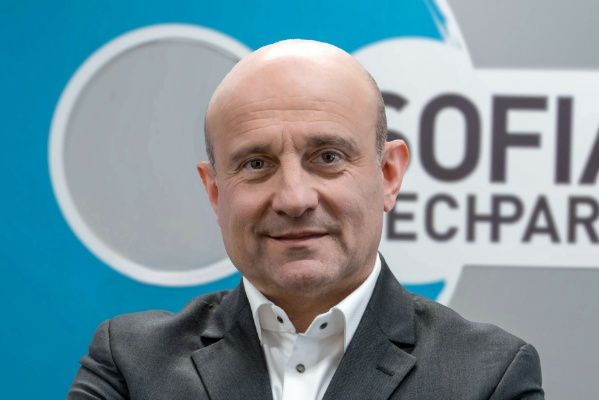
"Sofia Tech Park enters a new phase: AI, defense technologies, and technological sovereignty!"
Mr. Danovski,
could you introduce yourself – what is your role as the CEO of
Sofia Tech Park and what attracted you to the mission of developing the first
science and technology park in Bulgaria?
For the past 12
years, I have been working in the public sector to develop our economic and innovation
environment in a modern competitive form.
I have held
various mandates and roles in the field of institutional
entrepreneurship, an area that develops the public sector through the best practices of
the corporate world.
I joined the management of
Sofia Tech Park at the beginning of 2026 to support the team of
the company on its path to a new orbit with two new strategic directions in its
operations and secured new projects worth over 140 million euros. After years of working on aligning public policies, funding programs,
agencies, and tools for their implementation, and specifically managing
state-owned companies, I envisioned that I could be useful with this experience. I
am not one for missions. I prefer to say "hop" after I have jumped.
How did the
story of Sofia Tech Park begin and how has its role in the Bulgarian
innovation ecosystem changed from its establishment to today?
The story begins
back in 2013, when the idea for the first science and technology park in Bulgaria emerged, going through securing funding for this project
from the European Commission and the construction of the infrastructure and its opening
in December 2015. In the first years after the opening, the focus of the work was
entirely on transforming the park into an environment to support startups, small
and medium-sized companies, building a community and an environment for the development of
entrepreneurship and science, to stimulate innovations and technologies.
Services and opportunities for companies and research teams were activated, and
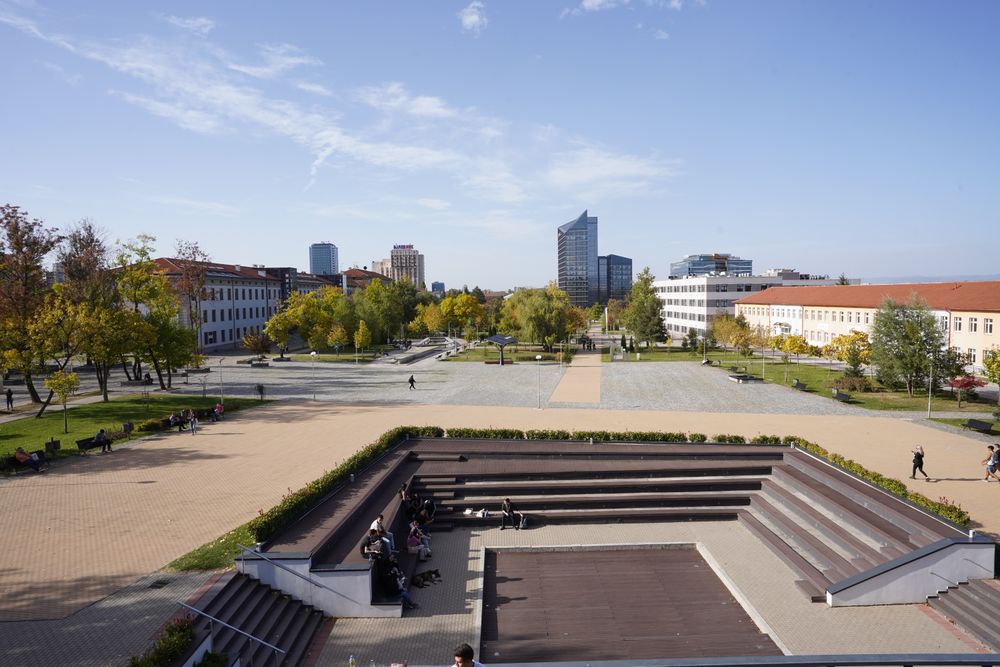
partnerships were created. Thus, ten years later, Sofia Tech Park is now an established hub for
innovation and business in the country and the region, participating in large national and
european projects.
Which stages of
the development of Sofia Tech Park would you define as the most significant and why were they
turning points?
The first turning
point was the completion of the main physical infrastructure and the launch
of the laboratory complex. The second major stage was positioning the park as
a regional hub with the installation of the Discoverer supercomputer and later
upgrading it with artificial intelligence systems. Currently, the Park has entered
its third stage, in which new key areas are added to the main priority areas - technologies, life sciences, and clean energy - on a global scale - technology
transfer, artificial intelligence, defense, and dual-use technologies. The Park is
among the main entities whose task is to establish national technological sovereignty
and industrial capacity.
If you take stock
of the last few years, what are the most important conclusions we can
make about the development of Sofia Tech Park and its place in the technological
ecosystem?
The technology
park has managed to establish itself as a trusted partner for over 200 companies that have
passed through it to start or accelerate their development. In Sofia Tech
Park, the ecosystem in our country already has a large part of the elements needed for the development of innovative projects and technologies – acceleration and
incubation services, testing laboratories, access to a network of partners, mentors,
professionals, experts, high-performance computing, all connected in a
functioning system.
What do you
consider to be the greatest achievement of Sofia Tech Park so far – the built
infrastructure, the attracted companies and organizations, the created partnerships,
or the community that is forming around it?
The greatest
achievement is the synergy between all these elements. Infrastructure without
a community is just real estate, and a community without technological resources
cannot develop.
What are the
main priorities in the current development strategy of Sofia Tech Park and
what do you want to be different in the park in the coming years?
We are preparing a business
program for a new 3-year cycle. We plan priorities in the field of AI through
the project for building a Bulgarian artificial intelligence factory BRAIN++, defense innovations, and dual-use technologies
through the Defense Innovation Center, the Center for Excellence in Kazanlak, and our
participation in NATO's innovation network DIANA.
Another priority of strategic
importance is the National Center for
Technology Transfer. We are also working to change the model of the Park, with the goal of expanding
into a more open system for sharing resources with businesses and scientific communities, to
attract strategic scientific, educational, and corporate partners, and to integrate even more deeply into European innovation chains.
What new
initiatives, projects, and partnerships are upcoming and in which areas do you see
the greatest potential for development?
I have already mentioned
some of them, but I will provide more details. The AI factory BRAIN++, which is funded by the state and the EU,
will have over 1000 graphics processors and will be used by businesses, research
teams, state and municipal institutions. The Defense Innovation Center has already opened a procedure for developing 6 types
of unmanned aerial systems worth over 10 million euros. Through NATO's DIANA accelerator,
Bulgarian companies will have the opportunity to use a network of
testing centers in the 32 member states of the Alliance. The establishment of
the Center for Excellence in Kazanlak is upcoming, with the first digital services
available to companies as early as 2027.
Innovation is
in the very DNA of Sofia Tech Park. How is the understanding of innovation changing today and
what does it mean to create an environment where ideas can turn into real
business or technology?
The understanding of
innovation is no longer limited to the emergence of a good idea or prototype, but to
the process of turning a scientific result into a market product. Creating an innovative
environment means offering a complete cycle - from the incubation program, like
SEEIP at Sofia Tech Park, through laboratory testing and validation, to
securing corporate capital, international markets, and a legal framework for
technology transfer.
We are entering a
period in which artificial intelligence is rapidly changing the technological
environment. How is this affecting the work of Sofia Tech Park and the
companies, scientists, and entrepreneurs in its ecosystem?
Artificial
intelligence requires enormous computational resources and specific capacity. For Sofia
Tech Park, this means transformation through the BRAIN++ project, which will upgrade the Discoverer+ supercomputer.
The project is not just a hardware purchase, but the creation of a comprehensive AI platform that
will provide data, expertise, legal security, and computational power for
startups, researchers, and established companies, as well as the public sector, to implement AI
in their products and processes, along with training that will create a critical mass and
a community of potential users of this computational resource. Sofia Tech Park
is gradually becoming one of the key factors in building and ensuring
the technological sovereignty of the country, where complex technologies are
connected with real industrial needs.
Which
technological directions do you think will have the strongest influence on the development
of the Bulgarian innovation ecosystem in the coming years?
The strongest influence
will come from artificial intelligence, defense and security technologies, dual-use solutions,
biotechnology, microelectronics, autonomous systems, and clean energy technologies. In these areas, Bulgaria can build
its own industrial capacity and not be critically dependent on external
suppliers. Areas such as software engineering, robotics, mechatronics, sensor systems, and others also hold great potential for the country, and in these
areas, we need to invest both resources and policies to stimulate them.
What have you learned
over the years about building a functioning innovation community – what brings it together,
what develops it, and what can destroy it?
Being a community
is not enough; it is time to fill the concept of ecosystem with content. In the innovation ecosystem, there is no center; in this
sense, each participant connects with others based on clear
interest, motivation, and stimulation - in the Western model, it is called a thirst for
competitive collaboration. These are the ingredients of the formula for ecosystem
connections. Resources, knowledge, and
opportunities for growth are exchanged. Transparency, open models, and
the ability for each participant to see direct benefits for their business or scientific
work develop it. What can destroy it is encapsulation, lack of trust, and
treating infrastructure as isolated property rather than as a
shared resource.
The role of Sofia
Tech Park is nothing more and nothing less than to be a mediator that produces
models of collaboration between these parties and builds a framework of trust,
shared risk, and clear distribution of benefits.
What do you think
is still missing in Bulgaria to turn good ideas, scientific
developments, and technology companies into a stronger and more sustainable engine of
the economy?
We still lack a sufficiently well-developed mechanism for technology
transfer and a closer connection between science and business. The percentage of
Bulgarian innovative high-tech products is low. We also lack a sufficient number of
large corporate partnerships that systematically invest in
Bulgarian scientific developments.
If we look
several years ahead – how do you want "Sofia Tech Park" to look and what would you
like its place to be in the Bulgarian and European technological
ecosystem?
I see Sofia Tech Park as a fully integrated hub at the European level,
an established national center for technology transfer, a leading AI factory in
the region, and an active accelerator for defense technologies in NATO's
DIANA network. Its place should be as a main driver that helps Bulgarian
companies compete in the global market.