The greatest revolution is not technological, but in the way we think
· Nikolay Hadzhidontchev
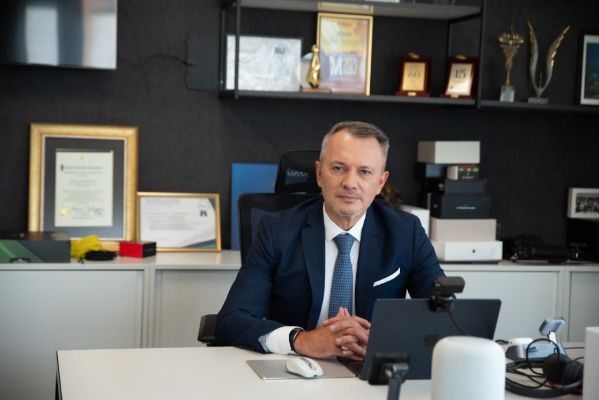
"The next great battle will not be between man and machine, but between knowledge and dependency!"
Introduce yourself in a few words to the readers of Career
Daily News. Who is Nikolay Hadzhidontchev outside of his professional biography and
what causes inspire you today?
Outside of my professional life, I am an avid underwater photographer
- a passion that allows me to explore the beauty of the unknown and capture
moments that few have the opportunity to see.
My wife has been by my side for 38 years – an unwavering support and
the person who has always encouraged me in every endeavor. Together we have raised
our two sons, and today I am a happy grandfather to two wonderful grandchildren.
Family has taught me how important support, trust, and the values we pass on to
the next generation are. Perhaps that is why the causes that inspire me are
related to young people, knowledge, and education. I believe that the most meaningful
investment is in the potential of young people, because they, supported by knowledge
and inspired to dream boldly and rely on values, have the power to change the world
for the better.
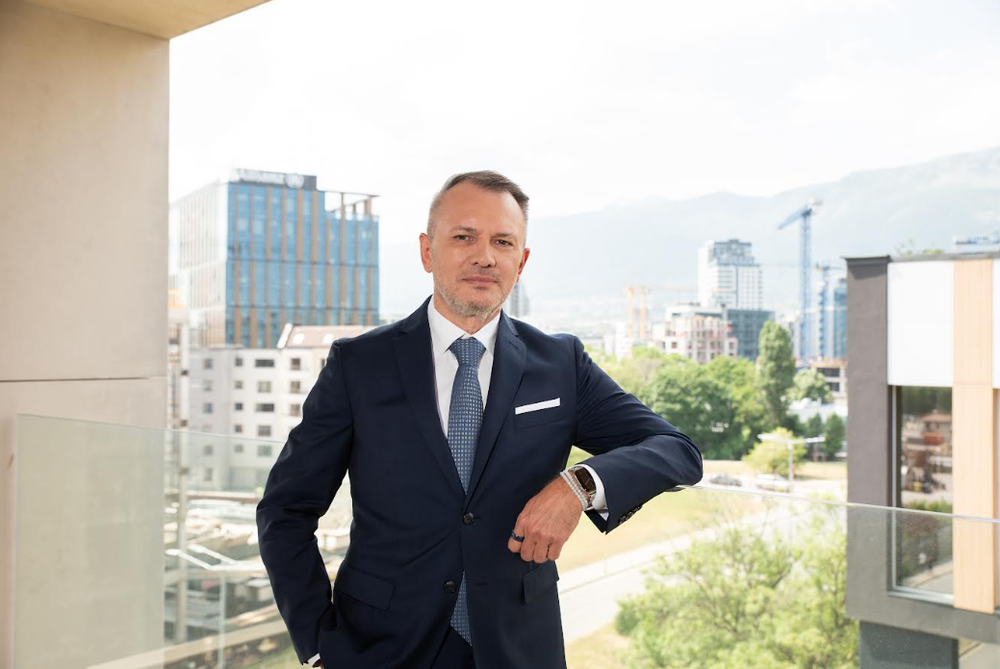
Photo: Personal archive
Are we at the beginning of the greatest technological
revolution in the history of humanity, and how will it be different from all
previous industrial revolutions?
I am convinced that we are at the beginning of the most extensive technological
transformation in human history. And this is not just another industrial
revolution. This is a revolution that will change not only the way we work
and live, but also the way we think, make decisions, and perceive the world.
Previous industrial revolutions primarily increased the physical
capabilities of humans. The steam engine replaced muscle power,
electricity transformed production, and computers automated information
processing.
Artificial intelligence is entering a territory
that we have always considered to be uniquely human – intelligence.
This is the fundamental difference.
Another aspect that makes this revolution unique is the speed.
Changes that previously took generations can now happen in just a few years.
As someone who manages a business in three European countries,
I see how quickly technologies are beginning to change management,
production, medicine, and relationships between people.
But for me, the most important question is not how intelligent
machines will become, but how wise we will be in the way we
use them.

Photo: Personal archive
If you had to point out the three biggest changes that
artificial intelligence will bring by 2030, what would they be?
I would highlight three fundamental changes.
The first is the revolution in productivity and the way we
work.
Artificial intelligence will become a natural partner to
humans. More and more routine, analytical, and administrative tasks will be
performed automatically. This will free up enormous human potential for
creativity, strategic thinking, and innovation.
The second is the transformation of healthcare.
This is an area that is particularly important to me.
Artificial intelligence has the potential to accelerate the discovery of new drugs,
improve diagnostics, and make medicine increasingly personalized.
Imagine a world where diseases are detected much
earlier, treatment is tailored to the individual characteristics of the patient, and
the development of new therapies takes significantly less time.
This is not science fiction, but a direction in which medicine
is already evolving.
The third is the fundamental change in education and
access to knowledge.
For the first time in history, every person will potentially have
access to a personal digital teacher, consultant, and assistant.
This could democratize access to knowledge in a way that
we have never seen before.
To summarize: by 2030, artificial intelligence
will not just change what we do. It will change what we are
capable of achieving.

Photo: Personal archive
We are increasingly seeing humanoid robots that can
work in factories, warehouses, and hospitals. How far are we from the moment when they
will become part of our daily lives?
I think we are much closer to that moment than
most people assume.
In the next five to ten years, I expect robots
to gradually become a common part of the industrial environment, logistics,
and certain activities in healthcare.
Initially, they will perform repetitive, physically
demanding, or dangerous tasks. Subsequently, they will begin to enter the
service sector and home care.
In the pharmaceutical industry, automation has long been a
reality. The next step is to combine it with intelligent systems capable
of adapting to a changing environment.
Of course, there are still serious technological, economic, and
regulatory challenges between impressive demonstrations and widespread,
reliable application.
However, I do not believe that the future belongs to a world in which
robots completely replace humans.
I believe in a world where robots will take on the heavy work,
and humans will have more opportunities to engage in what makes them
truly human.
Which professions do you think will be most affected by
AI and which will prove to be more valuable than ever?
I believe we need to change the way we ask this
question.
I would not divide professions into those that will disappear and
those that will survive. Rather, we will see a fundamental change in
the content of almost every profession.
Activities related to routine information processing, standard
analyses, administrative processes, and repetitive intellectual tasks will be
most affected.
At the same time, the value of professions that
require human judgment, empathy, leadership, creativity, and responsibility will
increase.
For example, a doctor will have incomparably more powerful
diagnostic tools. But the patient will still need a person who
listens to them, understands their fears, and takes responsibility for the decision.
The same applies to leadership.
AI can analyze vast amounts of information and
propose solutions. But it cannot replace human responsibility for the consequences
of those solutions.
The future will not belong simply to those who know
the most, but to those who can combine technological intelligence with human
wisdom.
Will there come a time when the ability to work with
artificial intelligence will be more important than a university diploma?
For many professions, that moment will likely come sooner
than we expect.
But I would not oppose university education to
the ability to use new technologies.
A diploma has never been a guarantee of
success by itself. It certifies a certain educational path, but not necessarily
the ability to create value.
In the future, employers will increasingly value real
competencies, problem-solving abilities, and readiness for continuous
development.
At the same time, there are professions, especially in medicine,
pharmacy, and science, where in-depth academic education remains
absolutely necessary.
My prediction is that a university diploma will be
the beginning of education, not its end.
The most successful people will be those who do not stop
learning after graduation.
What will be the most valuable quality of a successful person in
the next 10–15 years – knowledge, adaptability, critical thinking, or
the ability to learn continuously?
If I had to choose just one, I would point to the ability
to learn continuously.
Because it underpins all other qualities.
We live in a world where knowledge becomes outdated faster and faster.
What is a competitive advantage today may become a standard tomorrow, and
the day after tomorrow – completely unnecessary.
Over the years, I have realized that one of the most dangerous states
for any leader is the belief that they already know enough.
Truly successful people are not those who always have
the answers. They are those who continue to ask the right questions.
But I would also add one more quality – curiosity.
Curiosity is the engine of development. It drives us to
step outside the familiar, to challenge our own beliefs, and to seek
new opportunities.
In the future, the greatest competitive advantage will not
be what you know today, but the speed at which you can learn something new
tomorrow.
How should education change to prepare
children for professions that do not yet exist today?
This is one of the most important questions that society must
ask itself.
We are still largely educating children for a world
that is gradually disappearing.
The educational model is built around memorizing
information and reproducing correct answers.
But what is the point of assessing a child primarily on
their ability to memorize information when it is already available in seconds?
We need to shift from education based on memorization
to education based on thinking.
Teaching children to ask questions, to analyze, to
create, to work together, and to distinguish credible information from
manipulation.
Of course, fundamental knowledge in mathematics, natural
sciences, language, and history remains extremely important. Without them, there is no true
critical thinking.
But we need to add technological literacy,
entrepreneurial thinking, emotional intelligence, and the ability to work with
artificial intelligence.
There is one more thing that I consider extremely important.
We should not prepare children just to be good
employees in the economy of the future. We need to prepare them to be free,
thinking, and responsible individuals.
Because professions will change. Human values must not.
More and more people are afraid that AI will take
their jobs. Do you think this is a real danger, or will the greater
challenge be adapting to new roles?
Fear is understandable and should not be underestimated.
Yes, artificial intelligence will lead to the disappearance of
certain jobs. It would be insincere to claim otherwise.
But the history of technological progress shows us that every
great transformation creates new professions, new industries, and new
opportunities.
The difference now is in the speed.
Society may find itself in a situation where technologies
are developing faster than people and educational systems can adapt.
This is where I see the greatest challenge.
In my opinion, the responsibility of businesses will be much greater
than simply implementing new technologies.
As leaders, we must invest in people, develop their skills, and help them find their place in the new
environment.
I have always believed that the greatest strength of a company is
not the technologies it possesses, but the people behind them.
AI will not replace all humans. But those who know how to
work with AI will have a significant advantage over those who refuse to adapt.
Our task as leaders is to ensure that as many people as possible
have the chance to be part of this change.
What is the greater threat – that artificial intelligence will
become too intelligent, or that people will gradually stop thinking
for themselves?
For me, the second danger is more immediate and in some
ways more concerning.
Not because I underestimate the risks of developing an increasingly powerful
artificial intelligence. They are real and require serious mechanisms for control,
transparency, and accountability.
But there is also a much quieter danger – gradually starting to
delegate not only our tasks but also our own thinking.
When a technology always offers us a ready answer,
the temptation to stop asking questions is enormous.
And the ability to think critically is at the core of human
freedom.
I would not want to live in a world where machines become
increasingly intelligent, while people become more dependent on their decisions.
Artificial intelligence should expand our
intellectual capabilities, not render them meaningless.
The greatest danger is not that machines will start to think
like humans. The greatest danger is that humans will stop thinking
for themselves.
What kind of world do you think we will leave for the next generation
– a freer, richer, and fairer one thanks to technology, or more dependent on it?
I believe that technology can make the world a significantly
better place.
We can envision a future where many serious
illnesses are diagnosed earlier and treated more effectively, education
is accessible to more people, and productivity creates new opportunities for
economic prosperity.
But technological progress alone does not guarantee
social progress.
Artificial intelligence can reduce inequalities, but it can
also deepen them.
It can give people more freedom, but it can also create
new forms of dependency and control.
Everything depends on the decisions we make today.
On the rules we create. On the values we
defend. On how we distribute the benefits of technological progress.
As a business leader, I believe that success should not be measured
only by financial results, but also by the positive impact we
leave on society.
That is why the role of the pharmaceutical industry is so important to me. Its true meaning is to improve human
life.
The future will not automatically be better because of
artificial intelligence. It will be as good as the wise decisions
we make as a society.
What advice would you give to a young person starting their
career today who wants to be successful in the world of artificial intelligence?
I would give them several pieces of advice that I would also give to myself if
I were starting my professional path today.
First, do not be afraid of change. Embrace it as
an opportunity.
Second, learn to use artificial intelligence, but do not
allow it to think for you.
Third, invest in knowledge, but even more in your ability
to learn.
Fourth, develop qualities that technologies find hard to
replace – integrity, empathy, courage, character, and the ability to inspire
the people around you.
And finally, do not strive just to be successful. Strive to
be useful.
Over the years, I have become convinced that the most
sustainable success comes when you create value not only for yourself,
but also for the people around you.
Do not compete with artificial intelligence. Learn to
achieve with its help things that today seem impossible.
And never forget that technologies can give you
huge opportunities, but only your values will determine how you will use them.
If we meet again in 20 years, which of your predictions
from today’s conversation are you confident will have come true?
I am confident that in 20 years, artificial intelligence will be
as natural a part of our lives as electricity and the
internet are today.
We will not talk about it as a separate technology. It
will simply be everywhere – in medicine, education, transportation, business, and
our homes.
I believe we will witness medical achievements
that today seem almost incredible. We will be able to detect many diseases
significantly earlier, develop new therapies faster, and provide
increasingly personalized treatment.
But if I had to make one bolder prediction, it would be
this:
In 20 years, the most valuable resource in the world will not be
information or technology. It will be human trust.
Because in a world where machines can generate almost
unlimited amounts of information, content, and solutions, trust in humans,
their character, and their judgment will become increasingly valuable.
And if we have this conversation again in 20 years, I would like
us to be able to say that we used the most powerful technology ever created,
not just to become richer and more efficient, but to be healthier,
freer, and more humane.
Because the true success of artificial intelligence will not
be measured by how close it has come to human intelligence, but by how
much better it has made human life.