The Person Behind the Public Image of Mihaela Fileva
· Mihaela Fileva
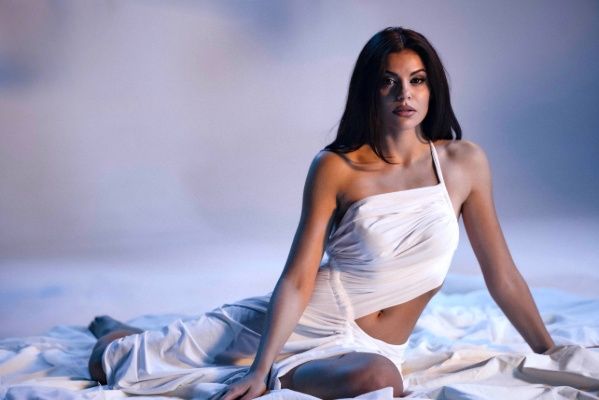
"Sometimes we take our loved ones for granted and forget how much their presence means!"
If you had to introduce yourself to someone who has never heard your music and knows nothing about you, how would you describe Mihaela Fileva? What are the three things that define you most accurately as a person?
I would say that I am curious, sensitive, and ambitious. Curiosity drives me to constantly seek new knowledge, experiences, and perspectives. Sensitivity helps me to feel the people and the world around me, so that I can be a creator who produces art that is relevant to its time, and ambition allows me to turn my ideas into reality. I also have quite an analytical side, which sometimes comes into an interesting conflict with my emotionality. It is precisely this clash of two self-denying principles that makes me the artist I am.
When was the last time you surprised yourself – by a reaction, decision, or courage that you didn’t suspect you had?
I think I most often surprise myself with my courage to take risks in things that initially seem much bigger than me. Sometimes I am faced with a challenge for which I don’t have time to think about whether I am prepared, and I just jump in. You start to act and in the process, you discover that you can do much more than you thought. This is one of the most wonderful feelings because it expands your perception of your own possibilities.

Is there a difference between the woman you are on stage and the one you are when you go home and are alone with yourself?
Of course. On stage, I am much more extroverted and energetic, interacting with a large number of people and my emotions are at a completely different level. In my personal world, I need more silence, tranquility, and time for myself. I love to read, travel, have long conversations with my loved ones, but also just give myself time to be at peace. I don't think these are two different personalities. Rather, they are different manifestations of the same woman.
What do people most often misunderstand about you because they only see your public image?
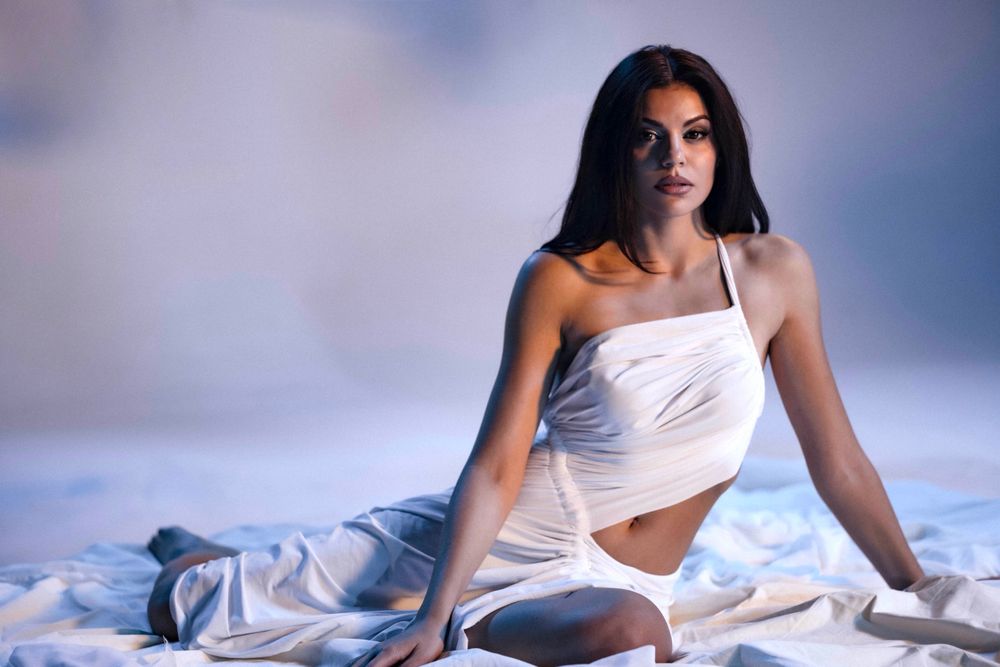
Perhaps how much work, doubts, and thought go into things that appear natural and easy from the outside. People see the concert, the song, the smile, but they don't always imagine the entire process behind them. Moreover, the artist is not just their public image. I have many interests, personal quests, and completely ordinary daily moments that have nothing to do with the stage.
Which of your traits do you love the most and which are you still trying to change?
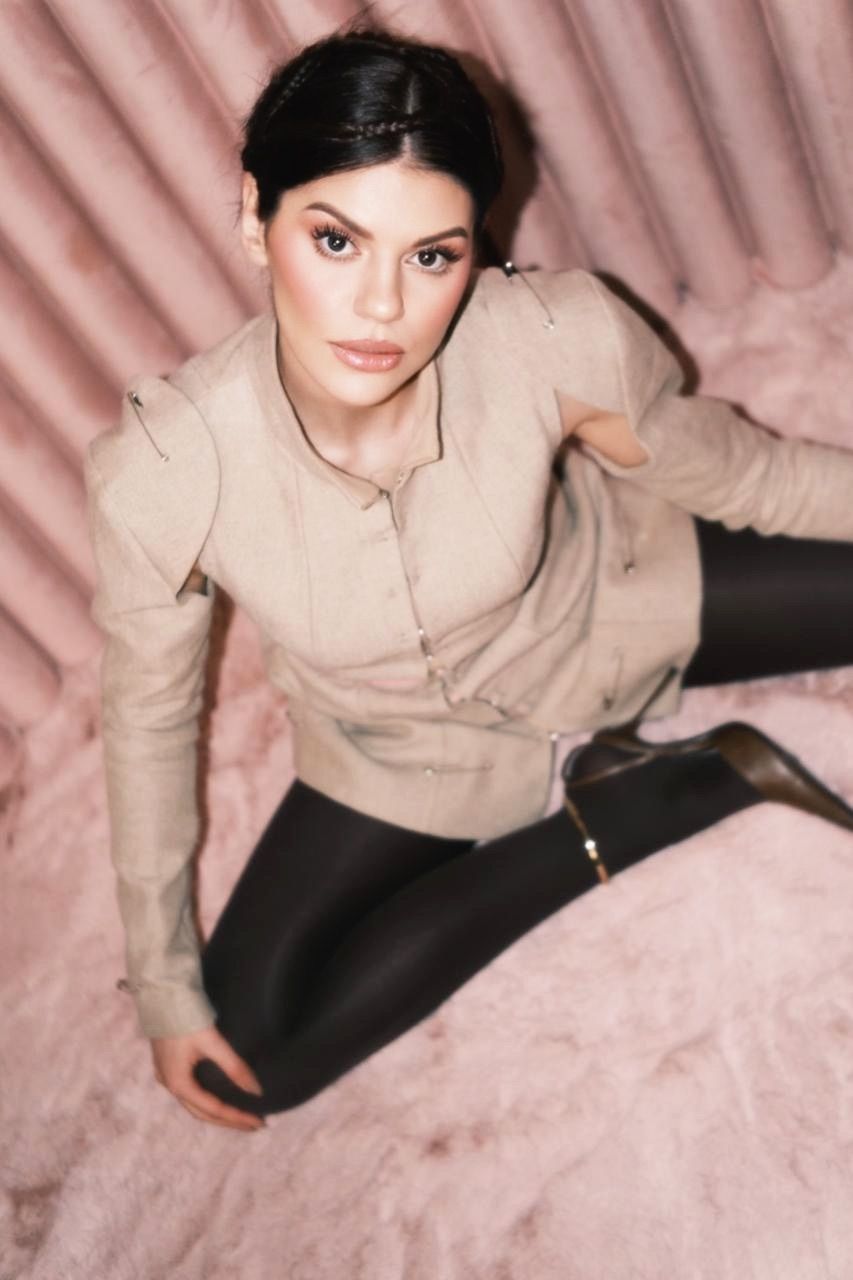
I really love my curiosity and my ability to get excited about new things. I like that I don't lose the desire to grow and discover. On the other hand, sometimes I am too critical of myself and I am still learning to accept that not everything can be perfect. I try to be gentler with myself and not turn every challenge into a test of my own worth.
Do you remember the moment when you first told yourself that music could be not just your dream, but your life and profession? What was your biggest doubt back then?
I think that realization came gradually. For the first time, my dream began to take on very real shapes when I was 15 and became the host of “Hit Minus One” on BNT. That was when I met many people from the music business who gave me valuable advice, and I started writing my first original songs. By the age of 16-17, I was already winning awards at international festivals both in the country and abroad.
After that came X Factor, which was one of the decisive confirmations for me that music could be my professional path. This coincided with my acceptance into the National Music Academy “Prof. Pancho Vladigerov,” in the class of Prof. Dr. Stefka Onikyan. These two recognitions – from the general audience through X Factor and from the academic environment – gave me tremendous fuel to believe even more strongly in my dream and not to give up.
I also had a completely different perspective ahead of me – I was accepted simultaneously at Sofia University, majoring in “Software Engineering.” Choosing to develop in music meant taking a path that is much more unpredictable.
I think that back then I intuitively understood something that has been confirmed over the years - talent is just the beginning. Much more important are perseverance, discipline, and the willingness to keep learning. These are qualities that the mathematical high school gave me and which turned out to be extremely useful in the profession of a musician.
Is there a price of success that no one warned you about? Something you realized only after you were already in this profession?
Yes.
Perhaps the greatest cost is the merging of personal and professional life.
When you love what you do so much, the boundary between work and personal
life easily blurs. You start measuring yourself by what you have achieved, by
the opinions of others, by the next goal. Sometimes you forget that you are
much more than your profession. I don’t need to be solely a musician to be a
good musician. I need a personal life, experiences, people, and time to just be
myself.
A diverse and exciting personal world actually makes us better artists.
Have you ever achieved something great and instead of feeling satisfied, felt that you now have to prove even more? How do you deal with that feeling?
Yes,
and I think this is quite characteristic of ambitious people. When you achieve
something you have long dreamed of and worked hard for, the joy is sometimes
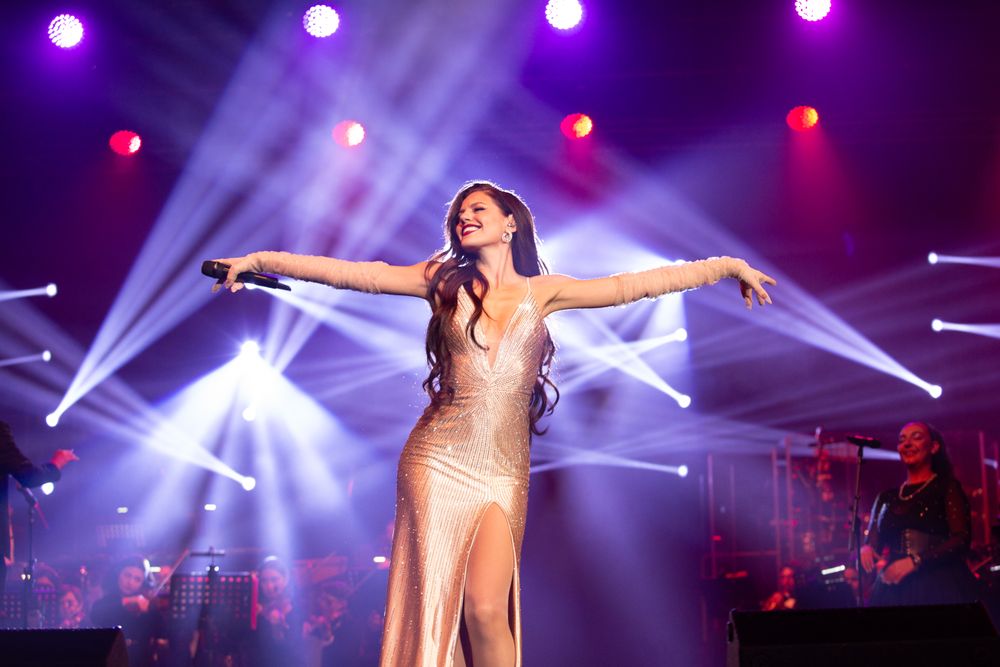
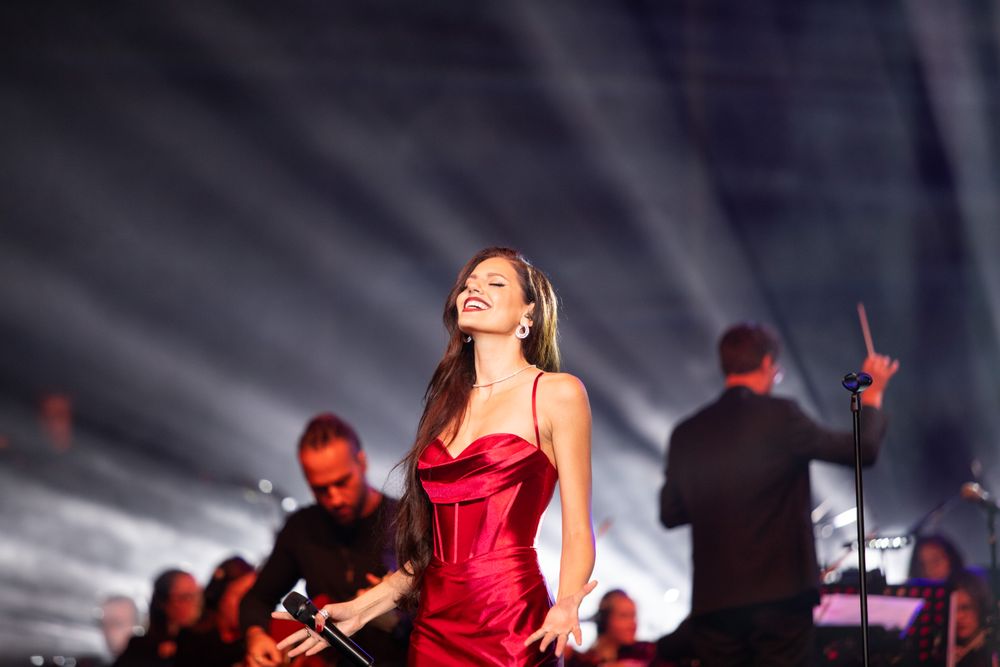
followed by the question “What now?”. I vividly remember my concert in Hall 1
of the National Palace of Culture at the end of last year - with over 60
musicians on stage as part of a large symphony orchestra, an extremely large,
complex, and costly concert to organize. This was a huge dream and a very
important moment for me and the pop scene as a whole. Almost immediately after
it, I started thinking about how this concert could turn into a tour, and just
a few days later, a live album is released, my first record capturing everything
we experienced that night with the audience. Sometimes it’s nice to have a next
goal, but I consciously try not to miss the pleasure of the work done. Otherwise,
you risk spending your whole life waiting for the next big thing.
What is more difficult – fighting for a place in the spotlight or keeping your place without losing yourself?
I think that the second is the bigger challenge. Fighting for a place requires talent, a lot of work, persistence, and courage. But once you are there, other expectations arise. There is a temptation to repeat things that work, to overly consider others' opinions, or to be afraid to take risks. For me, it is important to continue developing, to experiment, and to not lose touch with my own sense of music and meaning.
How often do you allow yourself to be satisfied with what you have achieved, without immediately setting the next goal?
This is something I am working on. I have a very strong sense of responsibility and often, even while finishing one project, I am already thinking about the next one. But there are moments when I consciously stop and realize what I have actually achieved. The concert at NDK, my albums, the songs that have found their audience, the people who come to my concerts… These are things I have dreamed of. And they deserve to be experienced with gratitude, not just checked off as another task.
Has there ever been a moment when you wanted to give up or take a completely different direction? What brought you back to music?
There have been moments of doubt, fatigue, and a desire to rethink the way I work. The music profession is very unpredictable and sometimes requires an enormous amount of energy, without knowing what the outcome will be. But I have never lost my true love for music. It is what brings me back. The very process of creation, the opportunity to tell stories, to be on stage, and to connect with people through my songs. This is much stronger than momentary disappointment.
Difficult moments and inner strength
When you go through a difficult period, do you prefer to retreat into yourself, seek out your loved ones, or continue working as if nothing is happening?
My initial instinct when something difficult happens is to retreat into myself. I don’t want to worry the people around me and often I escape into work. I fill my time with thousands of tasks so that I don’t have to face my own emotions.
Over time, however, I have started consciously changing this pattern. I have learned to first give myself time to understand how I feel and why, and then to communicate it with the people who are part of the situation. Because silence is not always an expression of care. Sometimes it simply leaves others without the necessary clarity and deprives them of the opportunity to take responsibility for their own actions, which is crucial for the growth of any individual.
I am empathetic, which allows me to easily step into someone else's shoes, even when I myself am a victim. For a long time, this made me justify others' behavior before the person opposite even realized they had crossed someone's boundary. Especially in professional relationships, I have found myself keeping quiet about things because I understand the motivation behind them. But I realized that in doing so, I sometimes harm both myself and the other person. Part of personal growth is receiving feedback, including when you have done something wrong. If you are constantly spared this truth, how could you change?
Today, I strive to use my empathy not to justify everything, but to lead more meaningful and honest conversations. I don’t think the solution is to either endure or to shut yourself off and seek a way out of every situation alone. It is important to give yourself time to understand yourself, and then find a way to explain to the people around you what is happening. This way, everyone has clarity on whether something is right, whether there is a problem, and what challenge you need to face together.
Because a team, whether we are talking about professional life or family, is a unit. And the most important thing for a team is that everyone knows what they are up against and can deal with it together.
What is the most important thing you have learned from a disappointment that seemed unfair at the moment it happened?
Perhaps that we do not always receive the explanations or justice we expect. Sometimes people make decisions that we cannot control, and we do not always understand their motives. What we can choose is how we will react and whether we will allow a disappointment to change our attitude towards the world. I do not want to lose my curiosity about people or my faith in goodness because of someone’s behavior. I think it is important to maintain your ability to trust without forgetting what you have learned.
Have you ever cried over something that the next day you had to turn into a smile in front of an audience? How do you find the strength to continue?
Yes, I think that is one of the peculiarities of a public profession. Sometimes your personal world goes through completely different emotions than those people expect to see on stage. I have learned to be responsible to the audience and to the people I work with, but I do not think that means suppressing everything I experience. The stage has a special power. It can be a place where for a few hours you set aside your worries and connect with something much greater than the specific moment. Sometimes it is music that helps me get through the tough times.
When should a person show more courage – when fighting for their dreams or when admitting they no longer want the same things?
In both cases, it requires immense courage. Fighting for your dreams means continuing even when the path is difficult and you don't know if you will succeed. But admitting that you no longer want the same things is sometimes even harder because you have to let go of the image of yourself that you have built. It is important to be honest with your own desires and not to keep pursuing something just because you once defined it as your dream.
How did you learn to set your personal boundaries in a profession where you are often expected to be constantly available, smiling, and dedicated?
This is still a process. In music, it is very easy to merge with your work, and sometimes you feel like you have to be available at all times. But I started to understand that personal boundaries do not mean less dedication. On the contrary, they allow me to preserve my energy and focus to give my best. I need time for rest, for my loved ones, and for my own interests. I don't believe that one should constantly prove how dedicated they are by neglecting themselves.
Is it easy for you to recognize your own emotions and express them, or do you sometimes prefer to hide them so as not to burden others?
I easily recognize my emotions, but it is not always easy for me to express them at the moment I experience them. Sometimes I need to analyze them first, to understand where they come from and what exactly has affected me. I tend to try to cope on my own so as not to burden the people around me. But closeness also requires allowing others to be there for you in difficult moments, not just when you are doing well.
When someone hurts you, do you tend to seek a conversation and explanation, or do you withdraw and let time show whether the relationship is worth it?
It depends on the situation and the person. Generally, I believe in conversations and in giving the other person a chance to explain their point of view. However, sometimes there are situations where withdrawing is necessary to understand your own feelings and assess what you want from that relationship. I can understand someone's motives and even forgive them, but that does not necessarily mean that trust will be restored. For me, honesty and loyalty are very important.
How do you know that a person is a true friend? Are there friendships that have taught you more about life than any professional meeting?
True friendship is reciprocity, loyalty, and genuine joy in the successes of the other. It is someone with whom you can be completely yourself, without overthinking every word or maintaining any image. A person with whom you can share both great joys and the very ordinary moments of everyday life.
In my twenties, I re-evaluated some of my friendships. There were relationships where I provided a lot of support and was there for people during their important and difficult moments, but later they proved to me through their actions that our closeness was a function of personal interests. This disappointed me, but it also helped me understand better what I value. Today, I may have fewer people around me, but I am much clearer about who my people are.
Have you ever had to let go of relationships that were important to you because you realized you were losing yourself in them?
Yes. Sometimes relationships are important precisely because they have a history, because they have been part of your life for a long time, or because you have invested a lot in them. But that doesn’t mean you should keep them at any cost. If you are constantly trying to be accommodating, suppressing your own needs, or conforming to something that hurts you, at some point you start to lose touch with yourself. I think it’s important to recognize that moment and accept that sometimes parting with certain relationships is necessary.
Can you be vulnerable with the people you love, or is it easier for you to be the one who supports others?
It’s easier for me to be the person who supports. I have a strong instinct to care for the people around me and often try to be a pillar when someone is in need. But allowing others to care for you is also a form of closeness. In my most meaningful relationships, I feel free to be vulnerable, to not have the answers, to have doubts, and not to have to be strong all the time.
What does emotional maturity in a relationship mean to you – being able to love, making compromises, or knowing when to walk away?
I think it’s a combination of all of these. Emotional maturity means being able to love without trying to possess the other person, making compromises without losing yourself, and taking responsibility for your own actions. But it also means having the courage to acknowledge when something is no longer good for you or for the other person. Love is not just a feeling; it’s also the way we treat each other.
How does a woman's perception of love change over the years? What would you no longer do in the name of a relationship?
I think that as the years go by, you start to understand that love shouldn't be a constant effort to hold onto someone or to prove that you are enough. When you are younger, sometimes you confuse strong emotions with the depth of a relationship, compromises with commitment, and putting the other person first with love itself. Today, I believe much more in reciprocity, in calmness, and in the freedom to be yourself with the person you love. I wouldn't want to lose my own identity, neglect important needs, or give up on things that make me happy just to maintain a relationship. Love should give you space to grow, not shrink you. I am happy that for almost a decade I have had exactly such a person by my side.
Is there something you have learned about yourself through love rather than through your professional successes?
Yes, I have learned that no matter how independent and confident you are in your professional life, it does not immunize you against vulnerability in your personal relationships. Successes can give you confidence, but they cannot teach you how to be close to someone, how to share your fears, or how to accept that you don't always have the answers. Love has taught me patience, compromise, but also to recognize my own boundaries. Perhaps the most important thing is that loving someone does not mean forgetting yourself.
Do you think that women sometimes set excessively high expectations for themselves – to be successful, beautiful, independent, caring, and always managing everything? Have you felt such pressure?
Absolutely. I think that modern women often fall into the trap of quite contradictory expectations. We need to be ambitious and successful, but also have enough time for family, be independent yet always gentle, look good, be caring, have a social life, and somehow manage all of this effortlessly. I have felt this societal pressure, and sometimes I have inflicted it on myself with my own expectations. Sometimes we are our own harshest critics. I think it is important to allow ourselves to be tired, to not know what we want, to change our priorities, and not feel guilty about it. Our worth does not depend on our ability to handle everything at once, nor on being perfect all the time.
What is more important to you today – to be liked by many people or truly understood by a few?
Truly understood. Being liked is sometimes related to the image people have of you, while being understood requires someone to show interest in the person behind that image. In my profession, it is natural to want my music to reach many people, but in personal life, the quality of relationships is much more important than their quantity. I value the people with whom I can be completely myself.
When you create music, how much of it contains true personal experiences and how much are you willing to tell stories that are not necessarily yours?
Music is very closely connected to my personal world, but that doesn’t mean that every song is autobiographical. Sometimes I use my own experiences, other times I am inspired by a person's story, a conversation, a book, or simply an emotion I have felt. I am curious to delve into different human stories and seek the truth within them. Ultimately, what matters most to me is that the song carries authentic emotion, regardless of where it comes from.
Is there a song that you would sing today in a completely different way because you now understand life and the emotion behind it differently?
Yes, “I Am Here,” which I wrote when I was 19 years old. I find it very interesting how, over time, a song created at that age can still resonate so appropriately as a theme. Back then, I wrote much more generally, not so much about specific situations or experiences, which actually leaves a lot of room for interpretation. It contains a search for oneself in an unordered world, driven literally by the impulse to find your place in the world and assert your presence. I think it is this universality that allows the song to continue to find meaning at different stages of life. Now I sing it from the perspective of a much more aware person.
What inspires you during periods when you have no new ideas, when everything seems familiar and it feels like you have exhausted your creative energy?
In such moments, it helps me a lot to step out of my usual context. Traveling, meeting new people, books, cinema, theater, and different forms of art are a huge source of inspiration. Sometimes a completely ordinary situation or conversation can unlock an idea that you have struggled to find in the studio for a long time. It is important for me to have a rich life outside of music because it is precisely this that gives me new perspectives and emotions that later find their place in it.
Is there something you still haven’t dared to do in music because it requires you to step out of your comfort zone?
Definitely. I have always felt that the most interesting things happen where you are not completely sure what the outcome will be. I want to continue experimenting with sound, with the way I tell stories, with different musical genres and forms of stage presence. I also have a desire to develop my international work, to meet new authors and producers, and to create music in different environments. I don’t think the comfort zone is a place where you should stay for too long.
What would you like your next big challenge in life to be – professionally or personally?
Professionally, I would really like my music to reach an audience beyond Bulgaria. To continue working with interesting international authors and producers, to perform concerts on stages I dream of today, and to create large projects that carry my artistic signature. Personally, I have a huge desire to keep traveling and discovering the world. And of course, I dream of having a family and being a parent. I believe that the best thing is to be able to develop your dreams in different directions without having to choose just one.
If you could see yourself in ten years, what question would you like to ask her?
I would ask her if she is still curious, if she continues to be excited about music, and if she hasn't lost the courage to try new things. I would like to know if she has managed to see all the places in the world she dreams of, if she has the people she wants to share her life with, and if she still finds joy in the little things. I hope that in ten years I will be a person who continues to grow but also knows how to enjoy what she already has.
Is there a dream that you have postponed for so long because of work that you are now wondering if it's time to give it a chance?
Traveling is one of the dreams for which I always wish I could find more time. There are so many places I want to see, cultures I want to explore, and experiences that cannot be replaced by anything else. Sometimes work naturally displaces personal plans, but I try not to forget that life doesn't happen only between concerts, the studio, and the next project. I want to have time for it.
Which person would you like to hug today and tell them that their presence in your life has changed something important?
I think there are a few people I would like to say this to, not all of them are still in this world. People who have been there for me in moments when I needed support, who have given me confidence when I doubted myself, or simply have been present in my life in a way that left a mark. Sometimes we take our loved ones for granted and forget how much their mere presence means. In fact, these relationships are one of the most valuable things we have.
If you could go back to 18-year-old Michaela, what would you tell her about love, success, and the people she should not allow to define her worth?
I would tell her not to rush to grow up and not to take every mistake as a disaster. Not to be afraid of others' opinions and not to let successes or failures define her attitude towards herself. For love, I would tell her not to forget her worth while trying to be good for someone else. And most importantly, to keep her curiosity, sense of humor, and courage to try. There is no need to know everything in advance to take the first step.
What would you like people to feel when they listen to your music – not just to like your songs, but to leave with some feeling or thought?
I would like my music to give people the freedom to feel and interpret in their own way. To discover in the songs something that relates to their own life, even when the story isn’t theirs. If a song manages to give courage, to comfort, to make someone smile, to cry, or simply to feel that they are not alone, for me that is of immense value. I really love the thought that music can be part of someone’s personal memory or an important moment.
When one day you take stock of your life, what would be more important to you – how many people applauded you or how many times you were truly happy?
True happiness, without a doubt. Applause is a wonderful part of my profession and I am grateful for every person who has chosen to be part of my musical world. But in the end, they are just moments. Happiness is much greater than the stage and professional successes. It lies in relationships with people, in the freedom to be yourself, in the experiences that change you, and in the peace of knowing that you are living a life that makes sense to you. I hope that when I take this stock, I will have many more memories of happiness than of applause.