Drones and cyberspace are now one. Are we ready?
· Anton Puliyski
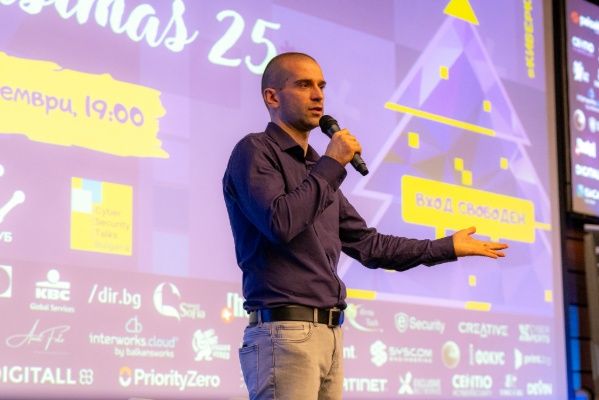
Technologies are not dangerous. Ignorance is dangerous!
Anton, you are a person who stands simultaneously behind two very
relevant causes — the Association “Unified Drone Society” and CyberCLUB. How do
these two directions intersect and what unites them in your overall vision for
digital security and development?
In fact, both work in the same direction - safe development of
technologies and a prepared society. The Association “Unified Drone Society” works
in the real world of unmanned systems: the focus is on the safe use
of drones, professional training of operators, the development of the entire
ecological system, and the dialogue between operators, business, and institutions. There we work on the ground
— with real technologies, real risks, and real applications that are already part
of our daily lives.
On the other hand, CyberCLUB addresses the same challenge, but in the digital
environment — how people can be prepared to live and work safely in an increasingly
connected world. The focus is on building a culture of cybersecurity,
early education, and practical skills that help not only to be
protected online but also to discover a professional path in technologies.
If I had to summarize it in one sentence: “Technologies are developing rapidly, but
real security depends on how prepared people are to use them.” This is the common thread in both initiatives — to help
society stay one step ahead of technological risks, instead of reacting
after problems have already arisen.
How did the idea for the creation of the Association “Unified Drone Society” arise?
What are its main goals and what problems in society and industry does it address?
The idea for the Association “Unified Drone Society” was born back in 2018,
when drones began to increasingly penetrate the aviation environment, but
without a clear framework for how this should happen safely and sustainably. In aviation,
safety has always been a leading principle, while with drones it was observed that
the focus was on the technology itself, not on its responsible use.
We saw that there are many people with desire and expertise who are doing
wonderful things individually, but by working together there was potential to build something much
bigger and sustainable. That’s why we created the Association as an environment — a space
that gathers these smaller groups around a simple but higher goal:
safety for all – in the air and on the ground.
For us, safety is not a formal requirement, but a philosophy taken directly from
aviation – planning, prevention, and responsibility above all. That’s why we work not
only on topics like regulations and training but also on building trust – between
operators, institutions, and society. When there are clear rules, prepared people, and
a shared responsibility, drones stop being perceived as a risk and
start being accepted as a technology with real value and benefit, both in
the civil and defense sectors.
On the other hand, what does CyberCLUB represent? How do you position it – more
as an educational initiative, a youth movement, or a platform for professional
development in the field of cybersecurity?
CyberCLUB is primarily a community and communication environment – a place where people with
different experiences and interests in the field of cybersecurity can meet, exchange knowledge, experience, and contacts. I do not perceive it as a strictly defined
structure, but as a living ecosystem that evolves together with the people in it. For
some participants, CyberCLUB is a first step towards a career path in
cybersecurity and technologies – a space where they can discover what
interests them, gain practical skills, and find direction. For others, it is
simply a place that helps them to be more aware and more cyber-hygienic in
their daily lives – to understand the risks without being afraid of them. And for people with
more experience, CyberCLUB is an opportunity to share knowledge, be mentors, and
contribute to building the next generation of cyber specialists. The common
thread among all is the aspiration for a more secure digital future, built not through
fear, but through knowledge, shared experience, and trust. When there is such an environment, people
naturally begin to support each other, grow, and carry this culture of
security beyond CyberCLUB.
Drones and cyberspace seem like different topics at first glance, but
are actually connected through technology and security. Where do these two
worlds meet according to you – and where do the risks begin?
There is a direct connection between drones and cyberspace. Modern unmanned
systems do not function in isolation — they rely on software, communications,
navigation, and data processing. Vulnerabilities in any subsystem directly affect
the overall cyber resilience. Risks begin to manifest where this connectivity is not fully
understood. When the drone is viewed primarily as a physical object, rather than as part of a broader technological
ecology, conditions are created for weak points leading to unauthorized
access, signal manipulation, or improper use of information.
That’s why it’s important to view security holistically — both in the air and
in the digital space. The good news is that with good preparation, clear rules, and
basic cyber hygiene, these two worlds can develop in parallel and safely.
Otherwise, the danger is that the risks gradually extend beyond the technology itself and begin to affect people and trust in it.
What are the main threats that drones can pose – not only
physical but also digital? How can people recognize these dangers and
counteract them?
When we talk about threats related to drones, it is important to consider them in
a broader context. On one hand, it is important to pay attention to a highly
concerning feature regarding physical risks, as improper
management, poorly planned flights over people, and technical failures can lead
to fatal consequences. They are part of every aviation activity and have traditionally been managed through following clearly defined rules
and procedures for many decades. In piloted aviation, pilots go through a long and strict process
of training and certifications before they are allowed to operate. During this period,
they develop what is known as a “safety culture.” With drones, the opposite often happens – the technology is easily accessible and many people perceive it as harmless.
This leads to underestimating the importance of prior preparation, and many
begin to fly in public places immediately after purchase, without considering
what adverse consequences this may lead to.
On the other hand, less visible but no less important are digital threats.
These can include unauthorized access to drone control, interception
of communication or video signals from the camera, as well as improper
use of insecurely stored footage. In many cases, people do not realize
where this data goes, who has access to it, and how long it is kept.
In some cases, operators even exhibit a rather concerning underestimation of
basic security measures - using factory passwords, lack of any
restrictions on the storage of the drone and its control systems, etc.
I believe that the key to physical and digital safety lies in education.
Recognizing and countering threats begins with a basic understanding of
drones as complex systems. Basic cyber hygiene, regular
software updates, secure connections, strong passwords, and multi-factor
authentication, limited access to devices, and a conscious attitude towards
data processing and storage make a real difference. When preparation
and awareness become a habit, risks are managed significantly more easily.
Recently, there has been much talk about the use of drones for espionage,
transporting illegal goods, or collecting data. To what extent is Bulgarian
legislation prepared to respond to such cases and what should be changed?
The topic of using drones for espionage, transporting illegal goods, or
unregulated data collection logically enters public
conversation more frequently. This largely reflects the fact that technology is becoming more
accessible and widely used, and not necessarily a sign of mass abuse. In
this sense, it is important to distinguish between isolated incidents and a systemic
problem, to avoid unnecessary demonization of unmanned systems.
Often, public focus falls on extreme and sensational cases, while
daily, completely legitimate and useful applications of drones remain in
the background – from inspections and mapping to sports and student training.
That’s why the conversation about security and safety should be conducted
calmly and in a dialogical form, with a clear boundary between responsible use and
intentional abuse. When this balance is present, it becomes possible to simultaneously
protect the public interest and promote the sustainable development of
technologies.
Regarding Bulgarian legislation, in general, it follows the European
framework and creates basic rules for operation, flight restrictions, and
sanctions for violations. The foundation exists and is gradually being developed.
The challenge, however, is not so much in the lack of regulations, but in their
practical application in areas such as rapid response, coordination between
institutions, and technical capacity for control, for example. I believe that this is
a matter of joint efforts, with the help of which we can achieve higher efficiency in these areas in the coming years.
Real experience so far shows that there are areas where refinement is needed.
There are situations where it is not entirely clear who responds first, how the
operator is identified, when we talk about an administrative violation and when about an intentional
crime. These are questions that require clearer procedures and better
synchronization between aviation safety, security, and law enforcement.
At the same time, it is important to note that we should not rely solely on
bans and sanctions. Many situations can arise not from
malice, but from a lack of preparation and understanding. That’s why information
campaigns and building a culture of safe use are just as important as the
regulatory acts themselves. When prevention goes hand in hand with
clear rules and working procedures, the risk significantly decreases and technology
can develop sustainably.
What specific actions does your association take to assist
state institutions and society in establishing clear standards for
safety and training?
In practice, we strive to work where standards and knowledge are actually
formed – among the people who use drones and the institutions that have
responsibility for regulating them. Part of our initiatives is aimed at
conducting information campaigns and demonstrations for drone safety, through
which we translate the rules and good practices into understandable language. The goal is
to form what is known as a “safety culture” among the general public, leading
to increased trust in the technology itself.
At the same time, we actively organize and participate in various forums, discussions, and
events that bring together operators, experts, representatives of
administration, business, and academia. These regular meetings are
foundational for establishing good relationships in the ecosystem because
they create space for real dialogue and sharing of experience, rather than just for
one-way communication.
Separately, we actively work on initiatives in schools and universities across the
country. Within the framework of the Drone ARENA project, we have invested
significant efforts in promoting and creating a sustainable environment for
practicing drone football. This is a sport that is rapidly gaining popularity, but
its value goes far beyond the competitive element. Through it,
students develop technical thinking, understand the basics of aviation and
technologies, learn to work in teams, take on roles and responsibilities, and
follow clear rules. Most importantly, safety is not taught
abstractly, but is built as a habit – through practice, discipline, and real
work with technology from an early age.
The goal behind all activities that unites all organizations in
the Association is more than ambitious – the development and use of unmanned
technologies in a safe and responsible manner that transcends the boundaries of the drone
ecology and has a real social benefit effect.
Moving on to the topic of CyberCLUB – what are the most common challenges
that young people face in the digital environment today? And what is
the most important thing you want to convey to them as a mission?
Digital challenges affect everyone in one way or another.
Dangers such as scams, profile theft, misinformation, or abuse of personal
data are part of the daily lives of all age groups. The difference is that
young people are usually more active online, while older individuals often lack
confidence or security habits, creating other vulnerabilities.
In my observations, young people are much more likely to share, to
experiment, and to perceive the digital environment as something natural, which
sometimes leads to underestimating the risks. Social networks, online games, and
different platforms create a constant flow of interactions, where
the boundary between personal and public easily blurs. That’s why it is
especially important for them to build cyber hygiene habits from an early age — not
as restrictions, but as a skill to navigate confidently and safely in
the digital world. I am an advocate of the idea of providing access at an early age to
the technologies that will shape tomorrow, but this should be accompanied by
guidance for their safe use.
In this regard, I believe that one of the great values of CyberCLUB is precisely
the environment where people with different experiences and ages can learn from each other. There,
the knowledge is shared in a community, the conversation becomes more natural, and topics like
cyber hygiene and information security cease to be something “complex” or
“scary.” Also, young people bring an intuitive understanding of technologies, while
experienced individuals contribute with life perspective and critical thinking. The benefit of
such an environment is that it creates trust and many useful contacts. Instead of
isolated learning in a strictly controlled environment, people learn through examples,
shared situations, and real cases. Thus, cybersecurity becomes not an
individual effort, but a shared cause — and this is key to building a
more cyber-secure digital future for all.
Do you see potential for CyberCLUB to become a national platform for training
and certification in cybersecurity – especially for students and pupils?
No, I do not see CyberCLUB in the role of a national platform for formal training and
certification in cybersecurity. I believe that there are already enough
established and functioning structures in this direction – universities, academies, certification
programs – that fulfill this function.
The role of CyberCLUB is different. It is to create an environment where everyone can
find their place – whether they are looking for professional development, want to
take their first steps in technologies, or simply want to be more aware and
more cyber-hygienic in their daily lives. This is a space for meetings, conversations, and
shared experiences, not for fixed paths and standardized results.
Another important thing – I believe that the direction of a community should be determined by
the people in it. In CyberCLUB, the topics, initiatives, and even the depth of
the conversations are formed naturally, according to the interests and needs of the participants.
This flexibility and freedom of expression is the strength of such a community.
In my opinion, excessive formalization carries risks - loss of spontaneity, of
open dialogue, or of a sense of belonging. For us, it is more valuable for CyberCLUB to
remain a place that connects people, gives them an environment for sharing ideas,
finding like-minded individuals, and creativity outside of a predefined framework. From
the very beginning, there has been no membership fee, and all our events and gatherings are free and
non-binding for visitors, because we believe that free access and
self-initiative for participation create stronger motivation, more authentic
community values, and a more sustainable desire for development.
Can you share a few examples of successful initiatives that you have already
implemented – or projects that are upcoming in the near future?
Since its establishment in 2021, we have implemented several initiatives that clearly show
the direction in which CyberCLUB is developing. One of them is CyberKNOW – an initiative
directed at the online safety of children, parents, and teachers. Within it,
we visit schools across the country, work directly with students and educational
teams, and partner with various organizations, with all activities being
free. The goal is to present topics on digital and media literacy in an understandable and practical way, tailored to the age and real
situations that young people face online.
At the same time, we are developing CyberCLUB Academy, aimed at career
orientation for people who have oriented themselves towards cybersecurity as
their professional field. The focus is on mentorship, building a
realistic understanding of the profession, and connecting with practitioners in the chosen
direction, as well as support in finding internships and first job positions.
We are also working on training programs for young trainers – people who have the desire
and potential to pass on knowledge and be active in their own
communities. In this way, knowledge is multiplied and reaches many more people
in a language that is understandable to them. In partnership with other organizations, we also participate in
initiatives related to virtual realities and new digital environments, where
issues of security, identity, and behavior will become increasingly important,
and gamification - more frequently encountered in social and business projects.
In the near future, we plan to pay more attention to topics related to
humans in cyberspace – engagement, habits, attention, and the role of
human behavior as part of the so-called attack surface. In the context of
security, the human factor proves to be crucial, so we see value in working
at this level – where technologies and behavior meet. This includes working on topics like cyberpsychology, behavior models, and building
conscious habits that reduce risk even before a technical incident or breach occurs.
For us, cybersecurity is not a separate topic or a one-time effort, but a
multidisciplinary process that is built over time through knowledge and shared
experience. That’s why we will continue to organize regular community meetings, in
which everyone can freely share, learn, and find the place that inspires them and brings them
desire for development.
As a person standing at the crossroads between drone technologies and
cybersecurity – where do you see future opportunities for professional development?
What new careers will emerge in these fields?
When we talk about future opportunities for professional development, I believe they
will increasingly be less strictly defined within one technology or one
discipline. Drone technologies and cybersecurity are already developing in a strongly
interconnected technological context, where software, communications, data, and
human behavior are closely intertwined.
A field is opening up for a new type of roles – specialists who understand not only how
systems work but also how they are used, managed, and protected in a real
environment. I believe that there will be an increasing demand for people who can think critically,
evaluate risk in context, and make decisions that take into account both technical and
human factors. Contrary to popular belief, cybersecurity
is moving beyond purely technical expertise, and this will become increasingly
apparent with the rise of connected technologies in cyberspace.
In the drone sector, this means the development of roles related to the security of
autonomous systems - based on Artificial Intelligence, protecting communications and
data, assessing risk in specific operations, and integrating drones
into broader infrastructures. The same model of development, however, is beginning to emerge in many other technological areas. The proposed logic is applicable
anywhere that will rely on systems connected in cyberspace – from
critical infrastructure and industrial processes to smart cities, healthcare,
educational platforms, or online commerce. Everywhere technologies
make decisions, collect data, and interact with people, there will be a need for
cyber specialists who understand risk in context, not just by specification.
I believe that people who can think systematically, place technologies in a broader context, and make informed
decisions in conditions of uncertainty will be successful in their careers. It is this combination of critical thinking,
understanding of interconnections, and adaptability that will determine the value of
specialists in an increasingly interconnected digital world.
How do you assess Bulgaria's potential to develop as a regional center for
innovation in the drone industry and cyber defense? Do we already have the necessary personnel and
conditions?
Bulgaria undoubtedly has many talented specialists – both in the field
of exact sciences and in the direction of cybersecurity and defense. In our
country, we have time-tested traditions for training technical personnel with
good mathematical and engineering preparation - people who successfully realize
themselves at the international level. This is undoubtedly a stable foundation upon which we can build.
At the same time, the potential is still not fully realized, with the main
reason not being a lack of people, but the environment. There is still a clear
need for better connectivity between education, business, academic institutions,
and administration. To develop as a regional center, more
spaces for experimentation, real testing environments, long-term development programs, and clearer support for innovations are needed.
What has been said is fully applicable in both the drone industry and cyber defense. This
means conditions in which new ideas can be tested safely,
regulations can evolve alongside technologies, and specialists can see
prospects for realization here, not just abroad. When talent is supported
by an appropriate environment, Bulgaria has all the prerequisites to establish itself as a significant
regional factor with a favorable investment climate in the mentioned areas.
What is the role of the media in this process – and more specifically, how do you see
the partnership between CareerDailyNews.com and your organizations? What can we
achieve together in promoting knowledge, career paths, and digital
responsibility?
The role of the media is key because they shape the way society
understands technologies, risks, and opportunities surrounding them. The media is not just
a channel for information, but a space where complex topics can be
translated into accessible language and placed in an understandable context.
In this sense, I see the partnership with CareerDailyNews.com as an opportunity to
create a sustainable public dialogue focused on digital and media
literacy and professional development, rather than a one-time campaign. Together
we can promote real examples, career paths, and different perspectives
– both from experts and from people who are just beginning to
find their way in technologies.
Such collaboration has the potential to connect knowledge with practice – to
help young people make informed choices, professionals to navigate in a dynamic environment, and the broader audience to develop a more conscious
attitude towards the digital world. When the media and communities work together,
authentic information becomes understanding, and understanding becomes conscious
action with added value for all.
And finally – what would you advise young people who are hesitant about whether to
embark on the path of technologies, drones, and cybersecurity? How to start
and what should they not forget along the way?
The most important thing they should not forget is that they will learn for a lifetime, as well as that
success comes not from how quickly you get somewhere, but from persistence and
curiosity along the way. When there is real interest and desire for development, experience
and opportunities come naturally. I would advise them first to give themselves time to
understand what truly excites them. Technologies, drones, and cybersecurity
are fields where learning never stops – you will learn every day, there will be
constant changes and challenges. That’s why it’s important from the very beginning to choose
not just a “well-paid professional direction,” but something you can imagine doing with interest for years to come. A good way to start is with
small steps – to experiment, to try different topics, to communicate with people
from practice, and to engage in communities. To give themselves the freedom to make mistakes and learn from their mistakes. This helps to feel much more clearly whether a given field is
“theirs,” rather than making a decision based solely on descriptions or expectations.