“Home Office: A Test of Trust or Fear of Losing Control?
· Career Daily News
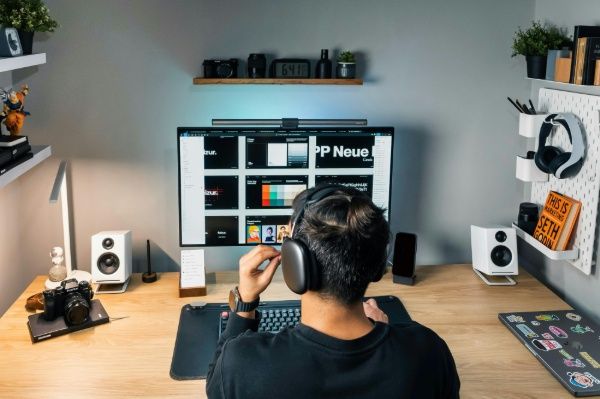
The short answer is: no. The long and honest one - the illusion of the home office as a universal solution is over!
Is the home office over?
The short answer is: no. The long and honest one - the illusion of the home office as a universal solution is over. What we see today is not an end, but a painful rearrangement of power between employers, employees, technology, and control.
From Freedom to a Return
The home office started as a salvation - flexibility, autonomy, less time in traffic, more focus. But for many companies, it has become something uncomfortable: harder control, blurring of working hours, decline in informal communication, and a sense of “disintegration” of corporate culture. That’s why today we see a wave of return to the office - not because the home office doesn’t work, but because some organizations have not learned to work in a new way.
The Real Conflict: Trust vs Control
The main problem is not where we work, but how we are trusted. The home office has exposed a deep deficit - the lack of trust. Instead of results, many managers continue to measure presence. Instead of clear goals - micromanagement. Thus, the home office began to be perceived as a risk, not an opportunity. In this context, returning to the office is often a symptom of managerial insecurity, not of real need.
The Hybrid Model: Compromise or Hypocrisy?
Hybrid work is marketed as “the best of both worlds,” but in practice, it is often the worst: employees are constantly “online,” offices are half-empty, and meetings are a chaotic mix of in-person and online presence. Without clear rules, hybrid creates new inequalities - who is “more visible,” who gets more opportunities, who actually participates in decision-making.
The Psychological Cost
The home office brought freedom, but also loneliness. For some - more balance. For others - blurring of boundaries, constant fatigue, and the feeling that “you are always at work.” Young employees often lose mentorship and informal learning, while more experienced ones lose a sense of meaningful connection with the team. This is not an argument against remote work, but proof that it requires a mature culture and new skills.
What Do the Trends Say?
-
The home office will not disappear, but it will become a privilege, not a standard
-
Companies will use presence in the office as a tool for control or for community - the choice will be indicative
-
The most sought-after employers will be those with a clear policy, not with “flexibility at the manager's discretion”
-
Workers will vote with their feet, not with complaints
The Real Question
It is not “Is the home office over?”, but:
Are we ready to work without being watched?
And even more uncomfortably:
Are leaders ready to manage through trust, not through presence?
The home office is not going away. But the naive idea that it can exist without a change in mindset – yes. And that is exactly what divides companies into future leaders and future memories.
Every day at www.CareerDailyNews.com, in the section “Career News“, we will address a different workplace issue – one that affects both employees and employers. We will not only raise questions for reflection but also give management in every company a reason to pay attention and make specific decisions. Our goal is simple – to bring to light those topics that are usually silenced in the office and turn them into a tool for change and development.