The real challenge is to grow together with your company
· Vladimir Rashev - Balkan Services

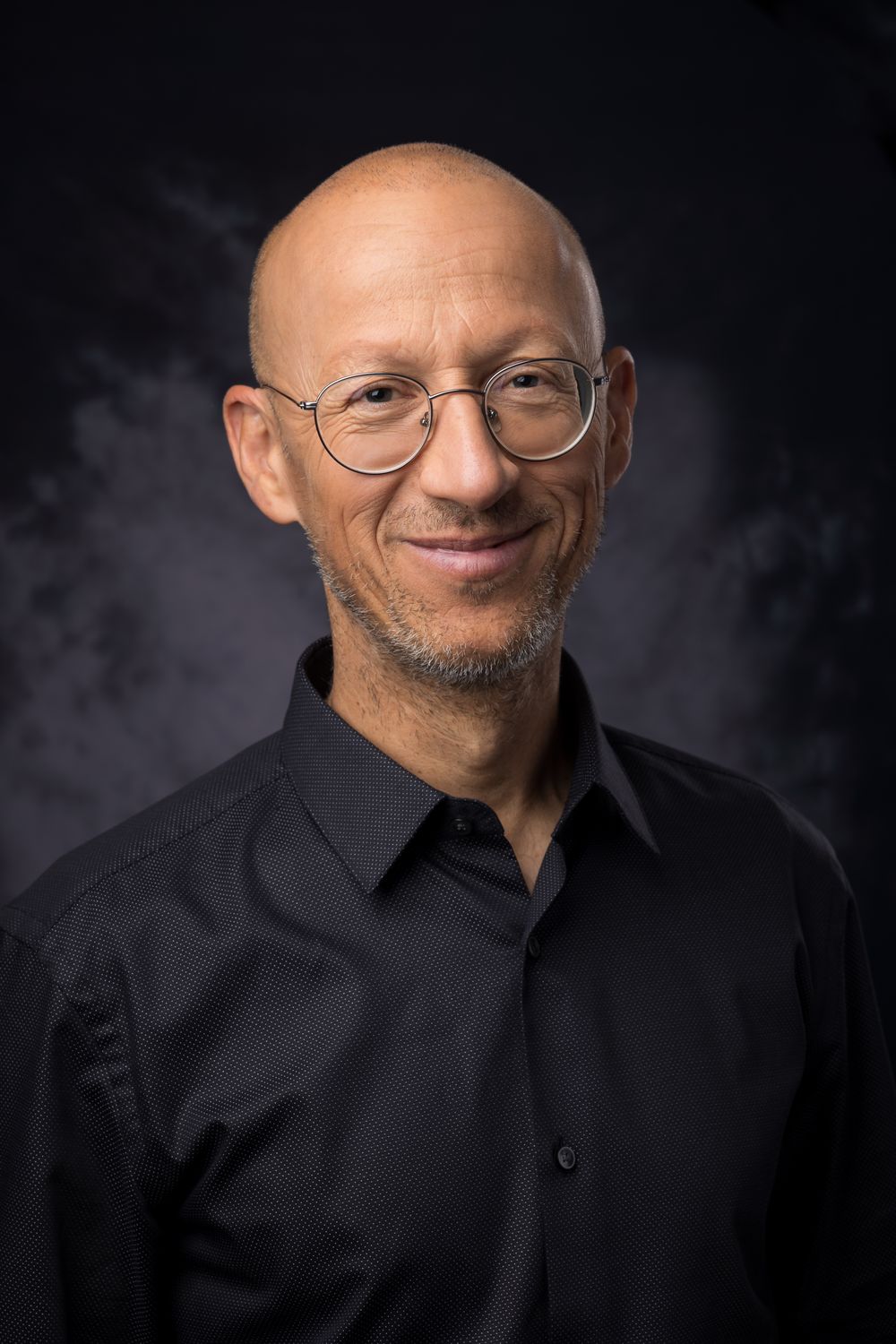
Vladimir Rashev, managing partner at Balkan Services
How would you introduce yourself to the audience at
https://careerdailynews.com/?
My name is Vladimir Rashev and for 20 years I have been
engaged in the implementation of business software and project management in this field.
What key milestones and transformations would you
highlight in the development of Balkan Services from its inception to today?
Over the last 20 years, we have gone through all the
natural stages of growth. We started from scratch - a few partners,
who built the company literally step by step. Today we are an organization with a clear
structure and scale, which ranks us among the leading medium-sized companies in
the Bulgarian market and a leader in areas such as BI, financial
consolidation and XBRL.
Over these two decades, we have changed a lot as an organization. We have accumulated deep industry expertise, established clearer processes and a sustainable operational
model that allows us to work effectively and predictably.
Our clients have also changed – their requirements have become more complex and strategic. This clearly showed us the direction in which to go: we focused on medium and larger projects, where we can take on greater responsibility, apply our full potential, and create real value for the client's business.
How would you describe your current market
position and the scope of services you offer?
We are established as a reliable partner and leader in consulting and
implementing business software.
And this brings with it the responsibility to
present ourselves consistently at a high level.
We work with companies that want to optimize
and digitize their business processes. We bring a combination of business understanding,
consulting expertise, and technical depth - which allows us to
design and implement solutions that truly work in the client's real environment. We cover a wide range of business areas - finance, operations,
sales, manufacturing, project
management, and data analysis. Behind every project stands a team that knows both
the business logic and the technology - and takes responsibility for the result. This is
complemented by comprehensive IT support and infrastructure services that provide
a stable and reliable technological environment for long-term operation.
In your latest customer satisfaction survey, a 99% positive rating was reported. What do you think
are the main factors for this result?
For me, a successfully implemented project is one that brings real value to the client. At Balkan Services, our goal is precisely that – to provide a solution that works effectively, meets the initially agreed goals, and is executed within the planned deadlines and budget.
For the client, this means predictability – clarity
in the process, lack of surprises, and alignment between expectations and results.
Receiving a working solution on time and with the agreed quality is a key
element of trust.
At the same time, we ensure that projects are
financially sustainable, so that the collaboration is satisfying for both
parties.
If I can summarize with one clear criterion – a
project is truly successful when it starts to be used actively. When
the solution is part of the client's daily work and genuinely supports the processes
and people in the organization.
This approach likely allows you to
build long-term relationships with your clients. How do you see your role beyond
the specific project?
For us, it is important that relationships with clients are built on trust and
openness - without unnecessary formality, but with clear frameworks for collaboration. We strive
to be the partner with whom they can discuss not only a specific project but also
broader topics – technological strategy, development of their systems, or
upcoming business changes.
This partnership can be expressed in many
ways - daily IT support, implementation of a new system, upgrading or
integration with existing solutions. It can be a question related to cybersecurity
or the overall IT strategy of the company. It is not always necessary for us to execute
everything, but it is important for the client to have a competent reference point
– someone with whom they can rethink their options and make an informed decision.
Ultimately, it is about building dialogue and
trust over time. When the client
takes an important decision — operational or strategic — to know that they have someone to turn to. This is the value of long-term partnership that
exceeds the boundaries of any individual contract.
What were the most serious challenges
faced by the company over these 20 years?
In our case, many of the colleagues have been with us
from the very beginning or for many years. With growth, everything changes – the scale of
the projects, the profile of the clients, the way of working. The challenge was not just for the company to
grow, but for us to grow along with it – to remain relevant to what the market requires,
and to what the clients need.
We work with various companies in the market and the environment
around all of us is constantly changing. The important thing was that this change should not happen
chaotically or too stressfully, but should be manageable – to be an active part
of it, rather than just reacting under pressure.
There is also something very human in the whole story. Over
time, not only the business changes, but we as people and leaders do as well. The perspective
expands, decisions are made differently, priorities are reassessed.
Perhaps this is one of the biggest challenges – the entire team of people
who build the company must be able to develop along with it, rather than
remain at a stage where it has already outgrown.
In the IT industry, the market and
technological environment are constantly changing. How have you adapted to these changes
over the years?
To be honest – quickly. The alternative is not to adapt, and that has never
been an option for us. At Balkan
Services we accept
change as a natural part of
the environment in which we work. It does not ask whether we are ready – it just happens.
We cannot predict everything, but there are things
that are obvious – for example, that the speed will continue to increase.
The question is not whether there will be change, but how we will meet it. Whether we will look at it
with fear and tension or seek the opportunities it opens.
Rapid change brings risk, but also opportunities.
When the market and technologies move dynamically, you have greater freedom to position yourself as you want – as long as you have a clear idea of where you are heading.
What we cannot control is the pace
of changes. What we can control is our attitude towards them – whether we will react
defensively or use them as a lever for development. We strive for the latter. The goal
is to stay fit and ready to act, no matter how fast the environment around you moves.
Do you remember a moment when
market uncertainty required extremely fast adaptation?
The period 2020 -2022 was truly a
challenging moment. Many projects were delayed or temporarily halted,
because businesses simply did not know what was next. There was uncertainty and it was
felt everywhere.
At the same time, there was a sharp and urgent need
for digitalization – remote work, data security, tools for
communication and team collaboration in an online environment. This accelerated processes that
would otherwise have taken years.
For us, it was indicative how quickly the
adaptation happened. Within a week or two, entire organizations switched to
a remote working mode and continued to function. Not after long
strategies and plans, but because it was necessary.
So this period was both a stress
test and a catalyst. There was uncertainty, but there were also many opportunities. In such
moments, you can see how quickly you can change when you have no other choice.
Speaking of changes, how would you describe
the development of digitalization among your clients in recent years?
If we go back 20 years, the volume of data that companies worked with
was significantly smaller. Software solutions were limited, and digital
processes played a supporting but not a leading role. The computer was a tool, but
not an environment where almost everything happens.
Today, the situation is fundamentally different. Almost every
company relies on business
software,
cloud services, and mobile devices. If
you do not have the necessary systems, you practically fall out of the market. Just like if everyone
has a mobile phone, and you do not – you formally exist, but you are actually out of
the game.
It is no coincidence that among the largest companies in
the world today, it is precisely the technology and software companies that dominate. This shows
where the center of gravity in the economy has shifted. Software is no longer
an auxiliary function – it is at the core of business.
For us, this means a more complex environment,
more complex projects, and many more systems, integrations, and data. The good
news is that clients are much better prepared. They understand better what
they can expect from a system, where the added value is, and how technologies
give them a real competitive advantage.
Digitalization has transformed from an addition to business into its foundation. And this naturally made our work
more responsible and more interesting.
What motivates you when you reach
yet another goal after the realization of each new project?
What motivates me is the idea of becoming
better at what we do – not just to implement another project, but to
do it with greater ease, more structured, and more effectively. With the accumulated
experience, you start to see where you can optimize processes, how to learn
faster, and how to use the tools you work with more effectively.
It is important to build an environment in which the entire
team develops their competencies - not only technically but also in understanding the
business of our clients. The deeper we know their real needs,
the more adequate and valuable solutions we can offer. This makes
our work more meaningful.
Another strong motivation is for the team to become more
independent. To have clear processes and enough confidence to manage
projects without constant operational intervention from my side. This gives me
the opportunity to focus on strategic priorities - not what will happen in the
next month, but where we want to develop the company in the coming
years.
Ultimately, motivation comes from development
– of the organization, of the people in it, and of myself as part of this process.
In the year that Balkan Services celebrates 20 years in the market – what is your vision for the next stage of the company's development?
Twenty years in the market is not just an anniversary - it is proof that we have built something sustainable and valuable. And it is this
foundation that gives us the confidence and clarity to look ahead.
The people at Balkan Services are at the core of
everything we do. A team that continuously develops, shares knowledge, and
grows together - not only as specialists but also as people who deeply understand
the business of their clients. Investing in them and in the culture of shared knowledge
will remain our top priority.
We are also looking beyond our current boundaries - towards new
partnerships, new sectors, and opportunities for a more substantial presence. The need for
reliable partners in digitalization will only grow, and we want to be among
those who set the standard.
At the same time, we are carefully exploring how
artificial intelligence and cybersecurity are changing the requirements that businesses
place on their systems and data.
The environment is changing rapidly and the questions are more
than the answers - but one thing is clear: data integration, information quality, and analytical capabilities, and the speed of data processing will become even more critical for
decision-making. This is an area where our expertise is deep and where we see serious potential for development.
I believe that the most interesting period for Balkan
Services is yet to come - with proven experience behind us, a built team and
ambition that has not changed since day one.