Over 30 Leading HR Leaders on AI: Threat or Opportunity?
· Career Daily News
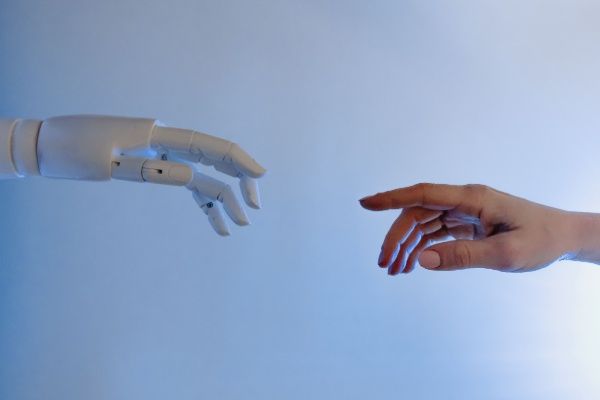
How do you think AI will change the role of HR professionals in the next 2–3 years - will it be a threat to the profession or the strongest tool in the hands of HR leaders?
Artificial intelligence is no longer a topic of the future – it is
part of the present of work, business, and people management. But what
does this mean for the profession of "Human Resources"?
Career Daily
News reached out to leading specialists in the field of human resources - HR directors, company leaders,
representatives of HR agencies and job platforms - with one key question:
"How do you think AI will change the role of HR professionals
in the next 2–3 years – will it be a threat to the profession or the strongest
tool in the hands of HR leaders?"
The responses show different perspectives, but also one common
trend - the future of HR
will not be a choice between humans and technology, but the ability to find
the right balance between artificial intelligence and human expertise.
We give the floor to our special guests:
Rada Yosifova (HR Director, AG Capital
Group)
"I
believe that artificial intelligence will change the way we work, but I do not
expect our lives to be completely different in six months, as we often hear at
conferences and in the media. Technology is certainly not a threat,
even though some commentators create anxiety on this topic. It is also hardly
the strongest tool in the hands of HR leaders, because a good
HR leader is distinguished by their expertise, strategic thinking, and
management qualities.
When I started working, I received my first salary in a white
envelope, signing against my name in a large book. A year later, I was already
receiving a printed payslip, and after some time – a bank transfer
via debit card. The work of the person calculating the salaries changed
dramatically, but the activity itself remained the same. Technologies gradually and almost
imperceptibly changed the way we perform a number of activities without changing
their essence. I believe the same will happen with artificial intelligence.
More and more administrative activities will be eliminated or
strongly automated, just as manual salary calculations or processing paper
leave requests were eliminated in the past. The HR profession will evolve and new
activities will emerge. They do not necessarily have to be strategic, but they will
likely just be different.
I find it exaggerated to claim that in a few years
HR will work with teams of people and machines. This, in my opinion, is the "animating" of
artificial intelligence in a psychological sense, i.e. attributing human
qualities to technology that does not possess such in reality. For years
there have been production lines that operate almost entirely without human
intervention. In banks, software robots have been automating payments for more than a decade. But
these systems are not colleagues and do not make independent decisions.
Another myth is that some people will not be able or will not
want to learn to work with AI, and will consequently lose their jobs. This
is also not true. Some people adopt technologies first and have a natural
curiosity, while others do so later. So far, I have not met a colleague who does not wish
to use an AI tool or refuses to be trained.
I personally use AI in my daily work. I like that it can
prepare drafts of various documents, analyze data, or help in structuring ideas. Sometimes I even use it as
a kind of coach or sparring partner. For me, it is a valuable assistant that saves
me time, often spent on tedious tasks. But I do not believe it can replace a colleague
in the full sense of the word, nor do I expect my daily life to change dramatically."
Implementing AI without a strategy is like buying a plane without a pilot
Eli Stoyneva (Co-Founder & Managing Partner at Top
Skills Recruitment)
"I think that
AI will redefine what HR professionals spend their day on, but it will not
replace them. In the next 2–3 years, much of the routine work will be taken over
by tools that are already good enough or are currently being improved.
This is not a threat, but a release of time for the things that make HR valuable:
assessment, conversation, and understanding the person across from you.
The threat exists only for one type of specialist, namely
those who reduce their work solely to administration and forwarding
documents. For HR leaders who think strategically, this will be the strongest
lever they have ever had – more data, faster decisions, and more capacity for
real people.
In our practice, we see this every day, because AI helps us
find and analyze candidates faster, but the decision of who enters
a team and stays in it is always human, and that will not change.
Hiring changes businesses, careers, and destinies, and such decisions are not delegated to
an algorithm.
Those who win are not those who fear AI, nor those who
blindly trust it, but those who use it without losing the human judgment
that makes this profession meaningful."
The Power of Story: When HR, PR, Marketing, and Employer Branding Speak Together
Milena Halacheva (HR Director at Updata One)
"In the
next 2–3 years, AI will not eliminate the HR profession, but it will dramatically change its
nature. Routine activities – recruitment, data analysis, document preparation, and administrative processes – will increasingly be automated, which
means that HR professionals who do not adapt risk losing their competitiveness in the labor market. However, for those who
embrace AI as a tool rather than a competitor, it will free up time for
high-value activities – building organizational culture,
developing leaders, managing change, and strategic partnership with
the business.
Paradoxically, I believe that the more processes in the HR field are automated,
the more this profession will turn to people.
That is why I believe that the future belongs to HR leaders who can
combine technological literacy with a deep understanding of people and
organizations.
However, the most important question is not how far AI can go, but
how far we are willing to allow it to make decisions for us. Decisions that
affect people must remain a human responsibility, based on ethics,
transparency, and professional judgment. AI will be the strongest tool in
the hands of HR, but it must never become a substitute for leadership and
moral responsibility."
Anastasia Stoyanova – Dragoeva (HR Manager)
"In the next few years, AI will significantly change
the way we work in HR. It will automate more and more administrative
activities and give us faster access to information and analysis.
However, this does not mean delegating thinking and critical
view. On the contrary – the more we use AI, the more critical thinking,
the ability to understand context, and to make conscious and
wise decisions will become important. Technologies can provide answers,
but they cannot take responsibility for our choices, which affect from individuals to hundreds of thousands of people.
I do not see AI as a threat, but as a tool – as long as it
remains a tool and we do not turn it into an equal partner, because it cannot
be such.
The most valuable HR leaders will be those who can
combine the capabilities of technology with human judgment, empathy, and
the ability to understand people beyond numbers and analyses, as well as to bear
the moral responsibility for decisions based not only on data but also on human
attitudes and business needs.
The strongest tool is not technology, but the way we choose to use our entire palette of skills every day,
including technological ones."
Georgi
Parvanov (Manager of “CTeam")
"In
the initial period, which is already underway, there will be massive layoffs of people involved in HR - recruitment,
training, payroll, etc.
In the middle of the period, there will be disappointments with AI, as it cannot take responsibility, is not creative, and currently we are paying
an unrealistically low price, which will increase many times. Disappointments, mistakes,
lawsuits, and business problems related to the use of AI in HR, medicine,
law, and other fields will begin. At the end of the period, we will see a
return of people to HR.
AI is not "intelligence," but a very advanced and highly developed
computer program."
Desislava
Dushilova (Head of Human Resources at Special purpose aviation operator-
SAO)
"AI can analyze data about people, but it cannot build
trust with them. And trust is the currency with which every successful HR
leader works." It is no coincidence
that I start my response to the posed question with this quote, which I recently read and
whose idea I fully share. Artificial intelligence will not be a threat
to the profession of HR specialists,
but will become one of the strongest tools in the hands of HR leaders.
AI has undoubtedly already changed the way we work by
automating a large part of routine and administrative processes – initial
screening of candidates based on predefined criteria, processing and analysis of
large data sets, document preparation, generating reports,
forecasting turnover, analyzing employee engagement, and other
activities that today take significant resources.
But the essence of human resource management has never
been administrative work. It is about working with people – building
trust, understanding human motivation, recognizing and developing
talent, managing conflicts, creating organizational culture, and
supporting leaders in making difficult management decisions.
No algorithm can replace human empathy,
intuition, moral judgment, and the ability to read nuances in a
behavior or in an organizational situation. Artificial intelligence can
show trends and dependencies, but it cannot build trust, inspire
people, or conduct a difficult conversation with an employee going through a
personal or professional crisis.
In my opinion, the role of the HR specialist will not decrease, but will transform. The more AI takes over technical and analytical tasks,
the more HR will focus on what creates the greatest value
for the organization – strategic partnership with the business, people
development, and building a sustainable organizational culture.
In this sense, artificial
intelligence could not replace the HR profession. It will free up time for
the most important part of it – the human. In the future, the most successful HR leaders will not
be those who compete with AI, but those who know how to use it wisely,
without losing the human element that is at the core of the profession."
Ventsislava Nikolova (Founder | Employer Branding &
Talent Partner at Work Vibes)
"Neither.
AI is a threat to a very specific type of HR work - that which consists of retelling
policies, filling out reports, and reminding about deadlines. If this is the content
of your role, the next two years will be unpleasant. If not, AI is the strongest
lever that our profession has received.
I will give a specific example. In six months, a client’s team
has doubled from 35 to 79 people, while the HR team remained the same. We built the entire HR
infrastructure in 6-8 weeks
with Google Apps Script and Claude, which writes the code - without a programmer and with zero software budget. We created an internal AI
assistant in Slack, and it answered 119 questions from 21 people in the first 18 days,
with an average response time of 8.4 seconds. These are questions that previously came
to the HR team.
Our strategy is to automate everything where
the risk is that something might be forgotten or delayed - probation periods, anniversaries, development meetings, birthday greetings. We do not automate conversations that determine someone’s future: assessment
after a probation period, feedback, salary decision, exit interview. The system reminds that these conversations need to happen, and provides
the data for them. The rest remains between people.
Therefore, the real change, in my opinion, is different. AI does not replace
the HR specialist, but mercilessly shows who has described their processes and who
has not. Technology does not fix the process if it is unclear, it only makes it faster, and
automated chaos is just faster chaos. In the next two to three years,
the difference will not be between those who use AI and those who do not. It will be between
HR that builds systems and HR that waits for someone to give them."
Milka Racheva (HR Director at Lirex)
"In
the dynamics in which we live and work, I believe that the threat to every HR
professional is not having embraced change as part of our daily lives.
Because embracing it for ourselves is just the foundation. As HR professionals,
it is expected of us to help people change their mindset, to be
more flexible and adaptive as a survival skill.
We are expected to help businesses and the functions we
manage to be more resilient to dynamics through flexible, continuous,
iterative changes. We seek, strive for operational excellence through
automations and optimizations that allow us to focus on what brings
added value to the business.
I view AI as one of the strong tools for achieving
the above goals of flexibility and resilience. In practice, for over 5
years, the market has been providing us with progressively self-improving AI tools.
Through them, we have managed to optimize daily tasks and repetitive functions,
we have created personas for sparring partners in creativity or critical thinking, intuitive training modules, models for complex processing of
different HR data, analyses, recommendations for improvements, and much more.
Whatever else appears as an AI tool – I believe we should
explore it critically, tame it, and find its application, again with
the aim of optimizing and adding value to the HR function for the business."
Neli Stefanova (HR Manager at Schreiber Foods)
"Change
is dynamic and influenced by many factors. I will not dwell on the obvious –
speed, transferring routine tasks to AI assistants, automating
most processes. Much more interesting to me are two main directions of
change:
1. How professional profiles of the future are starting to look and take shape – in this regard, the strong bond between
experience in the professional field and knowledge of the benefits that AI brings is a basic
combination, just as one cannot hire people without computer skills for an office.
Knowledge of AI tools and their management is becoming a basic skill.
Positions are becoming softer, more mobile, not so strictly defined as
daily tasks in this period of seeking a new balance. Experienced
professionals can hardly be replaced by AI – they can be
more competitive with its help. Therefore, HR must provide a foundation, train in
AI, and encourage people to use the tool that can bring them more
added value and competitiveness in the market.
2. Some positions may disappear, be replaced – not immediately, but gradually.
Strategically, the most interesting for me is to be directed towards solving the issue of
how young people, who will be the next level leaders and
managers, can gain experience, how to feel the rhythm of the profession and gain maturity as junior positions are taken over by AI assistants. This is a challenge for building
talent in a new way, integrating new technologies and opportunities and
providing space to feel the rhythm of the business.
Here, the role of HR is leading – to provide that space and
understanding that will allow continuity and building the next leaders of
the company, developing young people, rather than just hiring experienced
professionals. If statistically we have many fewer entry-level positions, this
narrows current opportunities for building new professionals. We need
a working compilation for developing young talent in companies. HR + AI is
the whole formula – only one of them keeps us either without thought and moral compass, or without
a view of the future."
Desislava Arbova (HR Manager at Intelliway Services)
"It is
difficult to predict how AI will affect the work environment in the coming years, as the development of technologies is extremely dynamic. Undoubtedly, however,
the artificial intelligence is a powerful tool that not only frees up time and
resources for HR teams by automating routine tasks but also fundamentally
transforms the role of HR professionals.
AI has already changed the skill set required of employees
in organizations. This implies fostering a culture of continuous learning and
development. Leaders should place a stronger emphasis on the psychological safety of their teams – to reduce fears related to
replacement by AI and to create an environment where experimentation and
allowing mistakes are perceived as a natural part of the learning and
innovation process.
Nevertheless, I do not believe that AI poses a threat to the HR
profession. The human factor remains irreplaceable in my opinion in the processes of
attracting, developing, and retaining talent, and skills for communicating with empathy,
emotional intelligence, and assertiveness continue to be key for
building trust and engagement in organizations."
Daniela Dolapchieva (Director, People and Culture Europe at
Sutherland)
"I
do not believe that AI is a threat to HR. The threat is to continue working in the same
way while the world changes. AI will not take the human out of HR. On the contrary –
it will give us the opportunity to finally focus on it.
In the next 2–3 years, the most successful HR leaders will not
be those who compete with AI, but those who use it to free up time for what no technology can replace –
building trust, developing leaders, making bold decisions, and
creating culture. That is where the true value of HR lies."
Maya Atanasova
(Head of HR at Kaolin EAD, part of Quarzwerke Group)
"Everything
depends on the mature strategic attitude of the HR Specialist - this will separate the passionate and dedicated
professionals from mediocrity.
The level of effectiveness will jump significantly."
Ivona Gavrilova (Senior Director, Global Talent
Acquisition for Product, Tech & Ops at Paysafe)
"In
the next 2–3 years, AI will not replace HR specialists, but it will certainly fundamentally change their role. More and more administrative activities – from
the initial screening of candidates and communication with them to data analysis and
shortlisting – will be automated. This will allow HR teams to focus on what AI can hardly replace: strategic decisions, building trust between the business and
job candidates, assessing potential, and creating real connections
with people.
My expectations are that in recruitment, recruiters will become career consultants and business partners who use AI as
a tool, not as a substitute for their professional judgment.
At the same time, employer branding will gain even more
importance. When AI facilitates applications and gives candidates access to
more opportunities than ever, their choice will increasingly be determined by
the employer's reputation, authentic corporate culture, and the quality of
the experience throughout the entire recruitment process. Companies that use
AI transparently, ethically, and without losing the human element in communication will
gain the trust of the best talents. That is why the future of HR will not
just be in using AI, but in the ability to combine technology with
empathy, critical thinking, and a strong employer brand – because that is what will
distinguish successful organizations in the battle for talent."
Mikaela Hristova Nencheva (People & Culture Leader @
Ocean Investments)
"One or two years ago, at almost every HR conference, we debated whether AI would replace HR. Today,
I am asking a different question: how is AI changing our perception of a good HR
professional. In recent months, I have often talked and written about the fact that knowledge
is gradually becoming an entry ticket, while the real difference comes from
critical thinking, good judgment, and the ability to distinguish the important from
the noise, to ask the right question, and to help the business make a good decision.
I feel this in my own work: AI saves me hours
in analysis, preparation, and editing, but not once has it made a difficult
decision for me regarding a person, team, or organization. People cannot be reduced to
data, ones and zeros, no matter how useful they are, so I do not expect HR to
become less needed.
I have the feeling that our profession is becoming more difficult, because
the more operational work technologies take on, the more we will be expected to carry the human judgment, responsibility, and courage to make
the right decision.
In the next 2–3 years, I expect to talk less and less about
AI and HR as separate topics. The conversation will gradually shift to human
judgment in the era of AI."
Svetlozar
Petrov (CEO of Jobtiger.bg)
"AI
will definitely change the HR profession. Besides becoming the strongest tool
in the work, it will change both the role of HR and the immediate tasks
in the near future, namely:
- Accelerated
implementation of AI tools and agents;
- Mapping
skills in the company. More and more necessary basic skills are
changing, and in the long term, it will be difficult to rely solely on acquired
degrees, but one must also take into account the skills of people, including
those acquired informally;
- Building
and maintaining a culture of resilience amid uncertainty for companies and in
the world;
- Development
of a new type of leadership in the world of AI;
- The new
roles of HR: architect of ethics, mediator of effective interaction
between people, business, and technology (AI), individual approach to each
employee, and guardian of trust.
The HR profession is acquiring many new tasks that it will need
to start performing in a short time, and this will definitely be
a challenge due to the required exceptional dynamics, flexibility, and
ability to learn on the job. Interesting and inspiring times for HR."
Irena Zoteva (Managing Partner at HILL International
Bulgaria)
"I do not think that AI is a threat to the HR profession. Rather, it will
change the way we work. In the next 2–3 years, I expect the biggest change to be in optimizing administrative processes –
document processing, initial candidate screening, data analysis,
generating reports. Of course, this will be even more effective if
the legislation also develops in this direction.
But I would not say that AI will become the "strongest
tool" in the hands of HR leaders. The strongest tool will always be
the ability to understand people – their motives, potential, values, and
the nuances in their behavior. This still cannot be replaced by an algorithm.
I personally use AI daily (mostly with questions) and it
saves me a lot of time. But I have one rule that I follow without exception:
never trust a machine 100%. Check, ask questions, think
critically. Ultimately, AI is an extremely good assistant, but the responsibility for
our decisions remains ours. And fortunately, that still cannot be
automated."
Kristina
Nenova (Global Head of HR at Shelly Group)
"AI will not
replace HR specialists, but will change the way they work. Routine
administrative tasks will be automated, which will allow HR
leaders to focus on what brings the most value – people,
organizational culture, and strategic decisions."
Radoslava Dimitrova (Managing Director & Founder @
HRLabs)
"More
and more people, regardless of their profession, are already using AI. This inevitably
changes the daily work of HR specialists. For us, this means more
speed, the ability to process and analyze large volumes of information, better
awareness, and more time for activities with higher added value.
But there is one important feature: AI sees patterns.
A good HR sees context.
The most crucial for an HR specialist will be the ability to
assess when data should be viewed through the prism of a specific
business, team, organizational dynamics, and the people behind the numbers.
This is where critical thinking becomes more important than ever.
I give an example from recruitment. More and more ATS systems now
use AI to assess compatibility between CVs and job descriptions.
This is a useful starting point, but my experience shows that in many cases, it is precisely
candidates with lower compatibility percentages who ultimately receive offers.
The reason is simple – the algorithm assesses the similarity between two text
descriptions, while a human can recognize potential, motivation,
development opportunities, and factors that are difficult to measure.
Therefore, I do not think the question is whether AI will be a threat or
the strongest tool for HR. The more important question is how to use its speed,
potential, and recommendations without losing sight of the specific context. For me,
AI should support our expertise, not replace it. The key is to
use better data and faster analyses without losing critical
thinking and professional judgment."
Natasha Kumcheva (P&O People Partner Bulgaria, Albania,
N. Macedonia & Kosovo)
"Artificial
intelligence is not a threat to the HR profession. It is the strongest tool that HR
leaders have ever had – as long as we know how to use it consciously.
I say this from the position of someone with 20+ years in HR, having gone
through technology, media, blockchain, and now pharma. I have seen many "revolutions" in
the way we work. The difference with AI is that this time the change is not
cosmetic – it truly rearranges our role.
AI is already taking on a large part of administrative work: first
drafts of communication plans, structuring assessments for recruitment, various
preliminary analyses, preparing presentations, assisting in processing and working
with email, calendar, and notes. For us, this is no longer an experiment, but part of
our daily routine – including through our own agents and/or bots for specific
tasks.
But here is an important caveat: AI is not a magic solution. Poorly
implemented tools can create more risk than value. For example,
in CV screening – we know how easily a poorly tuned algorithm can miss a
strong candidate because it looks for keywords instead of potential. So the question is not
whether to use AI, but whether we have the discipline to calibrate, test,
and carefully control it.
My thesis is simple: AI does not automatically turn an HR
specialist into a strategist. It simply reveals who has been thinking strategically so far and
who has been hiding behind operational workload. The tool does not create
competence – it exposes it.
The next 2–3 years will be very honest with the profession.
AI will free up time, but it will not replace the judgment, maturity, and courage of
a good HR leader. The most difficult conversations, organizational changes, the tension
in the room, the unspoken between people – this cannot be delegated to
an algorithm.
The future of HR will not be determined by how many tasks we give
to "machines." It will be determined by whether we use AI to become stronger
where the human role is irreplaceable.
AI does not threaten good HR leaders – it simply raises the bar
for everyone else."
Radoslava Mladenova – Alexieva (HR Manager at Viva
Credit)
"In no
way is AI a threat to the HR profession, but a strong assistant that will
bring us back to the most important part of our role – namely the people.
In the coming years, I expect AI to take on more and more
administrative, analytical, and repetitive tasks, thus freeing up time for
more significant work, such as conversations, trust, team development, and building
sustainable relationships.
For me, however, the strongest tool of the HR leader will remain
the ability to understand the different needs, context, and diversity in
organizations. AI can give us more data and faster decisions, but human
judgment, empathy, and understanding of nuances remain irreplaceable.
Therefore, I see the future not as "AI or HR," but as "HR with
AI"."
Sanya Milcheva (Executive Director People & Culture at
Remix)
"I think that
AI will not "eat" the HR profession in the next 2–3 years, but it will certainly
significantly change how HR teams look – and yes, honestly, I expect
optimizations. A large part of routine tasks – CV screening, interview planning,
first-line employee support, even parts of the analysis of compensation and
engagement data – can already be automated, and companies will reduce
headcount where they previously had to hire people just to do this
mechanical work. This is not pleasant news for everyone in the industry, but it is a reality we must be honest about.
On the other hand, this precisely frees up space for
things that AI cannot accomplish – building trust, culture leadership,
difficult conversations, judgment in gray areas, managing change. Here I see
a big difference between HR leaders who view AI as a tool for
faster and more informed decisions, and those who underestimate it or fear
it – the latter will definitely fall behind. The key competence going forward will not
be technical, but the ability to translate AI insights into specific actions
for the business and people."
Elena Stoyanova (Human Resources Manager at LATÉCOÈRE
Bulgaria)
"AI is a level
in the professional evolution of HR that we will either successfully pass or remain at
the stage of fear of the new and refusal to accept reality. The HR specialist
will manage to break free from administrative shackles and from hours of data analysis
thanks to the intelligent assistant, because the essence of our profession is to
be with people, with the business, and to achieve results.
This will bring success and satisfaction only if we understand
the profession through the prism of a visionary and strategist. Whoever has seen the payrolls from
50 years ago and compares them with modern payroll systems will embrace AI with
joy and relief! But only if they are skilled in the craft; otherwise, it will be catastrophic for
our profession and for the businesses we work for."
Radoslava Krosneva (Chief Co-Partner)
"I do
not think that AI will be a threat to the HR profession. I believe it will be the biggest
filter between two types of HR specialists – those who perform administrative
tasks and those who create real value for the business.
In the next 2–3 years, AI will take on a large part of
routine activities – CV screening, drafting job descriptions,
policies, data analysis, initial assessments of candidates, and even preparing
communications. This will free up time for HR leaders who can do
things that AI cannot: build trust, lead difficult conversations, manage
organizational change, read the dynamics between people and
the unwritten rules in an organization.
AI can analyze data, but it cannot sense when a
leader is losing their team. It can suggest a development plan, but it cannot build
psychological safety. It can generate content, but it cannot inspire
people to follow a vision.
The more AI automates processes, the more valuable
human skills will become – empathy, critical thinking, strategic
influence, and the ability to work with complexity.
Ultimately, AI will not replace HR specialists. Rather,
HR specialists who use AI wisely will replace those who refuse to
use it. And I believe this is the biggest change that awaits us."
Petya Pisarska (Human Resources Manager at Schneider
Electric)
"I believe
that AI is a wonderful opportunity for HR to focus on the real essence of
the profession – people. For quite some time, I have been observing the trend of operational,
administrative, repetitive activities being separated and standardized,
so that the role of HR can focus on value-adding activities.
I believe that AI will accelerate this process and HR will increasingly be
the profession that will draw strategy, create the right work environment,
communicate, balance, and develop values.
I believe that work will require more and more creativity,
individual approach, flexibility, vision, and speed, and frankly, I personally
increasingly rely on AI in my daily life."
Christina Dobrinovich (Global Director, People Team at
Dronamics)
"For me,
the things seem simple – AI is just a tool that we should not
view as a threat. If we learn to use it correctly, it will open
space and time for the more important things in our profession.
Namely, it will return the focus to human contacts and
the building of relationships, understanding individual needs, active
learning, and the development of people together."
Veselin Angelov (Executive and Human Resource Director at
Allianz Bulgaria)
"In my
opinion, AI will not be a threat to the HR profession, but the strongest tool in the hands
of HR leaders. In the next 2–3 years, it will automate a large part of
administrative work – analyses, reports, document preparation, training,
and recruitment – which will free up time for the true mission of HR: working with people,
organizational culture, and leadership.
The paradox is that the more AI enters business,
the more important human skills will become – empathy, change management,
talent development, and building trust. We already see how AI
increases productivity and the quality of decisions, but the value comes when
technology works in partnership with people, not instead of them.
That is why I believe that the future successful HR specialist will not
be the one who competes with AI, but the one who knows how to use it to
create a better experience for employees and stronger organizations.
AI first, but people led."
Zornitsa Zlatkova (Director and Human Resources Manager at
AUG.global)
"I believe
that AI will displace the administrative part of the role, reducing the time for
performing these tasks, which in my opinion is a plus for efficiency and
the quality of documentation processes.
I also believe it could be helpful in conducting
interviews, as a "side observer" with the ability to provide additional
confirmation.
I do not think it will displace the position as a whole, especially
quality personnel in it. Rather, it will clear out mediocre and cumbersome
processes, as well as ineffective employees in the field. I would say it will be a strong
instrument in the hands of quality professionals in the field."
Lyudmila Romanova (HR Manager at CloudCart)
"In my
opinion, AI will remove a large part of administrative and repetitive work, but
generally, it will add even more value to this role, as in a world that is changing so quickly,
personal communication and competence will become even more sought after and valued!
I would be happy for HR specialists to try to work,
based on the assumption of their experience and qualities, and to rely less and less
on AI when it comes to human relationships and development!"
Yulia Kameneva
(Group HR Manager at AXSMarine)
Artificial intelligence will not make the HR profession less
important – on the contrary. I believe that in the next 2–3 years, the role of HR
specialists will become even more key.
AI will take on a large part of administrative, repetitive,
and analytical tasks – CV screening, data processing, automated
communications, and report generation. This will free up the most valuable resource of HR –
time for people. And this is where the true value of the profession lies. No
algorithm can replace
empathy, trust, human intuition, and the ability to understand how a
person feels in a difficult moment, what motivates them, or how to create
a space where they feel significant.
In a world where AI will be present everywhere, human
relationships will become the most valuable factor for the development of organizations.
That is why the role of HR leaders will be not just to implement technologies, but to
preserve the human aspect – culture, belonging, meaning, care for one another, and the authentic experience of employees.
I believe that it is precisely the organizations that find the right
balance between technology and humanity that will be the most successful employers of
the future."
Petya Georgieva – Kondakova (Human
Resources Director at Municipal
Bank)
"In the next 2–3 years, AI will not massively replace
human resource management specialists, but it will certainly change
the idea of what it means to be a good professional in the field of
human resources, as well as what skills will be necessary for people working in
this area.
The most affected will be routine administrative activities,
the creation of reports and documentation, as well as the processing of large volumes of data.
The roles related to managing
relationships with people, building and maintaining organizational culture,
as well as making strategic decisions will remain the least affected by AI. These roles will become even more valuable and will
require the development of softer skills and competencies.
AI is already optimizing key processes in human resource
management: posting and adapting job ads, initial
selection of CVs, recruitment and interviewing through AI, onboarding platforms, performance management systems, analysis of engagement, and training based
on collected information, statistics, data, and figures. They save time, sometimes
can reduce human errors, are believed to reduce subjectivity, and are thought to allow
decision-making based on facts.
AI in human resource management processes both inspires me and surprises me negatively at times. I know many quality
candidates who do not pass the first selection of CVs made with AI,
because here it is more important to write your application in a way that includes keywords
from the "script" of the ad or job description than to assess
the experience and qualities of the candidates.
When the subjective human eye is not there to assess on an expert
basis the qualities and suitability of the candidate, this loses part of the personal contribution of
the human resource management professional to the company.
Despite technological advancement, creating relationships,
communicating with people, serving internal clients, resolving
interpersonal issues or conflicts, empathy, building trust,
creating and maintaining organizational culture, corporate ethics, and
values remain irreplaceable by technology.
People are not algorithms – they seek meaning, belonging,
and development. The HR professionals of the future will be facilitators of change,
mentors, and guardians of the values that build psychological safety and
an inclusive environment."
Vera Dimova (HR Manager at Cerillion Technologies)
"To me, AI is neither a threat nor the ultimate tool
for HR. It will help us become more efficient and faster by taking over some of
the routine tasks and information processing. However, HR is first and foremost
about people, and I do not believe that any technology can replace our role in
building trust, making decisions, and taking responsibility.
This is especially true in our environment, where we
constantly need to balance modern business technologies, regulatory
requirements, and administrative processes that demand flexibility and a
personalized approach. That is why I believe that over the next two to three
years, success in the HR profession will depend on our ability to combine the
capabilities of AI with genuine human connection and our capacity to help
people adapt to this significant transformation. Ultimately, this will remain
the most valuable contribution HR professionals can make."
Iva Nikolova (HR Manager at Anakatech)
"I believe that artificial intelligence will transform
the HR profession by becoming an indispensable partner rather than a
replacement. By automating routine tasks such as screening résumés and
scheduling interviews, AI saves valuable time and resources. This enables HR
professionals to shift their focus to strategically important activities,
including mentoring, resolving complex workplace issues, and strengthening
company culture.
AI also supports HR teams by providing insights that help
retain key talent and by enabling more personalized learning and development
experiences. Ultimately, empathy, ethical decision-making, and genuine human
connection remain uniquely human responsibilities."
Boyko Manev (Chief People Officer at KFC/Samex)
"In my view, AI will not be a threat to the HR
profession - it will be the greatest catalyst for its transformation. Over the
next two to three years, artificial intelligence will automate a significant
share of administrative and repetitive tasks, including candidate screening,
data analysis, and the preparation of documents and reports. This will allow HR
professionals to focus on their true mission: building a strong organizational
culture, developing leaders, and creating an environment where people want to
work, grow, and thrive.
I believe the future will belong neither to AI nor solely to
people. It will belong to HR leaders who know how to use AI as a strategic tool
without losing the human element in people management. Empathy, judgment,
ethics, and the ability to inspire will remain irreplaceable.
I often say that AI will not replace HR professionals. It
will replace those who refuse to work with AI. That is why the role of HR is
not disappearing - it is becoming even more strategic and even more essential to
business success."